A 2.5TFSI RS3, S58-powered G8X, or tuned MQB car can make serious power without a full exhaust. But once boost, fueling, and calibration move beyond mild upgrades, the factory system can become a restriction, a heat source, or simply the weak point in a build that deserves a better sound. The right performance exhaust systems do more than add volume. They manage exhaust flow, preserve fitment, control drone, and support the power level you are actually targeting.
The best choice is rarely the loudest or most expensive option. It is the system that matches your engine, turbo configuration, intended use, local requirements, and tolerance for cabin noise. A street-driven BMW with a stock turbo has different needs than an 800HP Audi RS3 or a dedicated track Volkswagen. Buy around the complete build, not one attractive dyno claim.
What Performance Exhaust Systems Actually Change
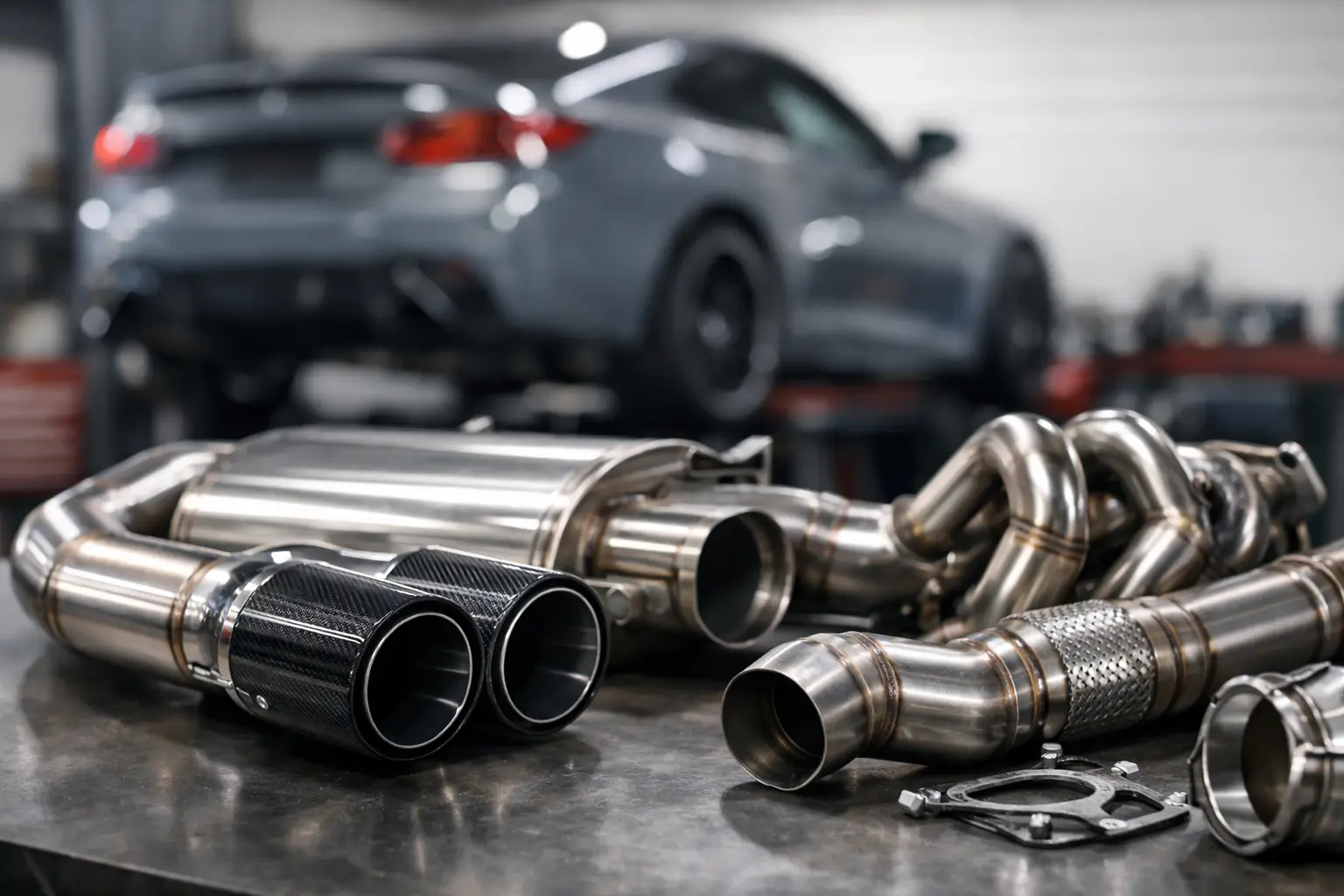
An exhaust system has one job at its core: move combustion gases out of the engine efficiently. In practice, the details matter. Pipe diameter, bend quality, catalytic converter design, resonator volume, muffler construction, and valve control all influence how the car performs and feels.
On a turbocharged European platform, reducing restriction after the turbine can help the turbo operate more efficiently. A properly designed downpipe and free-flowing cat-back can lower backpressure, improve spool characteristics, and create a stronger foundation for tuning. The gains from a cat-back alone are often modest on a modern turbo car, but it can be a valuable supporting upgrade when paired with a downpipe, intake, intercooler, fueling, and calibration appropriate for the goal.
Naturally aspirated engines respond differently. On applications such as high-revving BMW M engines, header design, collector geometry, and exhaust scavenging can have a more direct effect on the engine’s power curve. Diameter still matters, but bigger is not automatically better. Excessive pipe size can reduce exhaust velocity and hurt response in the lower rpm range.
Sound Is an Engineering Decision
Sound is the first thing most owners notice, but it should not be the only reason to select an exhaust. A system that sounds sharp at wide-open throttle may be tiring at 70 mph if its resonator design does not address the rpm range where the engine cruises.
Drone is usually caused by cabin resonance, not merely loudness. A well-engineered resonated system can be aggressive under load and controlled on the highway. Valved exhausts add another layer of flexibility, allowing a more reserved setting for daily driving and a freer, more assertive character when the road or track calls for it.
Material choice affects both durability and ownership experience. T304 stainless steel is a proven premium choice for corrosion resistance and long-term street use. Titanium saves substantial weight and delivers a distinct, crisp tone, but it comes at a higher price. For a car that sees harsh weather and regular miles, quality stainless construction is often the smart performance-per-dollar decision.
Choose the Right Exhaust Architecture
A complete exhaust is not always necessary. Start by identifying what is limiting the current setup and what you want the next stage of the build to accomplish.
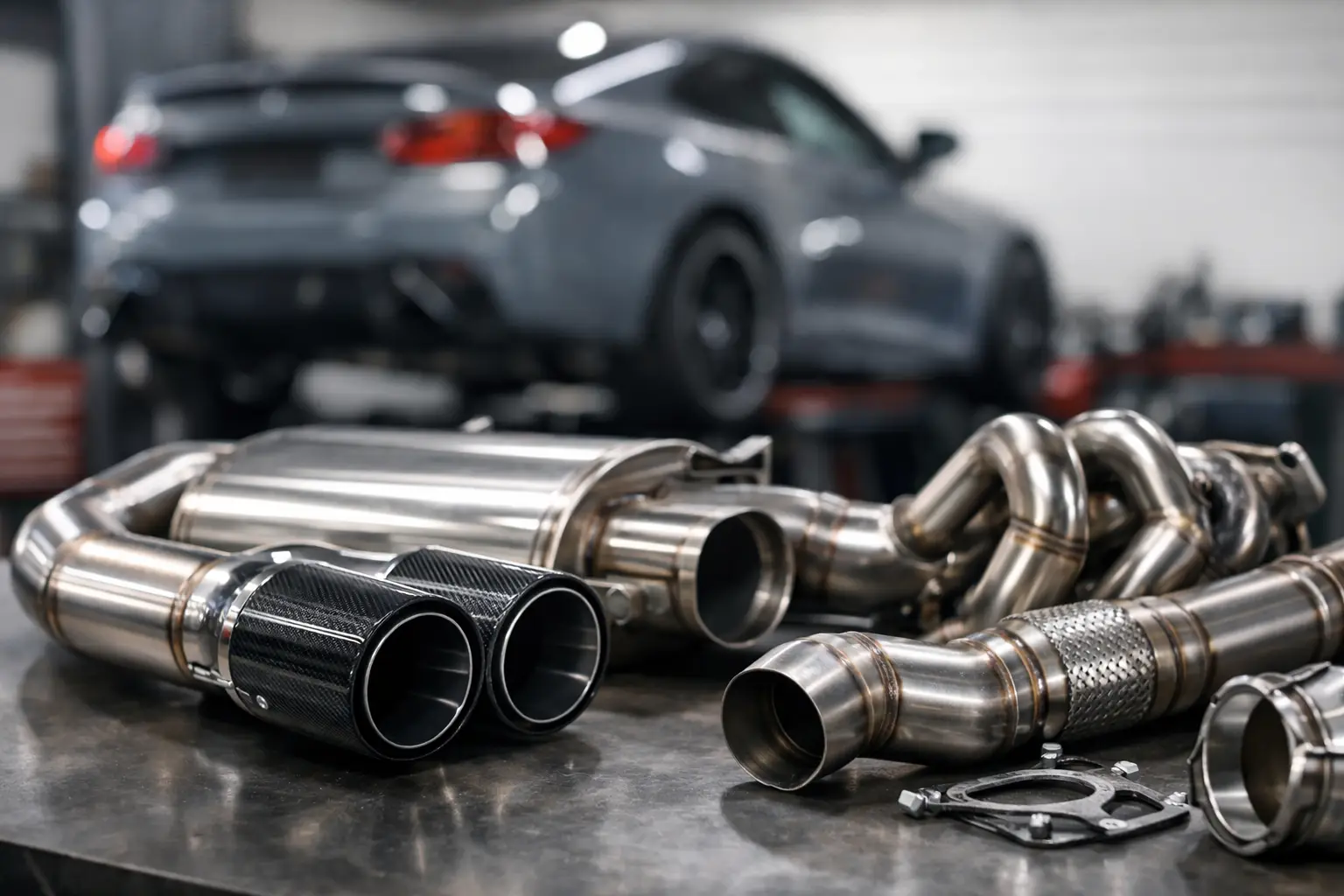
A cat-back system replaces the exhaust behind the catalytic converter. It is commonly chosen for improved sound, reduced weight, appearance, and refined airflow. For stock or lightly modified street cars, a premium cat-back can be the best balance of fitment, tone, and daily usability. It also typically avoids the calibration and emissions considerations associated with changing the downpipe.
An axle-back replaces the rear section of the system. This is a focused sound upgrade, often useful for owners who want improved tone or larger exhaust tips while retaining the factory center section. It is not generally the answer for a high-horsepower build seeking meaningful flow improvements.
A downpipe is one of the most influential exhaust upgrades on a turbocharged vehicle because it sits directly after the turbine housing. High-flow catted and race-focused catless configurations reduce restriction to different degrees, but the decision carries real trade-offs. Calibration requirements, emissions compliance, inspection rules, warning lights, odor, and sound level must all be considered before purchase. Use only components that are legal for your vehicle and location, and confirm whether a tune is required for reliable operation.
For serious builds, a turbo-back exhaust combines the downpipe and cat-back into a matched system. This can simplify component selection and ensure consistent diameter and connection design from the turbo outlet rearward. It is especially relevant when building high-output 2.5TFSI, S58, EA888, or Mercedes-AMG applications where every supporting system must work together.
Diameter, Resonators, and Valves Matter More Than Marketing
Exhaust sizing should match flow demand. A 3-inch system is common and effective across many tuned four-cylinder and six-cylinder turbo platforms. Higher-output applications may benefit from larger tubing, dual paths, or purpose-built systems designed around a specific turbo kit. Yet a large-diameter exhaust with poor routing, restrictive transitions, or weak fabrication is not a premium upgrade.
Look for mandrel-bent tubing that maintains diameter through bends, clean weld quality, proper flex sections where needed, and hangers positioned for factory-like fitment. These details reduce the risk of rattles, leaks, bumper interference, and long-term stress on the system.
Resonators deserve the same attention as the muffler. They shape frequencies that create rasp, boom, and drone. If your car is a commuter, a resonated midpipe is often worth more than chasing the absolute loudest setup. On the other hand, a track-focused car may prioritize reduced weight and unrestricted flow, accepting a more raw exhaust note as part of the package.
Valved systems suit owners who use one car for multiple roles. They can retain near-stock civility in comfort mode while opening up under load or in a dedicated performance setting. Confirm how the system integrates with factory valve electronics. Some retain OEM valve motors, while others use their own controller or require additional hardware.
Fitment Is a Performance Requirement
Exhaust compatibility goes beyond model year. The correct system must account for chassis code, engine code, drivetrain, body style, emissions equipment, factory exhaust valve configuration, and sometimes market-specific differences. An exhaust listed for an Audi A3 may not fit an S3 or RS3. A BMW G80 sedan and G82 coupe can share major hardware, but rear-section fitment and tip positioning may still differ by application.
Before ordering, verify the exact vehicle details and the parts already installed. This is particularly important when combining an aftermarket downpipe with a cat-back from another manufacturer. Connection diameter, slip-fit versus flange design, adapter requirements, and exhaust valve provisions can all affect installation.
For high-power projects, also consider the surrounding hardware. More exhaust flow can expose limitations in turbo sizing, fueling capacity, charge-air cooling, engine mounts, or transmission calibration. The exhaust should support a complete strategy, not become an isolated modification that creates new compromises.
Build for the Way You Drive
A premium exhaust should make the car more rewarding every time you start it, not force you to tolerate it between performance runs. Be honest about how the vehicle is used. A weekend canyon car can accept more sound than a daily driver with a long highway commute. A track vehicle has different priorities than a show car where finish, tips, and rear valance fitment carry equal weight.
For street builds, prioritize material quality, resonation control, reliable fitment, and a tone that complements the engine. For high-horsepower builds, prioritize flow capacity, heat management, strong connections, and compatibility with the intended turbo and calibration. For dual-purpose cars, a quality valved and resonated configuration usually delivers the broadest usable range.
The best performance exhaust system is not the one that makes the biggest claim. It is the one that fits the platform correctly, supports the next power level, and gives the driver a reason to take the long way home.