A Golf R ethanol tune example is most useful when it looks beyond a peak dyno number. On the MQB EA888 Gen 3 platform, ethanol can substantially improve knock resistance and charge cooling, but the result depends on the exact Golf R generation, turbocharger, fuel blend, tuner calibration, and supporting hardware. A well-matched E30 setup can transform a daily-driven Stage 1 car. A full E85 file on a larger turbo is a different project entirely.
The right question is not simply, “How much horsepower does ethanol add?” It is, “What fuel system, hardware, and operating habits does this specific power target require?” That is how a fast Golf R stays repeatable instead of becoming a collection of expensive compromises.
A Realistic Golf R Ethanol Tune Example
Consider a 2019 Golf R with the DSG transmission, factory IS38 turbocharger, intake, turbo inlet, upgraded intercooler, high-flow downpipe, and a reputable ECU calibration designed for an E30 blend. This is one of the most common high-value ethanol combinations for the Mk7.5 platform.
On a conservative dyno, that car may produce roughly 360 to 400 wheel horsepower depending on dyno type, weather, fuel quality, and the calibration strategy. Crank horsepower estimates can make the number sound larger, but wheel horsepower, datalogs, and trap speed tell the more useful story. The broad midrange torque is what most drivers notice first: stronger pulls from a roll, less timing correction under load, and more consistent performance when ambient temperatures climb.
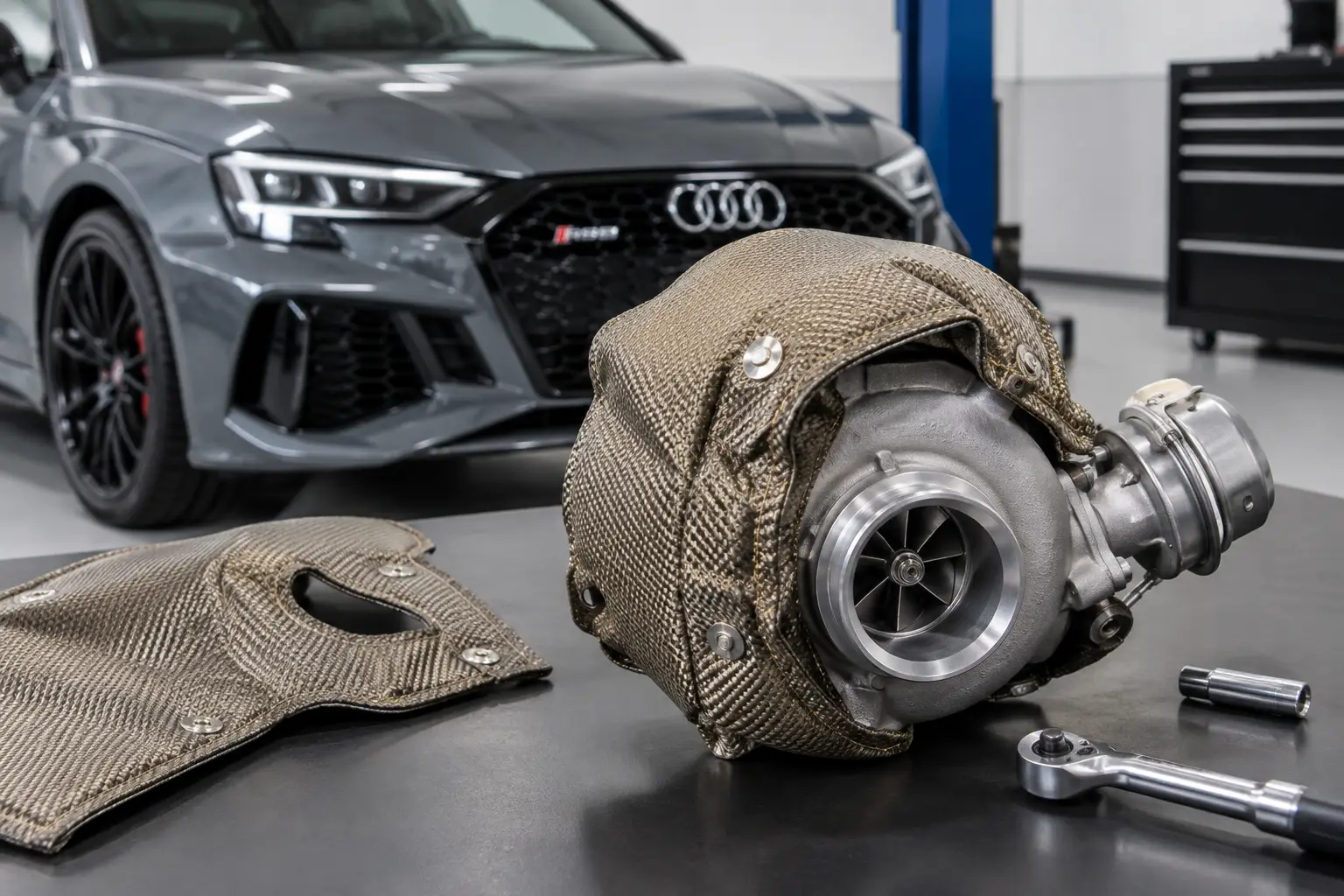
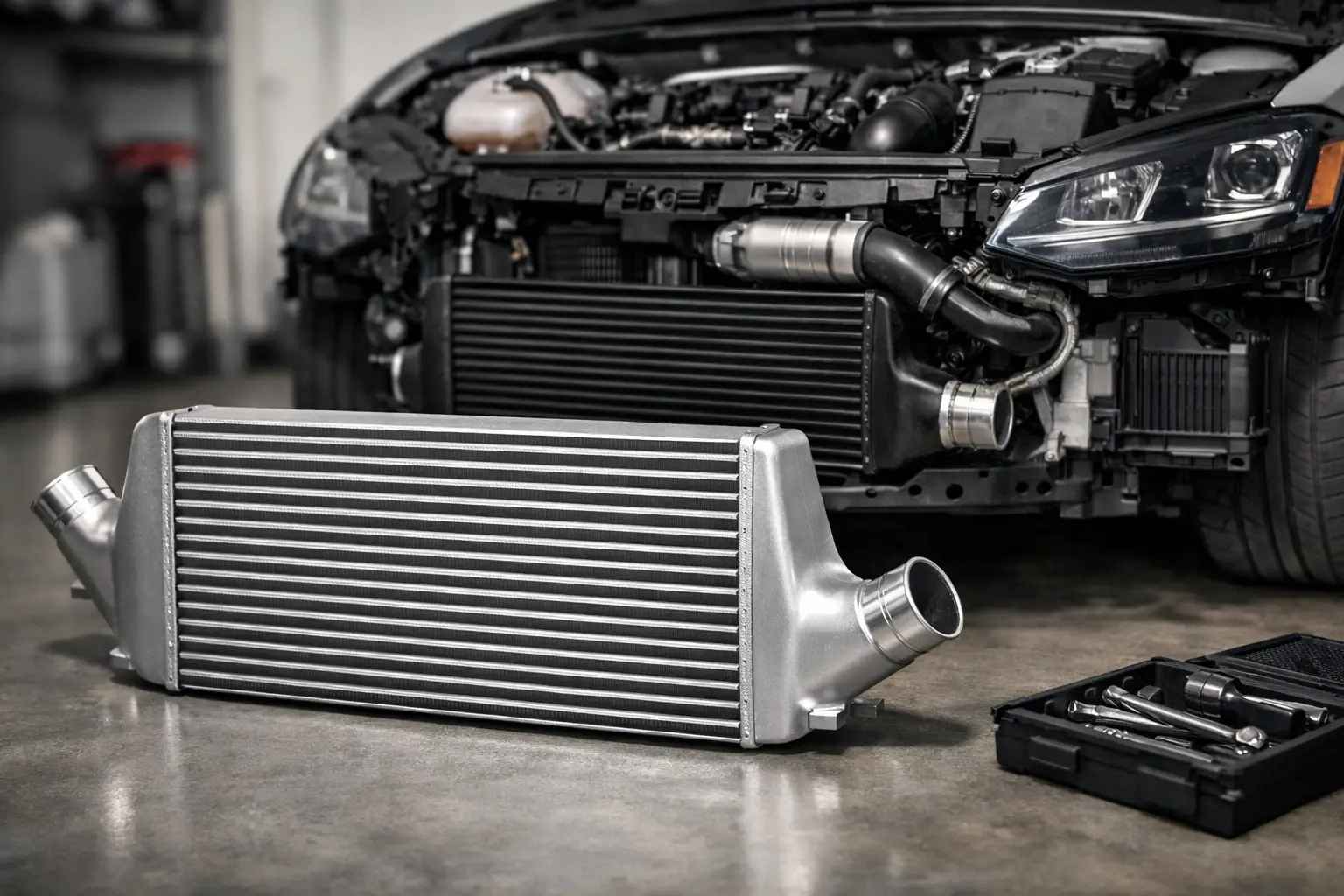
The supporting parts matter because they allow the calibration to perform as intended. The intercooler controls heat soak during repeated pulls. The intake and inlet reduce restriction ahead of the turbo. The downpipe supports exhaust flow, although its road legality and emissions implications must be considered before installation. Fresh spark plugs, properly gapped for the tune, help prevent misfires as cylinder pressure rises.
For this example, the factory low-pressure and high-pressure fuel systems can often support an E30 blend on the stock IS38 when the tune is specifically designed around it. That does not mean every car will behave identically. Fuel quality varies by station, and ethanol content at the pump is not always precisely what the label suggests.
Why E30 Is Often the Smart Starting Point
E30 means approximately 30 percent ethanol and 70 percent gasoline. It gives the EA888 a meaningful increase in effective octane while avoiding some of the fueling demand of full E85. For many stock-turbo Golf R owners, it is the balance point between strong output, reasonable operating complexity, and stock fuel-system capability.
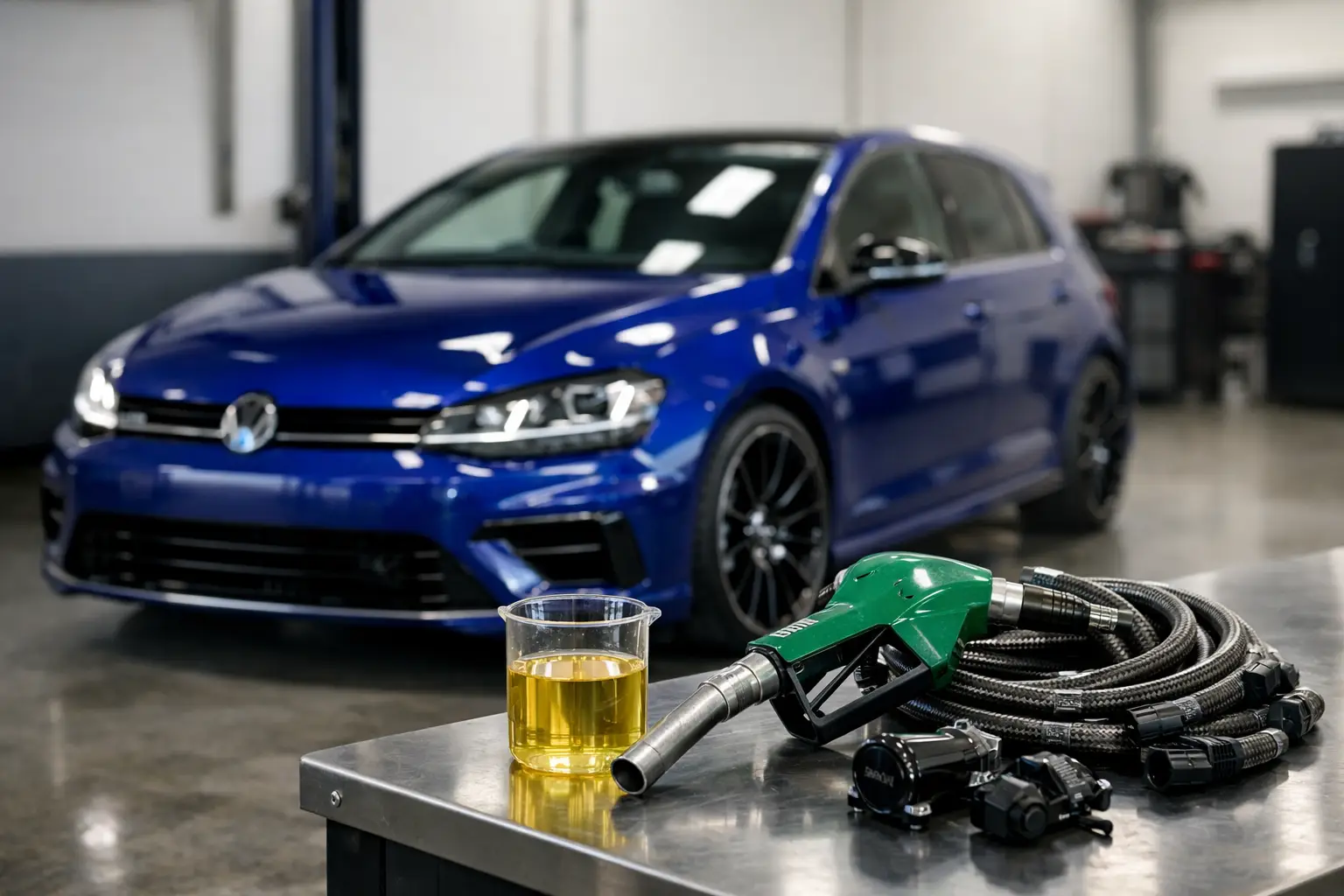
Ethanol contains less energy per gallon than gasoline, so the engine needs more fuel volume to make the same power. At E30, the added demand is manageable on many well-sorted stock-turbo builds. At E85, the demand rises sharply. That is where the low-pressure fuel pump, high-pressure pump, injectors, and tuning strategy become limiting factors rather than optional upgrades.
An E30-specific map is also different from pouring an estimated blend into the tank and hoping a 93-octane file adapts. Some factory control logic can make timing adjustments, but it is not a substitute for a calibration built for the actual ethanol content in use. The safest setup uses a tune matched to the blend, verified fuel quality, and regular logging.
What Changes With an E85 Golf R Setup
Now move the example to a Golf R with a hybrid turbo or larger turbocharger, upgraded intercooler, intake tract, exhaust hardware, and a tune targeting E60 to E85. At this level, the stock fuel system is usually no longer the complete answer.
A typical supporting package may include an upgraded in-tank low-pressure fuel pump, a higher-capacity high-pressure fuel pump, and, depending on turbo size and calibration, supplemental port injection or another approved fueling solution. The DSG also needs a transmission calibration capable of raising torque limits, refining shift behavior, and maintaining clutch pressure for the new load level.
Power potential can move into the 450 to 550-plus wheel horsepower range with the right turbo and full supporting combination. The range is intentionally broad because a hybrid turbo, a true big-turbo package, engine condition, elevation, and dyno methodology all change the outcome. A stock long block can tolerate impressive output when tuning and torque delivery are controlled, but a large peak number is not a guarantee of long-term reliability.
At this point, build quality becomes more important than the ethanol label on the pump. A car with inadequate fueling, weak charge-air cooling, or poor calibration can be less reliable at E60 than a properly engineered E85 build making more power.
Hardware That Supports the Calibration
A Golf R ethanol tune should be built around the narrowest component in the system. On a basic E30 stock-turbo car, that may be charge-air temperature control or spark consistency. On a larger-turbo E85 car, it is often fuel delivery.
Start with the platform basics: a quality intake and turbo inlet, intercooler sized for the intended use, and spark plugs appropriate for the tuner’s specified heat range and gap. For hard street use, road course sessions, or repeated drag-strip passes, cooling upgrades deserve serious attention. A single clean pull can hide a heat problem that appears on the third or fourth run.
Fueling should be selected based on measured demand, not forum assumptions. A low-pressure fuel pump upgrade improves the supply feeding the high-pressure side. A high-pressure pump can provide additional capacity where the direct-injection system begins to run out of room. Supplemental fueling can be necessary on high-output combinations, but it adds installation, calibration, and maintenance considerations.
Do not overlook the drivetrain. The DSG is highly capable, but it needs software that matches the ECU tune’s torque request. Manual-transmission cars may require a clutch upgrade well before the engine reaches its potential. Engine and transmission mounts, tires, brakes, and suspension are not horsepower parts, yet they determine whether the car can apply its output predictably.
Logging Is the Difference Between Tuned and Verified
A tune file is the beginning of the process, not the final inspection. Datalogging confirms that boost, fuel pressure, ignition timing, air-fuel ratio, intake-air temperature, and knock correction are behaving as expected.
For an E30 Golf R, owners should pay close attention to actual ethanol content, high-pressure fuel performance, and ignition correction during full-load pulls. For E85 and big-turbo builds, low-pressure fuel supply becomes equally critical. Pressure that falls off under load is a warning sign, even if the car still feels fast.
Logs should be reviewed after major changes such as switching fuel stations, changing blend targets, installing a new hardware component, or moving from cold-weather tuning to summer heat. A fuel-content sensor and flex-fuel-capable calibration can reduce the guesswork for drivers who cannot source consistent ethanol, although compatibility depends on the ECU solution and model year.
The Trade-Offs of Running Ethanol
Ethanol’s performance advantage is real, but it is not free. Fuel economy generally decreases. Cold starts can require more attention in low-temperature climates. Availability is inconsistent in some areas, and the ethanol percentage from an E85 pump can vary seasonally.
There is also the convenience factor. Blending E30 manually can mean calculating gallons at every fill-up unless a flex-fuel system handles changing content. Drivers who want maximum simplicity may be better served by a premium-pump-gas tune with excellent cooling and conservative timing. Drivers with easy access to verified ethanol and a goal of extracting more from the factory turbo will see a clearer benefit from E30.
For emissions-controlled street vehicles, confirm local laws and inspection requirements before choosing hardware or calibration changes. Off-road or competition components are not automatically legal for public-road use simply because they are common in the performance market.
Build for the Fuel You Can Actually Use
The strongest Golf R setup is rarely the one with the largest ethanol percentage. It is the one matched to your daily fuel access, driving style, power target, and willingness to monitor the car. An E30 stock-turbo Golf R with premium cooling, a proven tune, and clean logs can be a more satisfying package than an E85 build that is constantly short on fuel supply or dependent on inconsistent pump content.
Choose components by engine code, turbo configuration, and intended ethanol blend, then verify the package before leaning on it. If you need help matching premium fueling, intercooler, intake, and drivetrain parts to an MQB build, EAS Store can help narrow the combination to one that makes sense before the first tank of ethanol goes in.