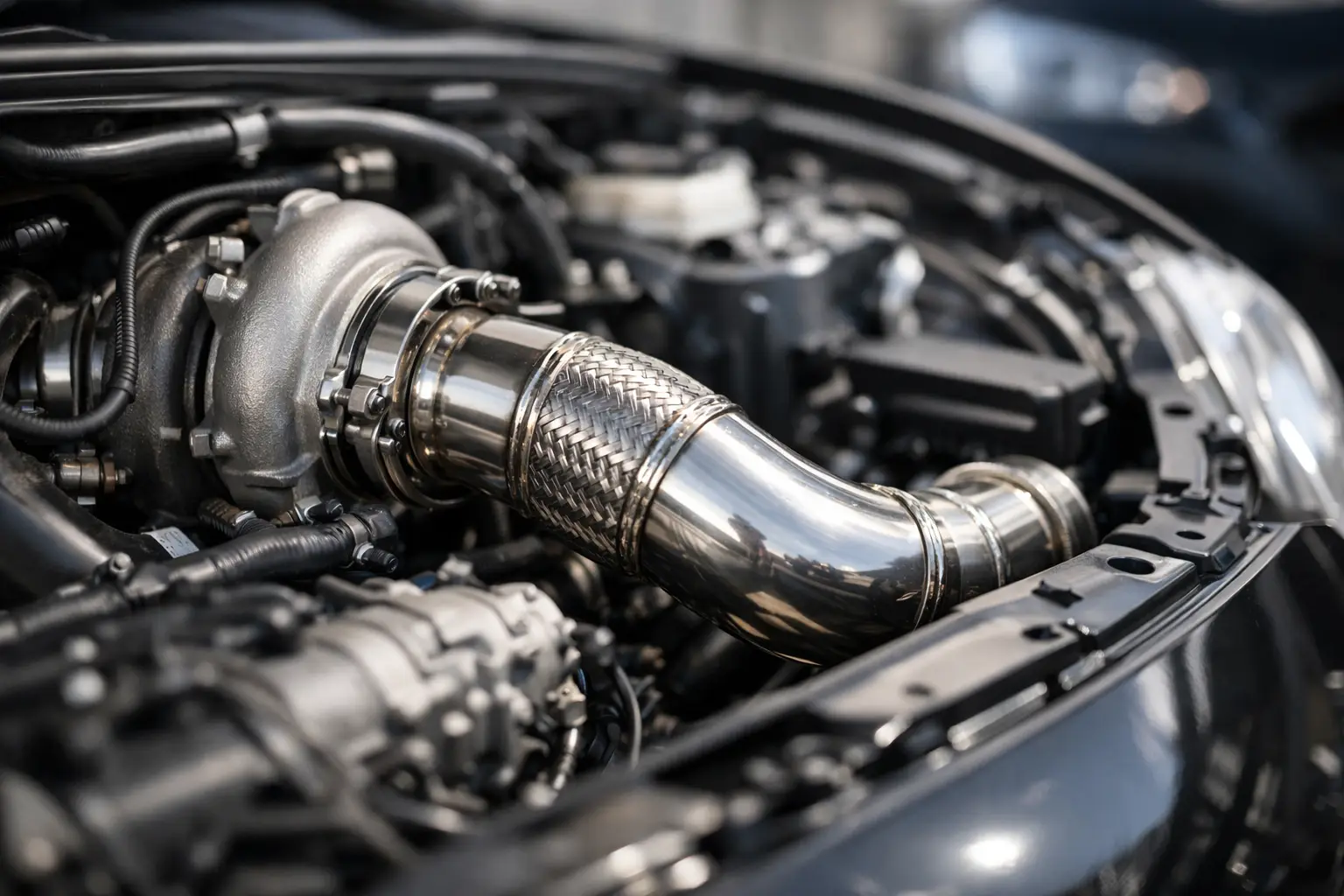
A turbine housing sitting inches from an intake, coolant lines, wiring, and a composite engine cover can turn an otherwise well-planned build into a heat-management problem. The turbo blanket versus ceramic coating decision is not about choosing the most expensive part. It is about deciding where heat needs to stay, what components need protection, and how your specific street, track, or high-horsepower application will be used.
For turbocharged European performance cars, this choice becomes more relevant as boost, exhaust gas temperature, and underhood packaging increase. An MQB big-turbo build, an Audi 2.5TFSI setup, or a BMW S58 running upgraded turbos all place more thermal demand on the hot side than the factory arrangement was designed to manage. Both solutions can help, but they do different jobs.
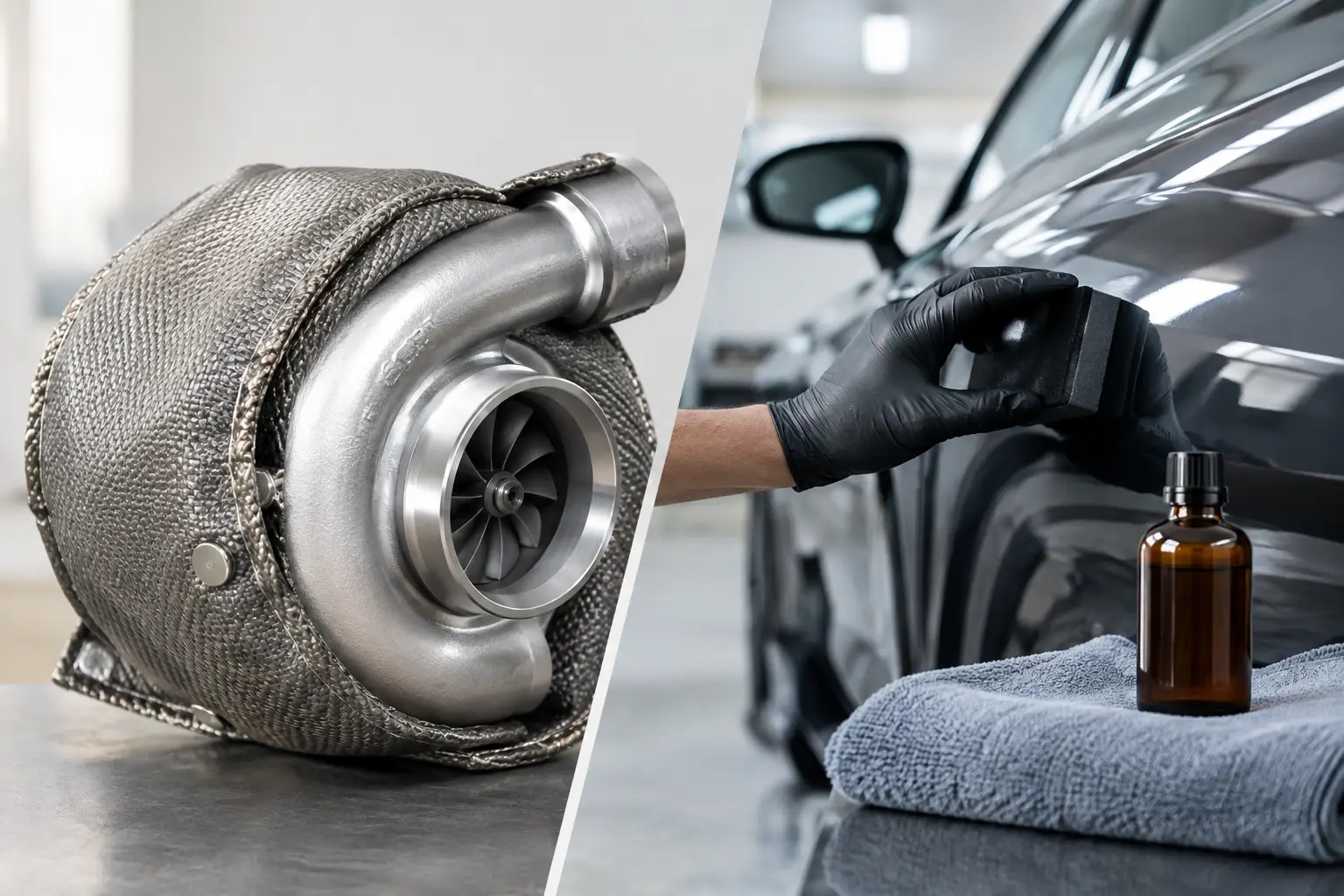
Turbo Blanket Versus Ceramic Coating: The Core Difference
A turbo blanket is a removable insulating cover that wraps around the turbine housing. Its primary purpose is to contain radiant heat at the turbocharger, reducing the temperature exposure of nearby hoses, wiring, intake components, brake reservoirs, and other underhood parts. It also helps retain exhaust heat within the turbine housing, which can support turbine energy and response.
Ceramic coating is a heat-resistant coating applied to the surface of a turbine housing, exhaust manifold, downpipe, or other exhaust component. It acts as a thermal barrier and reduces radiated heat from the coated part. A quality high-temperature ceramic coating can also improve corrosion resistance and give fabricated or cast components a cleaner, more durable finish than bare steel or iron.
The important distinction is insulation level. A properly fitted turbo blanket generally delivers a more dramatic reduction in radiant heat around the turbine housing. Ceramic coating provides a broader, lower-profile thermal-management solution that is especially useful across manifolds, exhaust sections, and components where a blanket cannot be fitted.
When a Turbo Blanket Is the Better Choice
A turbo blanket makes the most sense when the turbine housing is the dominant heat source in a tight engine bay. This is common with aftermarket turbo kits, upgraded stock-location turbos, and vehicles that place plastic intake plumbing, charge pipes, wiring looms, or fluid reservoirs close to the hot side.
On a hard-driven street car or track build, reducing radiant heat around the turbo can help protect components that were never intended to live beside sustained high exhaust gas temperatures. It can also lower underhood heat soak after a session or a full-boost pull. That does not mean every intake air temperature issue disappears, but it removes one major source of heat radiating into the engine bay.
Blankets are particularly effective when they are designed around the exact turbo frame and turbine housing. Fitment matters. A loose universal blanket can leave major gaps, contact an actuator or wastegate hardware, rub against lines, or shift over time. For internally wastegated turbos, confirm that the blanket has correct clearance for the actuator, lever, and linkage before ordering.
The trade-off is that a blanket holds more heat at the housing. That is the point, but it also means the turbocharger and surrounding hardware must be appropriate for the application. High-quality materials, secure fastening, and correct installation are not optional on a serious build. Cheap blankets can deteriorate, shed fibers, fit poorly, or become saturated if there is an oil leak.
Before installing one, fix any leaking valve cover, turbo oil-feed fitting, drain connection, or breather issue. An oil-soaked blanket is not a performance upgrade. It is a fire risk.
Best uses for a turbo blanket
A turbo blanket is usually the stronger option for a tight engine bay, a stock-location upgraded turbo, or a build where the goal is maximum protection from turbine-housing radiant heat. It is also a smart choice when intake routing or critical wiring must run near the turbocharger and there is no practical room to relocate those parts.
For competition use, where repeated heat cycles and high EGT are expected, choose a blanket rated for the application rather than treating it as a universal accessory. Turbine size, housing shape, external wastegate placement, and engine-bay airflow all affect what will fit and last.
When Ceramic Coating Is the Better Choice
Ceramic coating is the cleaner answer when coverage needs to extend beyond the turbocharger. Exhaust manifolds, tubular headers, up-pipes, downpipes, and crossover pipes can all radiate substantial heat. Coating these components reduces their thermal impact without adding bulk, straps, or clearance concerns.
It is especially useful for fabricated exhaust parts that sit close to bodywork, steering shafts, wiring, or suspension components. On a custom turbo system, coating the manifold and turbine housing can create a more controlled thermal environment while preserving access to clamps, fasteners, and wastegate hardware.
Ceramic coating also makes sense for owners who want a permanent, low-maintenance finish. Unlike a blanket, it does not need to be removed to inspect the turbo housing. A properly prepared and cured coating becomes part of the component, making it well suited to parts that are difficult to access once installed.
But coating quality matters as much as the coating itself. The part must be cleaned and prepared correctly, and the product must be rated for the temperature range it will see. A low-grade cosmetic coating may discolor, flake, or fail under the sustained heat of a modified turbo engine. Coating a component does not compensate for poor tuning, excessive backpressure, an overworked turbocharger, or uncontrolled EGT.
Ceramic coatings are also not as effective as a blanket at isolating the turbine housing from the engine bay. If your priority is shielding a nearby intake pipe or protecting heat-sensitive electronics beside the turbo, a coating alone may not be enough.
Best uses for ceramic coating
Ceramic coating is ideal for manifolds, headers, downpipes, and turbo housings where long-term corrosion protection and reduced radiant heat are the goal. It is often the better first investment on a custom setup with extensive exposed hot-side plumbing, especially when packaging does not allow a blanket around every critical area.
It can also be the practical choice for vehicles where frequent inspections are required. There is no cover to remove, reinstall, or monitor for contamination.
Performance Gains: What You Should Expect
Both products are often marketed with horsepower claims, but heat management should be the primary reason to buy either one. Retaining exhaust energy can support turbo efficiency and response, particularly in high-output applications, but the real-world result depends on the turbo, manifold design, turbine sizing, tune, boost target, and backpressure.
Do not expect a blanket or coating alone to transform spool on a properly sized turbo system. The benefits are more often seen in component protection, lower surrounding underhood temperatures, and improved consistency when the car is repeatedly heat-soaked. Those gains matter. They just should not be confused with a major standalone power modification.
On a street-driven car, lower heat exposure can help preserve nearby plastic connectors, vacuum lines, coil harnesses, and intake components over time. On a track car, it can reduce the punishment placed on everything surrounding the exhaust side during long sessions. For an 800-horsepower build, it may be the difference between a clean engine bay and a recurring battle with cooked wiring and heat-damaged hardware.
Can You Run Both?
Yes. In fact, a ceramic-coated manifold and turbine housing combined with a correctly fitted turbo blanket is often the strongest approach for demanding builds. The coating manages heat across the wider hot-side system, while the blanket provides the highest level of insulation at the turbocharger itself.
This combination is not automatically necessary for every Stage 1 or Stage 2 street car. If the factory turbo is retained, packaging is generous, and there are no heat-sensitive components nearby, the cost may be better spent on cooling, maintenance, or a more effective intercooler solution. Thermal upgrades should address a known weakness, not simply fill space in the engine bay.
If both are used, pay close attention to service access. Make sure the blanket does not interfere with wastegate operation, V-band clamps, oxygen sensor wiring, or oil and coolant fittings. After the first few heat cycles, inspect for rubbing, discoloration, loose fasteners, and any sign of fluid contamination.
Choose for the Build, Not the Hype
Choose a turbo blanket when turbine-housing heat is threatening nearby components and you need the greatest reduction in radiant heat. Choose ceramic coating when you want durable, low-profile thermal control across manifolds, exhaust tubing, and other hot-side parts. Use both when the vehicle sees sustained high load and the budget supports a complete heat-management plan.
The right answer starts with accurate fitment, turbo configuration, and a realistic look at how the car is driven. If you are unsure whether a blanket will clear your actuator or which coated components offer the best return, EAS Store can help narrow the options before parts are ordered. Heat management works best when it is planned around the entire build, not added after the next hose or harness fails.