Heat is what separates a quick pull from a repeatable fast car. On the 8V and 8Y Audi platform, an upgraded oil cooler for RS3 becomes relevant the moment the car sees hard back-to-back runs, track time, hot climate driving, or meaningful power increases. The factory system is competent for normal street use, but once oil temperature starts climbing and staying there, performance, consistency, and long-term durability all get dragged into the conversation.
Why the RS3 Starts Asking for More Cooling
The RS3’s 2.5 TFSI is a serious engine, and that is exactly why cooling matters. It makes dense power from a compact package, and when you raise boost, ethanol content, turbo size, or sustained load, you also raise the thermal burden on the oiling system. Oil is not just lubrication here. It is also a heat management tool, and when it gets too hot for too long, you are asking one fluid to do too many jobs at once.
This is where owners often get tripped up. Coolant temperature may still look manageable while oil temperature keeps creeping into a range that affects viscosity, pressure stability, and overall confidence. The car might not feel obviously slower on a short street hit, but repeated pulls can expose the problem fast. On track, it becomes even clearer. A car that feels excellent for two laps can start softening power delivery, forcing shorter sessions, or putting the driver in the position of managing temperature instead of driving.
What an Upgraded Oil Cooler for RS3 Actually Changes
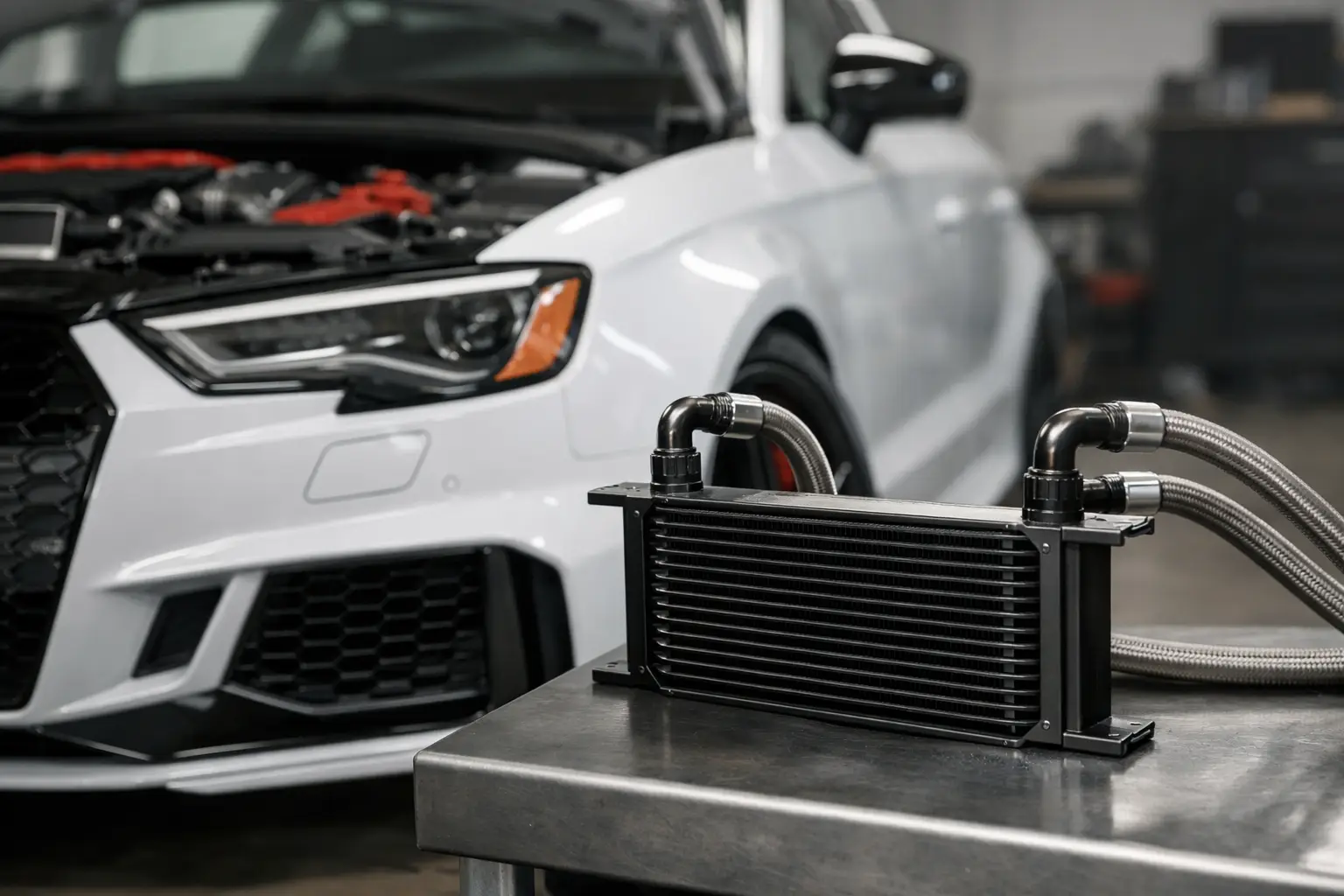
An upgraded oil cooler for RS3 is not magic, and it does not solve every heat issue on the car. What it does is improve the system’s ability to reject heat from the oil under sustained load. That usually means lower peak oil temperatures, slower temperature rise during repeated abuse, and faster recovery once airflow improves.
In practical terms, that gives you more consistency. Consistency is what serious enthusiasts pay for. It is the difference between one clean dyno number and a setup that holds together in summer traffic, on a roll race night, or through a full session at the road course.
There is also a protection angle that should not be ignored. High-output RS3 builds often focus heavily on fueling, turbo hardware, and intake air temperature control. Those are all valid priorities, but oil temperature has a direct relationship with long-term engine health. Lower and more stable oil temps can support better lubrication behavior and reduce the punishment your engine sees when driven the way an RS car is actually driven.
Street Car, Drag Car, or Track Car? It Depends
Not every RS3 needs the same cooling package. A mostly stock street car in a mild climate may never truly outgrow the factory oil cooler. If the car sees occasional spirited driving and no sustained high-load use, the OEM system can remain perfectly acceptable.
The equation changes when the car is tuned, especially on ethanol blends or with a larger turbo. More power means more heat, and the stock margin starts to shrink. Drag racing also adds nuance. A dedicated drag setup may not need the same kind of sustained thermal control as a road course car, but repeated hot lapping, staging, and short turnaround times can still push oil temperature beyond what owners expect.
Track use is where the case gets strongest. If your RS3 is doing 15- to 20-minute sessions, especially in warm weather, upgraded oil cooling quickly moves from nice-to-have to smart insurance. The same applies to mountain driving, half-mile events, and any use case where airflow, power output, and duration combine to overwhelm stock thermal capacity.
Signs the Stock Oil Cooler Is Reaching Its Limit
You do not always need a data engineer’s spreadsheet to know the car wants more cooling. If you are seeing oil temperature climb rapidly during repeated pulls, if the car feels less consistent later in a session, or if you are modifying the engine faster than the cooling system, those are all signs worth taking seriously.
Another clue is the type of build you are assembling. Once you are investing in larger turbo systems, more aggressive calibration, upgraded fueling, and supporting hardware, leaving oil cooling untouched starts to look like an imbalance. The RS3 platform rewards complete builds, not partial ones.
Shops know this well. The cars that stay happy at elevated power are usually the ones built with a full systems mindset. Cooling is not the glamorous part of the project, but it is often the part that keeps the glamorous parts alive.
Choosing the Right Upgraded Oil Cooler for RS3
Fitment and intended use matter more than chasing the biggest core on paper. A well-designed kit should match the RS3 chassis properly, route cleanly, and maintain dependable flow without creating new headaches. Core size, line quality, mounting strategy, and thermostat integration all deserve attention.
Thermostatic control is one of the most overlooked details. On a street-driven car, you do not want oil running unnecessarily cold in normal conditions. A quality thermostatic solution helps the system warm up correctly, then increases cooling when the car actually needs it. That balance matters for both drivability and engine health.
Airflow is another big part of the conversation. An oil cooler is only as effective as the air reaching it and passing through it. Front-end packaging on the RS3 can get crowded quickly once you add intercooler upgrades and other supporting hardware. The best solution is not always the physically largest unit. It is the one that fits the car’s overall thermal package without choking airflow or complicating service access.
Build quality also separates premium components from parts that only look good in photos. Oil cooling hardware lives in a harsh environment. Heat cycles, vibration, pressure, and road debris all matter. Serious buyers should be looking for proven engineering, quality hose and fitting standards, and application-specific design instead of generic universal setups.
Trade-Offs You Should Know Before Buying
There are trade-offs, and pretending otherwise is not helpful. A larger external oil cooler system can add complexity, installation time, and cost. Depending on the kit, you may introduce more lines, more fittings, and more packaging demands in an already tight front-end area.
There is also the question of overbuilding. If your RS3 is a lightly modified street car that rarely sees sustained abuse, an expensive cooling upgrade may not move the needle enough to justify the spend. In that case, your money may be better used on tires, brakes, maintenance, or a more complete tuning path.
On the other hand, if you are already managing elevated oil temps or planning a higher-output setup, waiting too long can be the more expensive choice. Cooling upgrades often feel less exciting than power parts right up until the day they become the reason the power parts keep working.
Installation and Compatibility Matter More Than People Admit
This is not a category where buyers should guess. The RS3 has platform-specific considerations, and compatibility can change with model year, bumper configuration, intercooler choice, and other installed hardware. If the car already has a stack of aftermarket components, confirming fitment becomes even more important.
That is where dealing with a specialist supplier pays off. A premium parts source with real platform experience can help you avoid mismatched kits, unnecessary fabrication, or cooling solutions that fight the rest of the build. At EAS Store, that consultative approach is part of the value. Serious performance parts should come with serious fitment guidance.
Installation quality matters too. A great oil cooler kit installed poorly is still a problem. Proper line routing, secure mounting, clean clearance around moving and hot components, and careful system priming are not details to rush through. If the car is mission-critical for events or customer delivery, this is one of those upgrades worth doing once and doing correctly.
So, Is an Upgraded Oil Cooler for RS3 Worth It?
For the right car, absolutely. If your RS3 is tuned aggressively, driven hard, or used in conditions that keep oil temperature elevated, upgraded oil cooling is one of the smarter supporting mods you can buy. It protects consistency, helps preserve engine confidence, and supports the kind of repeatable performance enthusiasts actually notice.
If your car is mostly stock and street-driven, the answer is more conditional. It may not be urgent today, but it is still worth planning around if your build sheet includes more power, more grip, and more sustained use in the near future. The best time to think about heat management is before heat management starts making decisions for you.
A fast RS3 is easy to build on paper. A fast RS3 that stays composed when the temperature climbs is where the parts selection starts to matter.