Anyone shopping built engine parts for S58 usually gets to the same point fast – the stock engine is impressive, but the build plan is moving beyond simple bolt-ons and conservative tune files. That is where part selection starts to matter a lot more than brand hype. On the S58, a smart build is not about replacing everything at once. It is about reinforcing the right areas for your power target, fuel choice, and how hard the car will actually be used.
When built engine parts for S58 actually make sense
The S58 has earned a strong reputation because BMW gave it a serious foundation. Closed-deck architecture, capable head flow, and factory turbocharged performance make it far more than a fragile modern performance engine. That is exactly why so many owners overshoot the decision point. They assume that because the engine is stout, built internals are either never needed or only needed for extreme drag cars. Neither view is especially useful.
For a street-driven G80, G82, or G87 running moderate power on quality tuning, cooling, and fueling support, the factory long block can carry a lot. But once the conversation turns to higher boost pressure, repeated track heat, ethanol-heavy tuning, upgraded turbos, or a margin of safety for long-term abuse, built engine parts become less of a flex and more of an insurance policy.
That does not mean every S58 should get a full tear-down. It means the parts list should match the risk. A car chasing dependable four-digit crank horsepower has very different needs than a street car looking for clean, repeatable performance in the 700 to 800 wheel range.
The core S58 bottom-end decisions
When enthusiasts talk about built engine parts for S58, they are usually focused on the bottom end first. That is the right place to start because cylinder pressure is what forces the issue.
Pistons
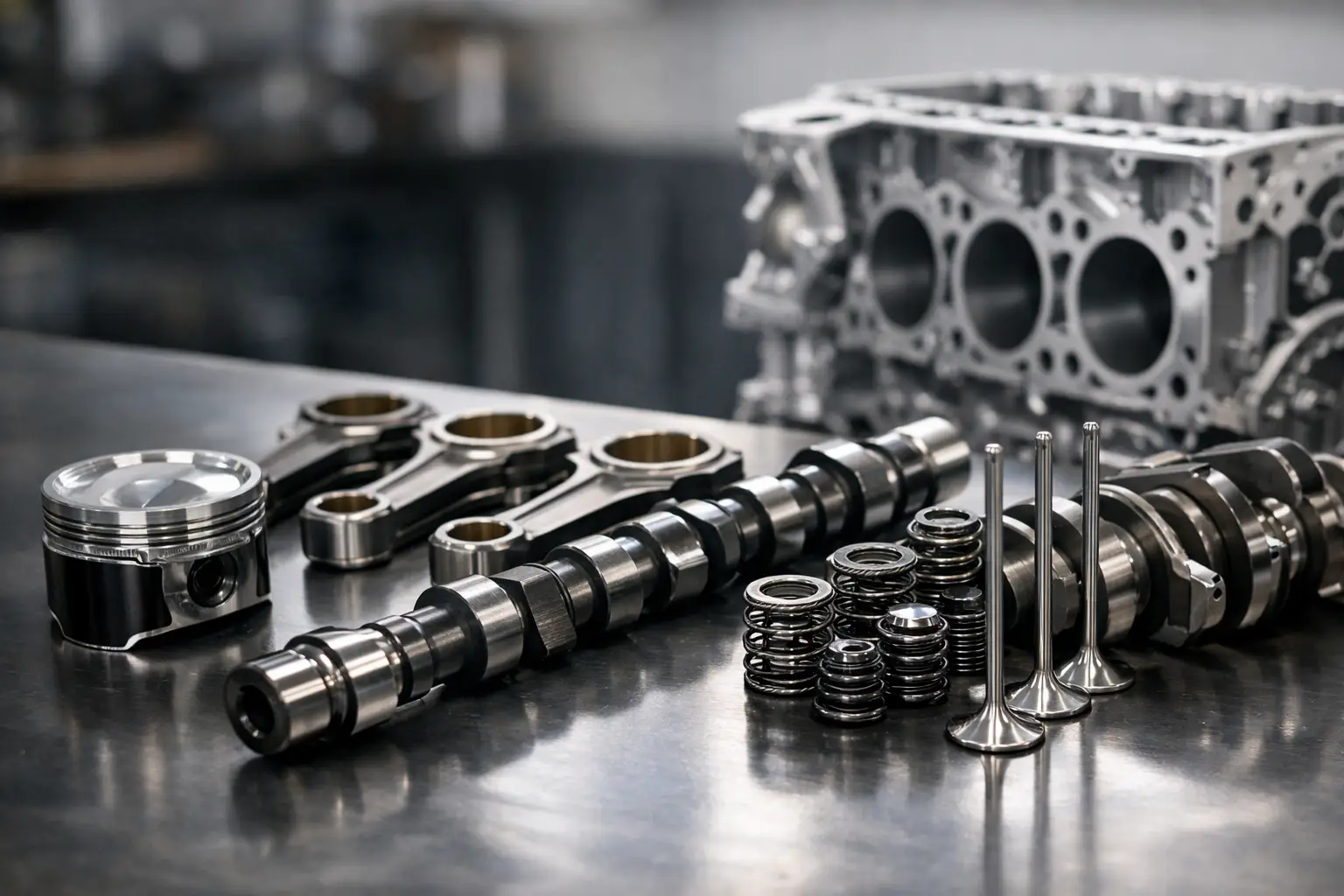
Forged pistons are often one of the first serious upgrades considered for high-output S58 builds. The reason is simple – once boost, heat, and detonation risk go up, piston strength and ring land durability become more important. A quality forged piston set can also give the builder control over compression ratio, which matters if the car is being tuned around larger turbos or a specific fuel blend.
The trade-off is that pistons are not a casual upgrade. Proper clearances, coating quality, ring package selection, and tuning all matter. A forged piston on a poor calibration is still a bad combination. For many owners, pistons make the most sense when the engine is already apart or when the build target clearly exceeds what a stock rotating assembly should be asked to tolerate.
Connecting rods
Rods are usually part of the same conversation because they directly affect how much cylinder pressure the engine can survive over time. On a hard-used S58, especially one living on big torque and aggressive midrange boost, upgraded rods add confidence where stock parts begin to carry more risk.
Not every rod upgrade is equal. Material, beam design, fastener quality, and real-world track record matter more than marketing language. A premium rod from a proven manufacturer is the kind of part that supports a serious build. A cheap rod sold on headline specs alone can turn an expensive engine into scrap.
Rod bolts and main hardware
This is the category that gets skipped in too many builds. Fasteners are not exciting, but they are critical. Upgraded rod bolts, main studs, and head studs help maintain clamping force under the load levels that built S58 setups see. If you are increasing boost and cylinder pressure, hardware is not where you cut corners.
That said, more clamp is not always a universal win. The block, gasket strategy, machining quality, and intended use all affect what hardware combination makes sense. This is one of those areas where good support and application knowledge save time and money.
Cylinder head and valvetrain support
A lot of S58 buyers focus heavily on the rotating assembly and forget that airflow and valvetrain stability also matter once the build gets more serious. The stock head is capable, but the rest of the package has to support the rpm and boost demands.
Head studs and head gasket strategy
If the engine is coming apart, head clamping deserves attention. Higher combustion pressure can expose weaknesses quickly, especially on cars that see repeated full-load use. Upgraded head studs are a common move because they help keep the sealing system stable under stress.
The gasket choice depends on the exact build. Some combinations work well with an OE-style approach paired with better hardware, while more aggressive setups may justify a different sealing strategy. This is not a one-answer category. The right answer depends on boost level, surface finish, tuning quality, and how often the engine will be pushed hard.
Valve springs and valvetrain components
For many street builds, the stock valvetrain is not the first limit. For higher-rpm use or more aggressive turbo combinations, upgraded springs and related valvetrain parts can become more relevant. Valve control matters when you start extending the operating window of the engine beyond what BMW designed for factory use.
Again, this is where build discipline matters. Throwing valvetrain parts at a moderate-power setup just adds cost if the real bottleneck is elsewhere. But on a properly planned big-power S58, ignoring valvetrain support can leave the engine vulnerable where the owner least expects it.
Bearings, machining, and the parts behind the parts
Built engine parts for S58 are not only the visible hard parts listed in a catalog. Bearings, clearances, balancing, machine work, and assembly quality are what determine whether those premium components actually perform like premium components.
A forged rotating assembly with poor machine work is not a premium engine. Bearing choice has to fit the oiling strategy and intended use. Piston-to-wall clearance needs to reflect the alloy and operating temperature. Ring gap has to match boost and fuel. Balancing matters. Surface finish matters. None of this is glamorous, but this is where reliability is built.
For enthusiasts buying parts rather than commissioning a full engine, this is also why compatibility guidance matters so much. Even the right part can become the wrong part if it is matched with the wrong tolerance, wrong hardware, or wrong supporting setup.
Supporting parts that protect a built S58
Internal upgrades only make sense if the support system keeps up. On the S58, that usually means cooling, fueling, and crankcase management need to be looked at as part of the same project.
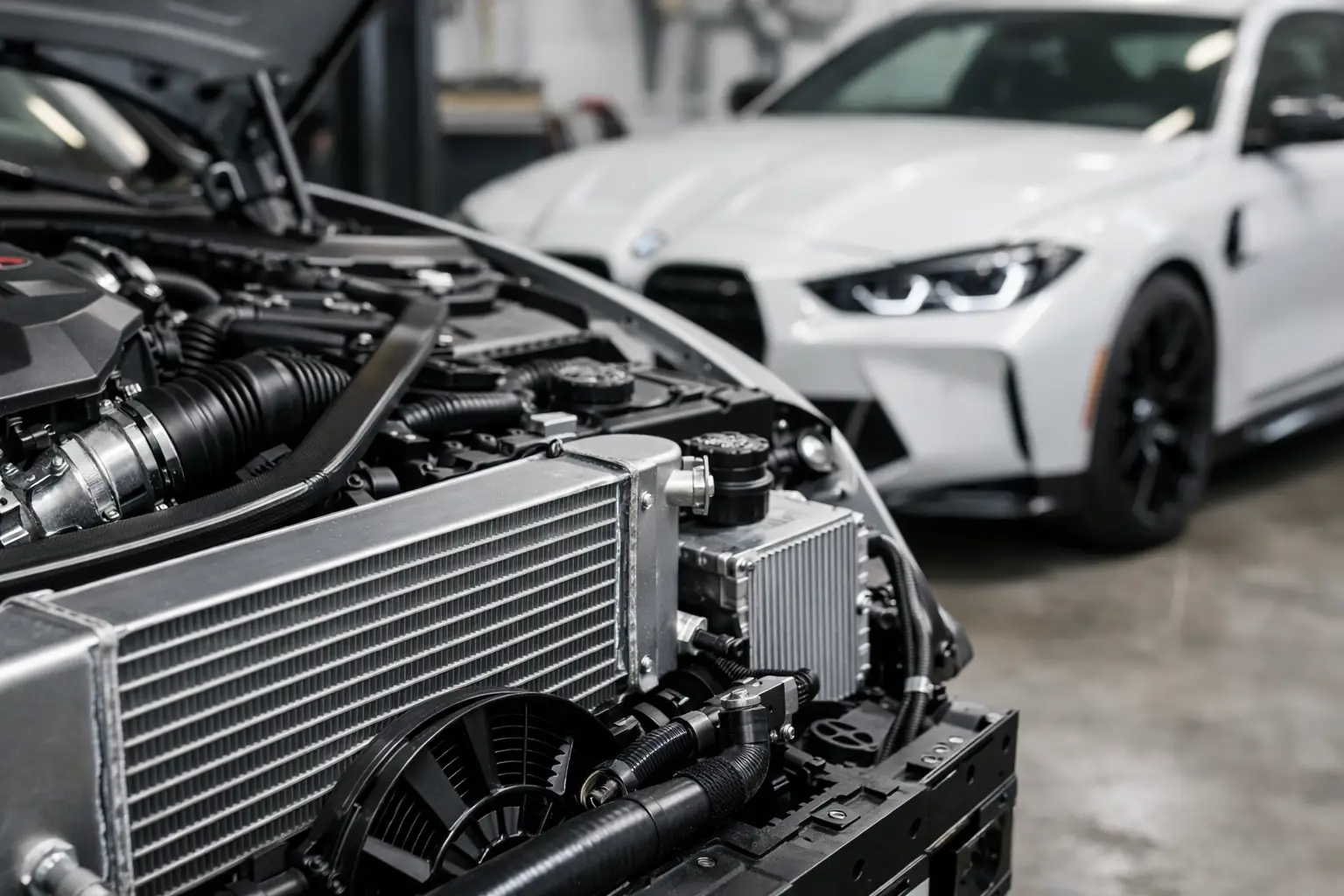
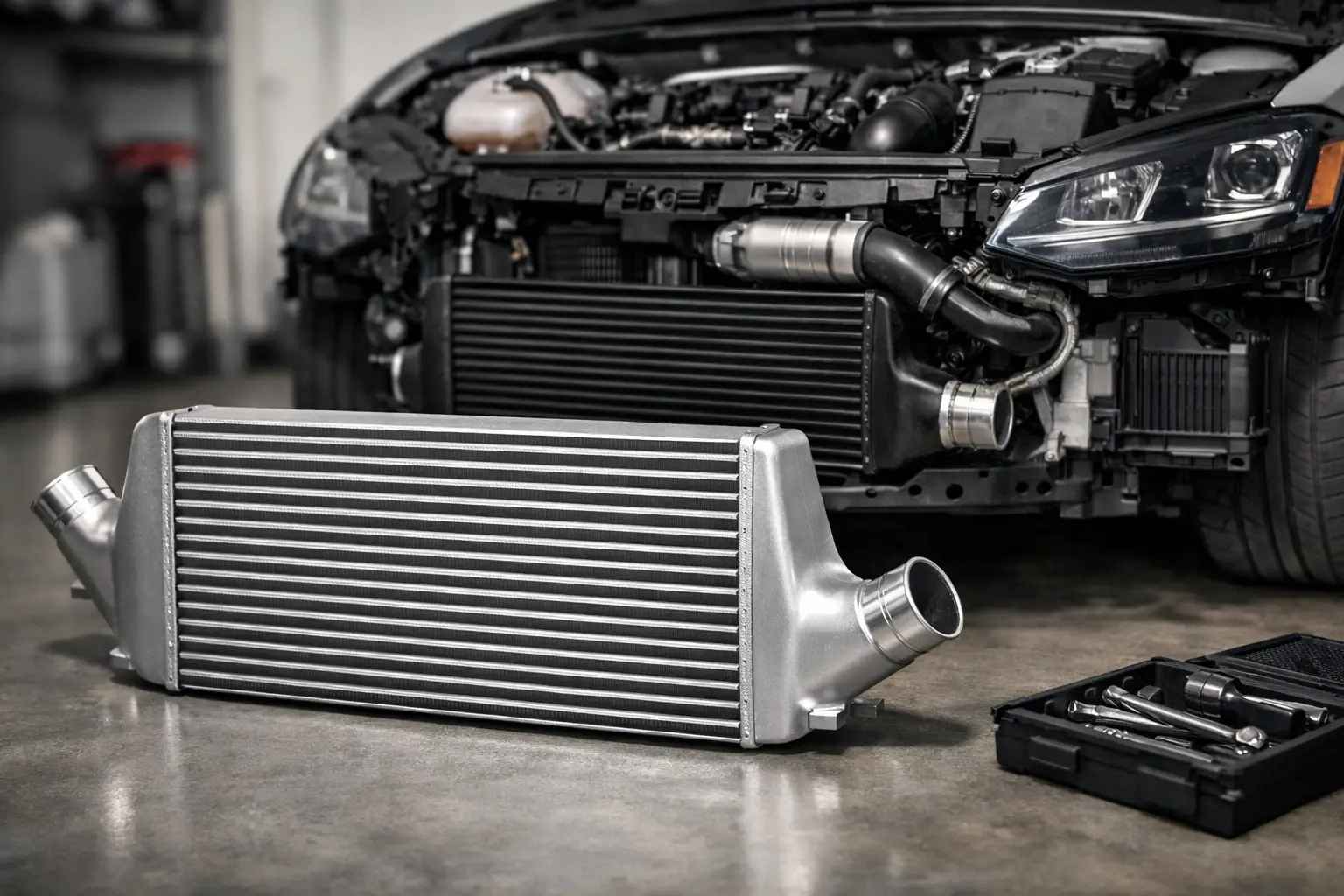
Cooling is a major one. More power means more heat, and repeated heat is what shortens the life of expensive components. Upgraded heat exchangers, radiators, oil cooling solutions, and charge-air support are not just performance parts. They are durability parts.
Fueling is the same story. A built engine still fails quickly if it goes lean or the tune outruns the system. If the car is moving into higher ethanol content or larger turbo territory, the fueling package has to be honest about demand. Shortcuts here are expensive.
Crankcase pressure control deserves more attention than it usually gets. Once boost and blow-by increase, the engine benefits from a properly thought-out venting strategy. It is not as exciting as pistons or rods, but it supports ring seal, oil control, and general engine health.
How to choose the right build level
The best S58 builds are usually not the ones with the longest parts list. They are the ones where the parts match the goal.
If the car is a fast street build with occasional spirited use, you may not need every internal upgrade available. If it is a dedicated roll-race car or drag setup with upgraded turbos and aggressive fuel, the margin for compromise gets smaller. If it sees track time, heat management and repeatability become just as important as peak output.
That is why serious buyers tend to shop with a narrower question than what is the best part. The better question is what is the best part for this exact S58 plan. Premium suppliers like EAS Store add value here because fitment, platform knowledge, and realistic guidance matter just as much as inventory.
Avoiding the common S58 build mistakes
The most common mistake is buying built internals too late, after the power plan has already outrun the safety margin. The second is buying them too early, before the owner has sorted the actual weak points in the full system. Both waste money, just in different ways.
Another mistake is mixing premium and bargain-bin parts in the same engine. One weak component can undermine the whole build. The same goes for chasing internet numbers without asking how the car was used, how long it survived, or what maintenance it required.
The S58 rewards a measured approach. It is a strong platform, but strength is not the same thing as invincibility. Once the build moves into serious horsepower territory, the right engine parts stop being optional extras and start becoming the foundation that lets the rest of the package work as intended.
If you are planning a real S58 build, buy parts the same way you plan power – with a clear target, honest supporting mods, and enough headroom to enjoy the car instead of worrying about the next pull.