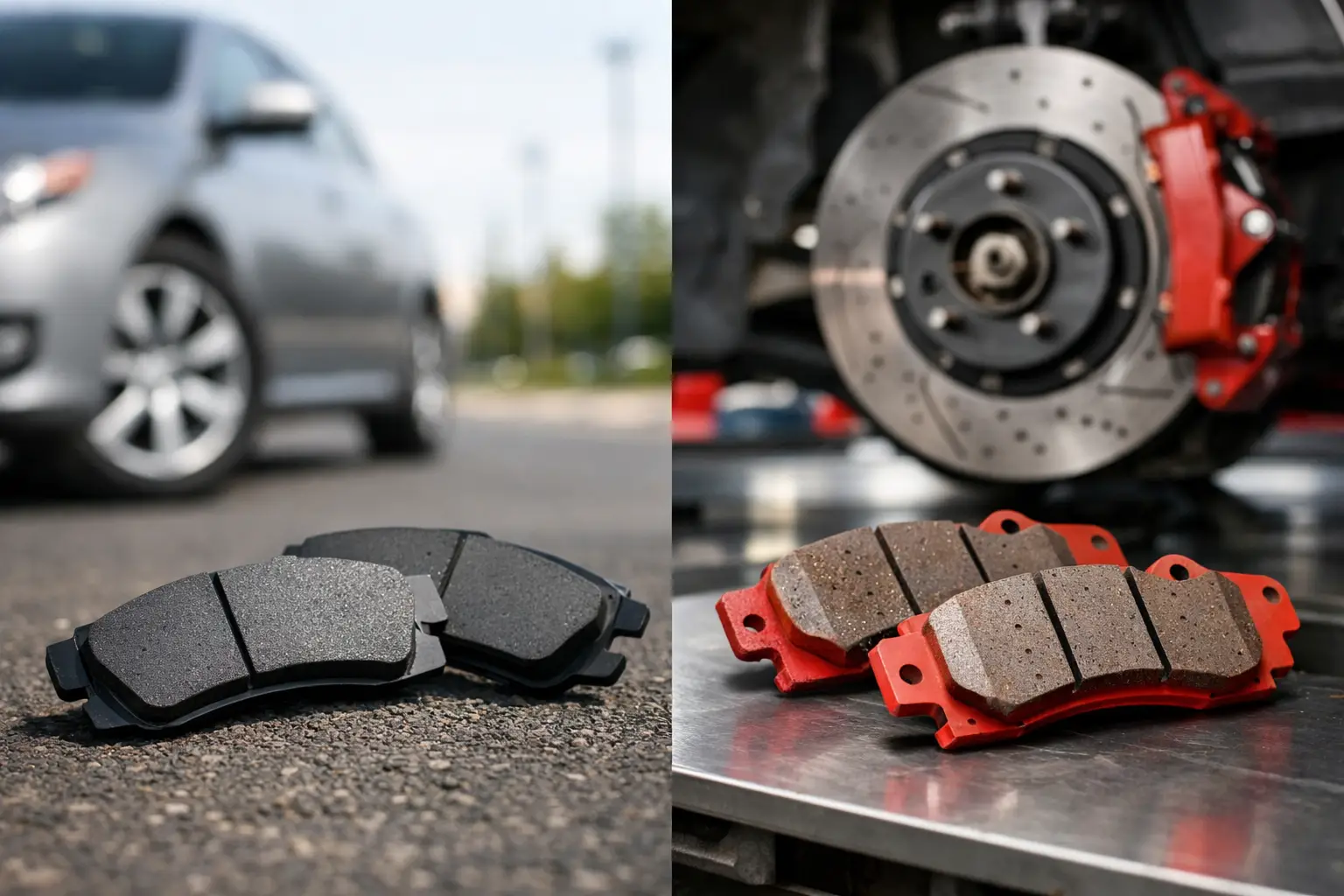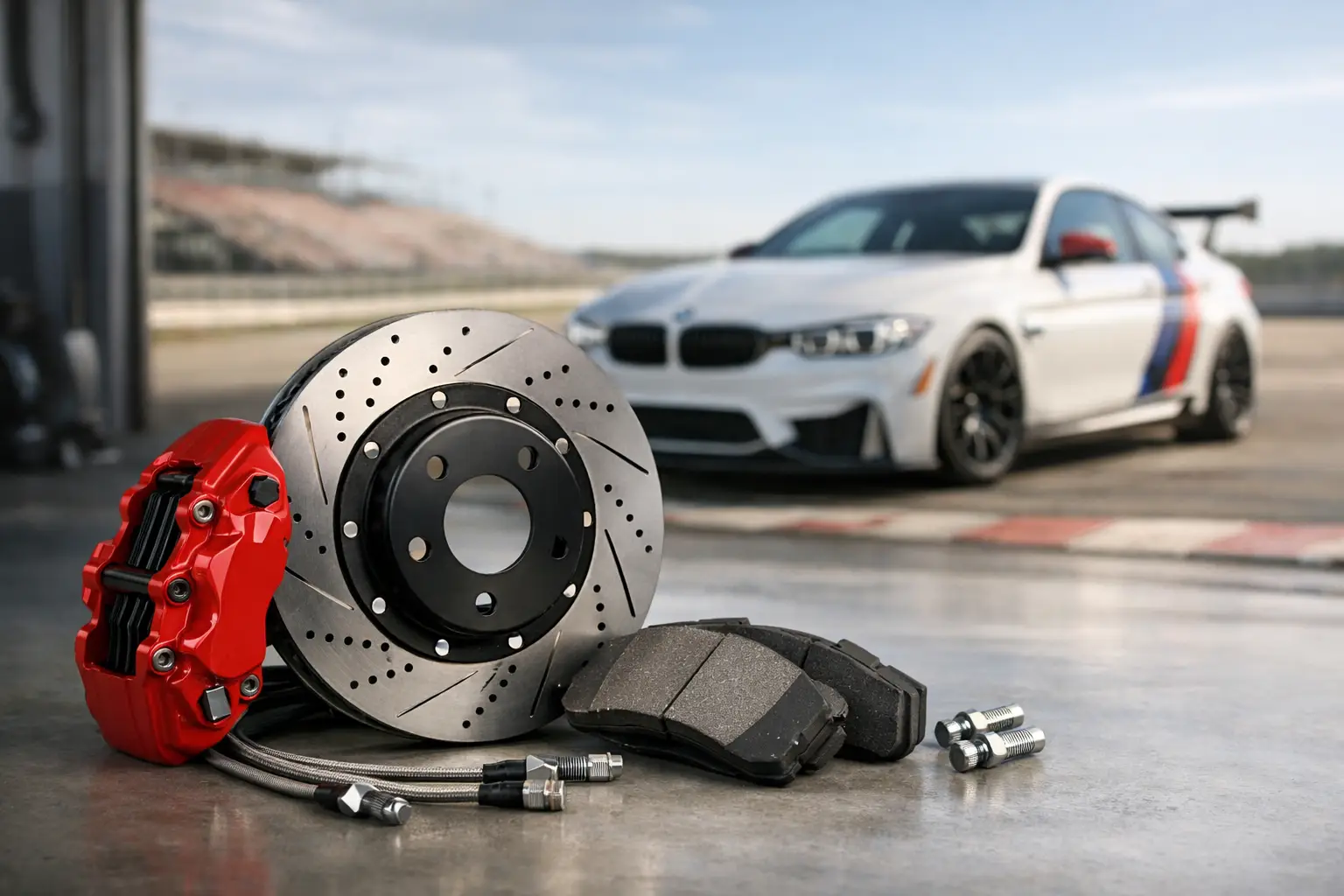
The first time an M3 cooks its factory brakes at the end of a long session, the problem gets very clear, very fast. Pedal travel grows, confidence drops, and lap time stops mattering because you are now managing heat instead of attacking corners. If you are shopping for the best brake kit for M3 track use, the right answer is not just the biggest rotor or the most expensive caliper. It is the kit that matches your chassis, tire, pace, and how hard you actually run the car.
What actually makes the best brake kit for M3 track use?
A proper track brake kit does three jobs better than stock. It manages heat, maintains pedal consistency, and gives you repeatable stopping power over a full session instead of one or two hard laps. That sounds simple, but this is where a lot of buyers overspend in the wrong places.
On an M3, brake demand changes dramatically depending on generation and setup. An E46 on 200-treadwear tires is asking something very different from a G80 with sticky rubber, aero, and significantly more speed at the end of the straight. The best brake kit for M3 track use is always application-specific. There is no single universal winner across every M3 platform.
Rotor mass matters because it is your heat sink. Caliper stiffness matters because it affects pedal feel and pressure consistency. Pad shape and availability matter because a fancy kit is less useful if your preferred compounds are hard to source. Then there is serviceability. Two-piece rotors, replacement rings, seal durability, and hardware quality all affect long-term value more than marketing claims.
Bigger is not always better
A common mistake is jumping straight to the largest front kit available. More rotor diameter can add leverage and thermal capacity, but it also adds cost, wheel clearance issues, and sometimes unnecessary front bias for lighter or less aggressively driven cars. If the car is mainly seeing HPDE days with moderate tire and power levels, a well-matched 4-piston front kit with quality pads and proper cooling can outperform a heavier, oversized setup that never gets fully used.
On heavier or faster M3 builds, especially F80 and G80 cars that carry real speed, a larger 6-piston front setup starts to make more sense. That extra thermal headroom is not just about ultimate stopping force. It is about keeping the same pedal and brake response on lap 8 that you had on lap 2.
The rear kit question is even more dependent on use case. Many track M3 owners benefit more from a serious front kit, aggressive fluid, track-capable pads, and brake cooling than from immediately converting all four corners. Rear upgrades can help balance, thermal capacity, and appearance, but they are not always the first dollar to spend.
Caliper design matters more than logo appeal
There is a reason experienced track drivers pay attention to caliper construction. A stiff monoblock caliper gives a firmer, more predictable pedal under repeated high-temperature braking. That predictability is worth real confidence when you are threshold braking from triple-digit speeds.
Piston sizing also matters. A well-engineered kit keeps hydraulic balance in check and spreads pressure evenly across the pad. That helps with pad wear and keeps the car from feeling strange at turn-in or during trail braking. Premium kits separate themselves here. They are not just visually impressive. They are engineered around piston area, rotor diameter, hat design, and thermal behavior.
This is why brand reputation in the braking space matters. Proven systems from established motorsport-focused manufacturers usually have better pad support, better replacement part availability, and more consistent results across real-world track use. On a platform like the M3, that support matters because these cars tend to be modified in stages, and your brake setup needs to keep up.
The rotor is doing more work than most buyers realize
If you are evaluating kits, spend less time looking at caliper color and more time looking at rotor design. Rotor diameter gets attention, but thickness, vane design, metallurgy, and ring replacement cost are just as important.
A quality two-piece rotor is usually the right move for track-focused M3 builds. It reduces unsprung weight compared with a comparable one-piece design, handles thermal expansion more effectively, and makes service easier over time. When the ring wears out or heat-checking gets excessive, replacing the rotor ring is more practical than replacing the entire assembly.
Curved vane designs are also worth paying for. They improve airflow and cooling efficiency, which directly affects fade resistance and component life. On a hard-driven M3, rotor quality is not a detail. It is the foundation of the system.
Pads, fluid, and cooling can make or break the kit
Even the best brake kit for M3 track use will disappoint with the wrong consumables. This is where many track-day cars get misdiagnosed. The owner blames the caliper when the real problem is a street-biased pad, tired fluid, or no airflow to the brakes.
Track pads change the system completely. They raise the operating ceiling, improve bite at temperature, and make the kit feel like it should. The trade-off is noise, dust, and often weaker cold performance on the street. That is why dual-purpose M3 owners need to be honest about use. If the car sees regular commuting, a dedicated track pad swap before events may be smarter than trying to live with an aggressive race compound full time.
Fluid is non-negotiable. High-temp racing fluid should be treated as baseline equipment for any tracked M3, whether it has stock calipers or a full big brake kit. The same goes for stainless lines if the system supports them and the car is being pushed hard.
Brake cooling deserves more respect than it gets. Ducting and airflow management can dramatically improve consistency and reduce pad and rotor wear. On some builds, adding proper cooling to an already solid kit gives better results than stepping up to an even larger brake package.
How to choose the right kit for your M3
The best way to shop is to start with your real operating conditions, not your wishlist. If you have an E9X or F80 that runs several events a year on aggressive street tires, a premium front big brake kit with a properly sized two-piece rotor, track pads, and fluid is usually the sweet spot. It gives meaningful thermal improvement without turning the car into a maintenance-heavy race build.
If your M3 is running R-compound tires, aero, extra power, or advanced-driver pace, step up in thermal capacity and pad support. At that point, larger front rotors and a stiffer multi-piston caliper become much easier to justify. The goal is not to impress people in the paddock. The goal is to finish sessions without managing fade.
Wheel clearance is another real filter. Some kits require specific spoke profiles or larger wheel diameters. An otherwise excellent package is the wrong choice if it forces a complete wheel change you did not budget for. Fitment accuracy matters, and this is where a specialist supplier such as EAS Store can save buyers from expensive mistakes.
Platform-specific reality checks
E46 M3 owners can get excellent results without going extreme. The car is lighter than newer generations, and many drivers see a major improvement from a balanced front kit, quality pads, fluid, and cooling. Unless the car is heavily built, there is no need to chase massive hardware.
E9X M3 cars ask more from the system because of weight and V8 speed. These cars respond well to real rotor mass and strong front caliper stiffness. If the car is driven hard, this is one of the generations where a serious front brake kit starts to feel less optional.
F80 M3 models combine speed, weight, and modern grip levels in a way that can overwhelm marginal setups quickly. A premium front kit is often the right answer for regular track use, especially once tire and power upgrades enter the picture.
G80 M3 owners should be realistic from the start. The platform is fast and heavy, and track pace comes easily. Brake demand is high. If the car is used aggressively, buying enough thermal capacity up front is usually cheaper than replacing undersized components later.
What separates a smart purchase from an expensive one
The smart purchase is the kit you can run, service, and get pads for without drama. It has proven pad options, replacement rings that are actually available, clear fitment data, and a track record on cars similar to yours. The expensive mistake is buying a visually impressive system with weak consumable support or sizing that does not match your pace.
For serious M3 track use, premium brake kits earn their price when they deliver consistency, serviceability, and confidence under heat. That is the standard to shop against. Not social media photos, not oversized calipers, and not vague claims about stopping power.
The right brake kit should make your car feel calmer at the end of the straight and easier to trust when the session gets hot. If you choose with that in mind, you will end up with a setup that works harder than it talks.