A B58 valve cover is easy to ignore until the engine bay smells like burned oil, the idle starts acting strange, or a previously clean engine develops a film around the cylinder head. On BMW’s turbocharged inline-six, the valve cover does more than seal oil inside the head. This BMW B58 valve cover guide explains why the cover and its integrated crankcase ventilation system matter, how to diagnose common failures, and what performance owners should consider before ordering replacement parts.
For a stock daily driver, a leaking valve cover may be an inconvenience. For a tuned B58 running elevated boost, upgraded fueling, frequent heat cycles, or track use, it can become a reliability issue that affects oil control, crankcase pressure, and drivability. The correct repair starts with identifying the actual problem, not simply replacing the first gasket that looks suspect.
What the B58 Valve Cover Does
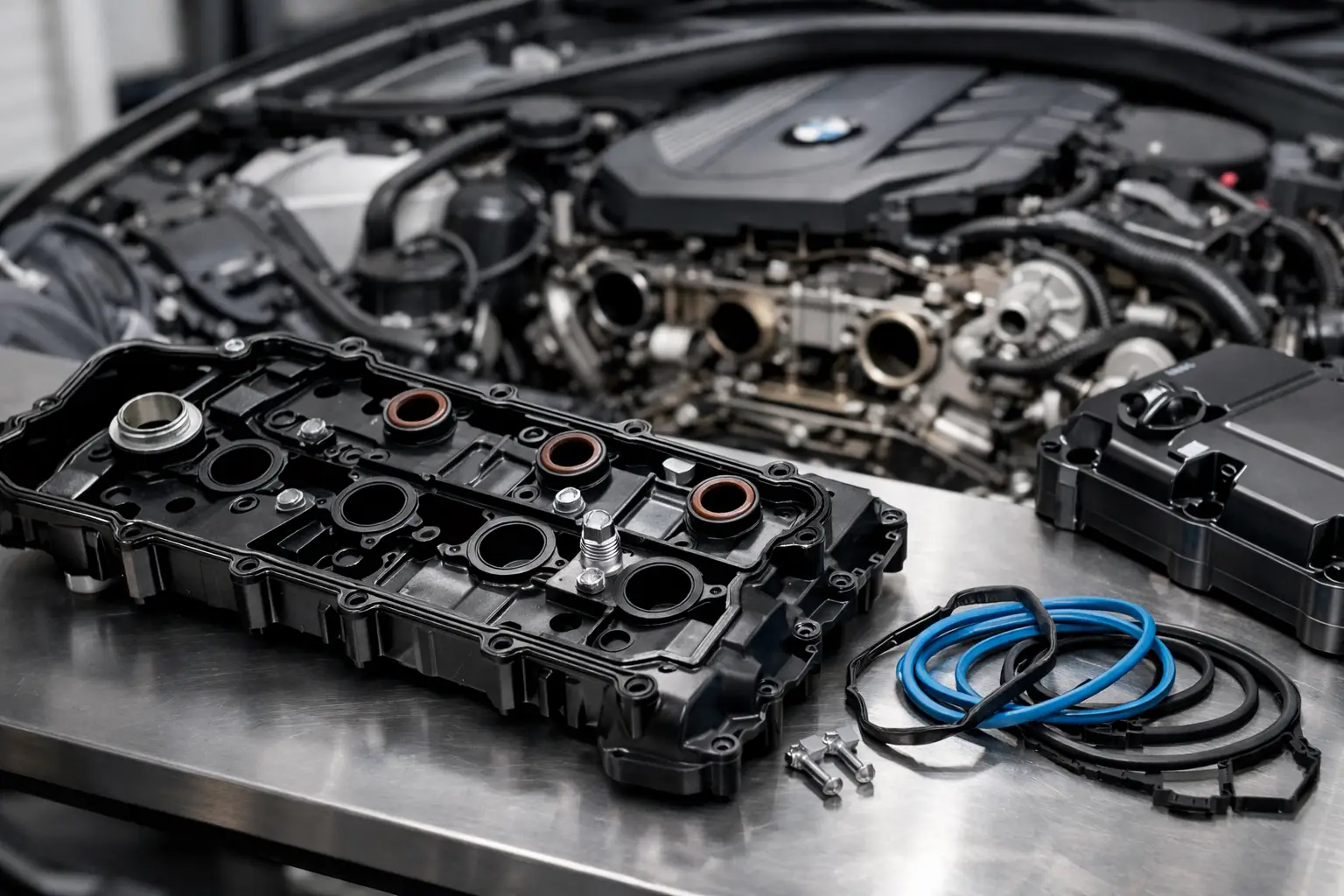
The B58 valve cover seals the top of the cylinder head and keeps engine oil contained around the valvetrain. BMW uses a composite cover design on many B58 applications, which helps reduce weight but also integrates components that deserve attention during diagnosis.
Most notably, the valve cover assembly works with the positive crankcase ventilation, or PCV, system. PCV regulates crankcase pressure by routing blow-by gases back through the intake system. When the internal diaphragm, passages, or related breather hardware fail, the symptoms can look like a boost leak, vacuum leak, ignition problem, or even a turbocharger issue.
That is why replacing only the perimeter gasket is not always the right answer. If the cover itself is warped, cracked, or suffering from an internal PCV fault, a fresh gasket may stop an external seep temporarily while leaving the underlying drivability problem untouched.
Common BMW B58 Valve Cover Failure Signs
External oil leakage is the most visible warning sign. Look along the valve cover perimeter, especially near the rear of the cylinder head where heat and tight packaging can make seepage difficult to spot. Oil can collect beneath acoustic covers, run onto hot exhaust-side components, and create a distinct burned-oil smell after a hard drive.
A failed PCV system often produces less obvious symptoms. Rough idle, whistling noises, excessive crankcase vacuum, increased oil consumption, and smoke from the exhaust can all point toward a ventilation problem. Some cars may show mixture-related faults or inconsistent fuel trims because unmetered air is entering the system through a failed diaphragm or compromised cover assembly.
Pay attention to the oil filler cap behavior at idle. Some vacuum is normal, but extreme suction, a pronounced whistle, or an engine that stumbles severely when the cap is removed can justify a closer PCV inspection. This is not a standalone test, but it can help direct the diagnosis.
Oil in the spark plug wells is another concern. A valve cover gasket leak around the plug tube sealing areas can contaminate ignition components, contribute to misfires, and shorten coil or boot life. If plugs and coils are already being serviced, inspect the area carefully before reassembly.
Leak Diagnosis Before Ordering Parts
Clean the engine first. A dirty B58 can make a small valve cover leak look much worse than it is, while oil from a vacuum pump, oil filter housing area, turbocharger feed line, or upper timing cover can migrate and imitate a valve cover failure.
After cleaning, inspect the cover perimeter and surrounding components after several heat cycles. A UV dye inspection can be useful when the source remains unclear. Specialty workshops should also smoke-test the intake and crankcase ventilation system if there are idle or mixture concerns. This separates a physical oil leak from a PCV-related air leak.
Do not assume that every oil smell means the cover is cracked. A tired gasket is common, particularly on higher-mileage cars, but the repair decision depends on the cover’s condition and the symptoms present. If there is only a minor external seep with no PCV concerns, a gasket-focused repair may be reasonable. If there are ventilation symptoms, cracks, distorted sealing surfaces, or repeated gasket failures, replacing the complete assembly is usually the smarter long-term move.
B58 Valve Cover Fitment Is Not Universal
This is where many online parts purchases go wrong. B58 is an engine family, not a single identical configuration. Vehicle chassis, production year, emissions equipment, engine revision, and market specification can affect the valve cover, breather connections, mounting hardware, and related hoses.
Early B58 applications and newer B58TU variants should never be treated as automatically interchangeable. A cover that appears nearly identical in a product image may have different ports, sensor provisions, hose routing, or PCV architecture. The same caution applies to vehicles such as the 340i, 440i, M240i, 540i, X3 M40i, X5 xDrive40i, Z4 M40i, and Toyota GR Supra, where engine-family overlap does not guarantee identical part fitment.
Use the vehicle’s VIN, exact engine code, and production date to verify compatibility. For modified cars, also account for aftermarket intake systems, catch-can plumbing, turbo inlet changes, and supplemental fueling hardware. A replacement cover may fit the cylinder head perfectly but require different routing or fittings to work with the rest of a built engine bay.
OEM-Style Replacement or Upgraded Valve Cover?
An OEM or OE-quality replacement is the right choice for many street-driven B58s. It restores factory sealing and crankcase ventilation behavior, generally retains easy compatibility with stock hoses and coils, and avoids introducing unnecessary variables. For a lightly tuned vehicle, quality installation and correct part selection matter more than choosing a flashy component.
An upgraded valve cover can make sense for higher-output builds, particularly where the factory composite cover has become a repeat service item or where improved crankcase ventilation management is needed. Premium aftermarket options may offer aluminum construction, serviceable PCV components, reinforced fittings, better resistance to heat cycling, or provisions that simplify catch-can and breather plumbing.
There are trade-offs. Aluminum covers can add cost and may require careful attention to supplied hardware, gasket compatibility, and fitment around aftermarket components. Catch cans and external breather solutions are not automatically beneficial on every street car either. Poorly designed crankcase ventilation changes can create oil vapor issues, cold-weather condensation concerns, idle instability, or emissions-related complications.
For an 800-horsepower-style build, crankcase pressure control deserves the same serious planning as fueling, intercooling, and turbo sizing. For a stock or Stage 1 daily driver, an OE-quality cover and fresh related seals may deliver the most dependable result.
Installation Details That Protect the Repair
Valve cover replacement is not a job to rush. The work typically involves removing upper engine bay components, ignition hardware, wiring connections, and breather lines before the cover can be lifted free. The exact process varies by chassis, but the risk is consistent: damaged connectors, pinched seals, misplaced harnesses, and overtightened fasteners can turn a straightforward repair into a comeback.
Use the correct tightening sequence and factory repair information for your exact application. Composite covers are especially unforgiving of uneven clamp load or excessive torque. Replace seals and grommets specified for the job, inspect breather hoses for brittleness, and verify that every electrical connector and ground point is fully seated before starting the engine.
Before installing the new cover, inspect the cylinder head sealing surface for old gasket material, oil residue, and damage. It should be clean and dry. Avoid excessive sealant. If sealant is required at specific joints on your application, use only the prescribed amount and location. Extra sealant can squeeze inward and create problems that are harder to diagnose later.
After the repair, let the engine reach operating temperature and inspect for fresh oil. A short road test followed by a second inspection is worthwhile, especially on tuned cars that see higher boost and underhood temperatures.
Build the Repair Around Your Actual B58
The best valve cover choice is not always the most expensive one. It is the one that matches your B58 revision, power target, ventilation strategy, and intended use. A properly fitted OE-quality assembly is excellent for many cars, while serious street and track builds may benefit from a premium upgraded solution selected around the complete engine package.
When fitment or PCV strategy is unclear, getting expert confirmation before parts are installed is far less expensive than correcting an oil leak or drivability issue afterward. Treat the valve cover as part of the B58’s crankcase control system, not just a plastic panel at the top of the engine, and the repair will support the reliability your build deserves.