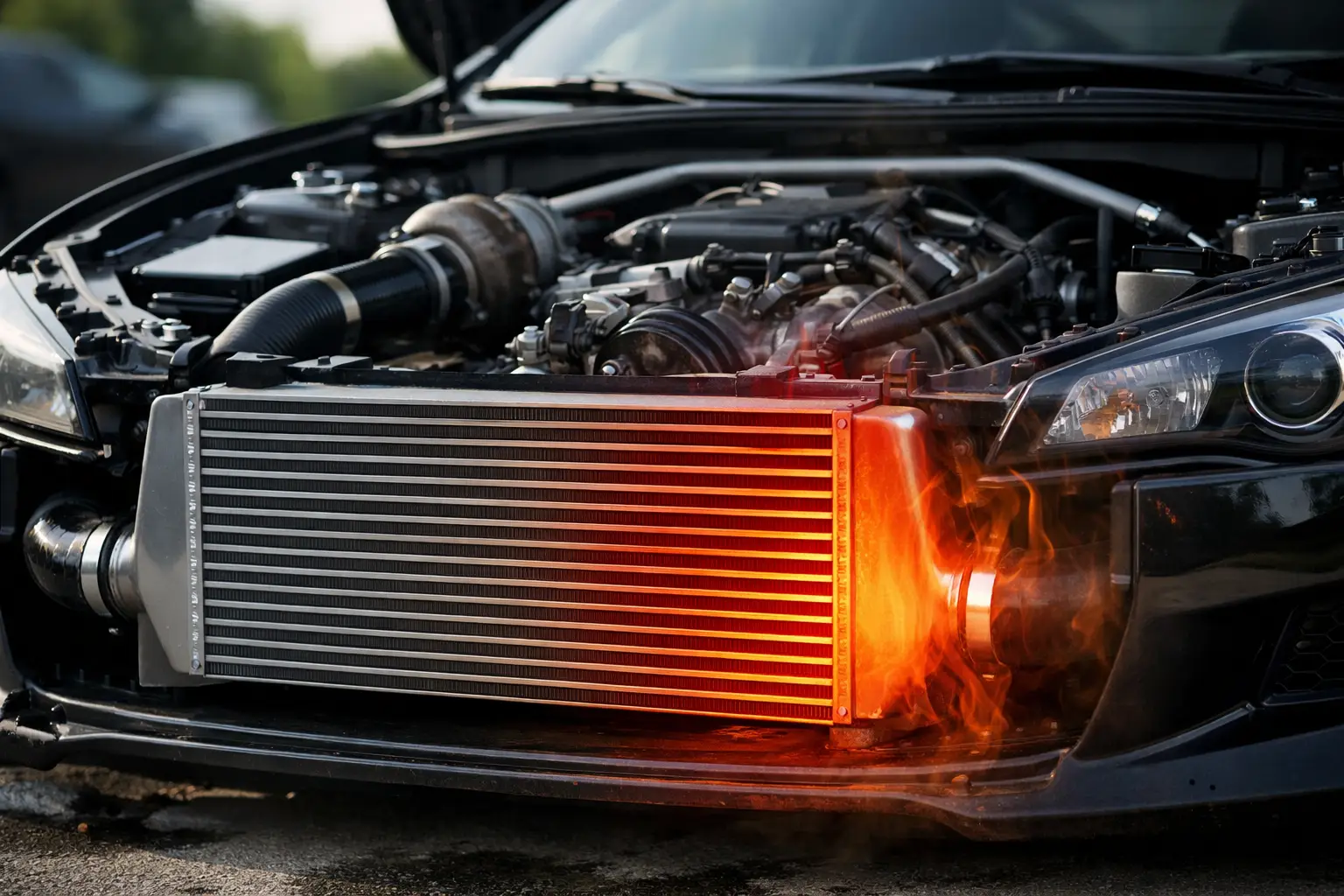
Heat soak shows up fast on a tuned MQB car. Maybe it happens after one hard pull on a summer afternoon, or maybe the car feels strong in the first few minutes and then starts laying over as intake air temps climb. That is exactly why an MQB intercooler upgrade guide matters – not as a forum talking point, but as a real decision that affects consistency, knock resistance, and how much of your tune the car can actually use.
The MQB platform responds well to airflow and boost, but it also exposes the limits of the factory charge cooling system once power and ambient temperature go up. Whether you drive a GTI, Golf R, A3, S3, GLI, or another MQB-based setup, the right intercooler choice depends on more than peak horsepower claims. Core design, pressure drop, fitment, climate, and the way you use the car all matter.
Why the stock MQB intercooler becomes a limit
From the factory, the intercooler is built around packaging, cost, and acceptable performance for stock boost levels. That works fine for daily driving and occasional spirited use. Once you add tuning, a downpipe where applicable, turbo upgrades, or repeated hard driving, the stock unit can struggle to control intake air temperature.
When intake air temps rise, the ECU starts protecting the engine. Timing can be reduced, power becomes less consistent, and the car often feels softer as the run goes on. On pump gas, this matters even more because you have less margin before the calibration has to pull back. The result is familiar to most MQB owners – the car that feels quick for one pull, then noticeably less impressive on the next.
That is where an upgraded intercooler earns its place. A well-designed core improves thermal efficiency and helps the car repeat the same performance more reliably. On a street car, that means stronger back-to-back acceleration. On a track or drag setup, it means more stable conditions for the tune and less performance loss from heat.
MQB intercooler upgrade guide: when is it worth it?
If your car is completely stock and used mainly for commuting, an intercooler is not always the first upgrade to buy. Tires, maintenance, and the right software often make a more immediate difference. But once the car is tuned, especially in warmer climates, the intercooler moves from optional to highly recommended.
For Stage 1 owners, the need depends on region and expectations. In cooler weather, a stock intercooler may remain acceptable for casual use. In hot states, or for drivers who do repeated pulls, autocross, or canyon runs, the stock unit becomes a weak point much sooner.
For Stage 2 and hybrid turbo cars, the case is stronger. Higher boost generates more heat, and asking the stock intercooler to manage that load usually means inconsistent results. If you are building for track use or aiming for strong power on ethanol blends, a quality intercooler is one of the smarter reliability-minded upgrades on the car.
Choosing the right intercooler for your power goal
The biggest mistake buyers make is assuming larger always means better. An oversized core can help with heat management, but it can also introduce trade-offs if the design is poor or simply too aggressive for the setup. Good intercooler selection is about balance.
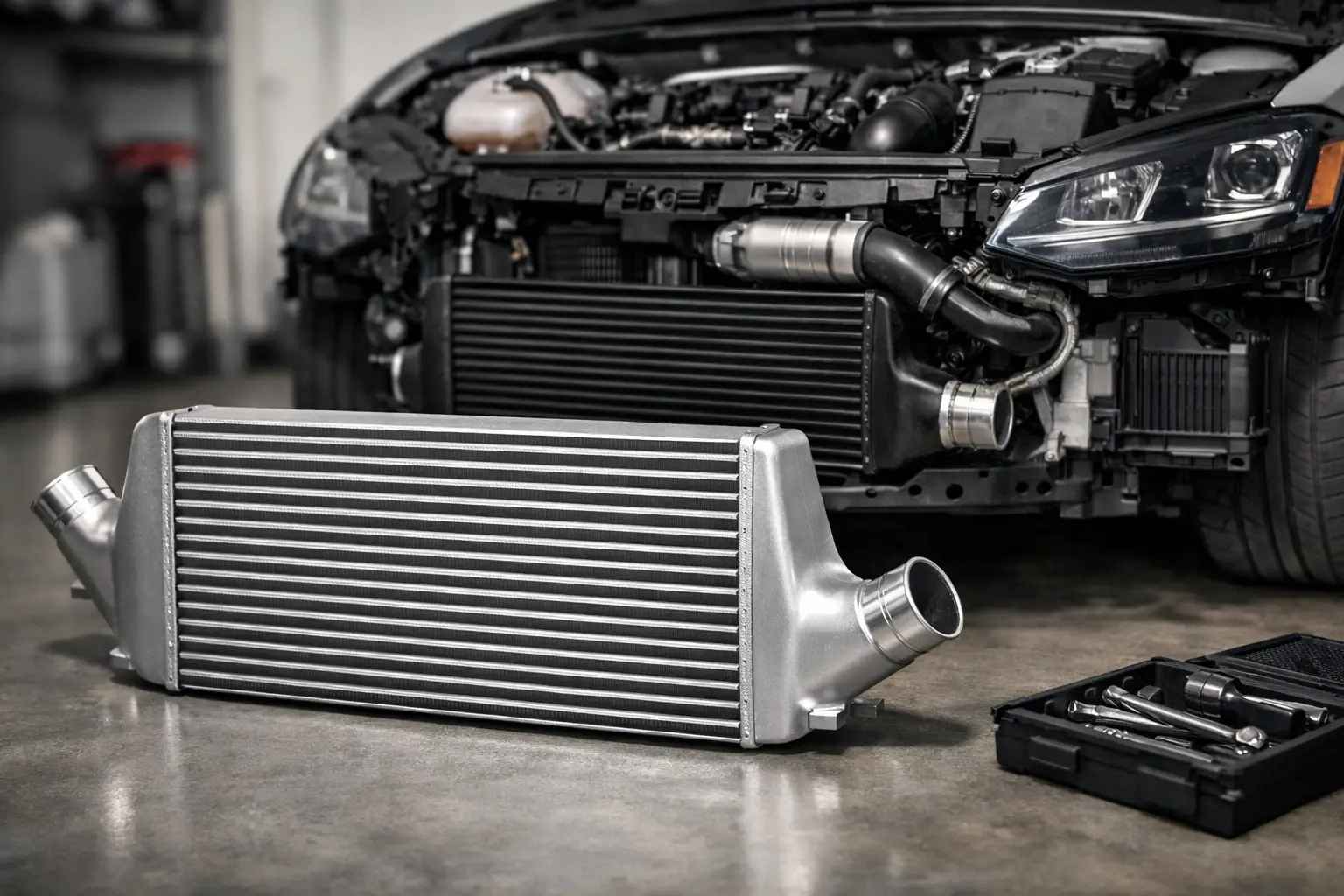
A quality direct-fit stock-location intercooler is often the sweet spot for most MQB street and dual-purpose builds. It improves cooling substantially while preserving clean fitment and factory-style airflow routing. For many tuned IS20 and IS38 cars, and even a number of moderate hybrid turbo setups, this is the right answer.
A front-mount option can make sense for certain applications, especially where packaging, airflow exposure, or custom setups push the build in that direction. But front-mount kits are not automatically superior. Some require compromises in crash bar design, ducting, or auxiliary cooling airflow. Others are ideal on higher-output builds where the priority is maximum heat rejection under sustained load. It depends on the hardware and the goal.
Core construction matters just as much as size. Bar-and-plate designs are common because they offer strong thermal capacity and durability, but weight and airflow characteristics vary from brand to brand. End tank design also matters. A properly engineered end tank helps distribute air across the core more efficiently and reduces unnecessary pressure drop.
Pressure drop is one of the details serious buyers should pay attention to. Lower intake air temps are the goal, but not at the expense of a major restriction in the charge system. A good intercooler cools effectively without forcing the turbo to work harder than necessary to maintain target boost.
Fitment matters more than people think
MQB fitment is generally better supported than many platforms, but there are still details that can create problems if you buy based on a generic listing. GTI, Golf R, A3, S3, GLI, and related MQB applications often share broad compatibility, but not every part fits every bumper, crash bar, radiator pack, or engine setup the same way.
This becomes more important on cars with additional cooling hardware, custom turbo inlet routing, aftermarket piping, or body modifications. If the car is a daily driver, clean install quality matters. If it is a race car, serviceability matters. Neither group benefits from an intercooler that technically fits but turns future maintenance into a headache.
For that reason, premium brands usually justify their price through more than just the core itself. Better engineering, repeatable manufacturing quality, and more complete application support reduce the chance of fitment surprises. For buyers who care about doing the job once and doing it right, that matters.
Piping, couplers, and the rest of the system
An intercooler should not be viewed in isolation. Charge pipes, couplers, clamps, and the turbo outlet path all influence the final result. In many cases, the factory piping is acceptable at moderate power levels, especially when paired with a well-designed direct-fit intercooler. In other cases, upgraded piping improves durability and reduces potential weak points under higher boost.
This is where build context matters. A street-driven Stage 1 GTI has different needs than a Golf R running a bigger turbo and ethanol. Spending heavily on every pipe in the system is not always necessary, but ignoring weak links can cost you time later. The right approach is to match supporting hardware to actual power and use case, not just buy every available part.
What to expect after the upgrade
The most noticeable benefit is not always a dramatic peak horsepower gain. On many cars, the real improvement is repeatability. The car pulls harder for longer, recovers better between runs, and feels less sensitive to heat. That consistency is what makes the upgrade worthwhile.
You may also create better conditions for your tuner to run a more stable calibration. Lower and more predictable intake air temps give the ECU less reason to intervene. That does not mean an intercooler is a magic power part on its own. It means the rest of the setup can perform closer to its intended level more often.
For track drivers, this can be one of the most valuable cooling upgrades on the platform. For drag racers, it helps maintain performance through multiple passes. For daily-driven tuned cars, it simply makes the car feel more dependable when weather and traffic are working against you.
Common buying mistakes
The first is shopping only by advertised horsepower rating. Those numbers are useful as a rough guide, but they do not tell the full story. A 600-horsepower rating means little if the core has mediocre efficiency or poor fitment on your exact application.
The second is underestimating climate. A car in Arizona, Texas, or Florida has very different cooling demands than one in the Pacific Northwest. If you live in a hot environment, thermal headroom is not a luxury item.
The third is ignoring intended use. A car that sees occasional highway pulls has different needs than one that spends 20-minute sessions on track. If you choose based only on peak dyno appeal, you may end up with the wrong solution for how the car is actually driven.
The best MQB intercooler upgrade guide advice
Buy for the complete setup, not the version of the build that exists only in your head. If the car is staying near full bolt-on power, a premium direct-fit intercooler is often the right balance of performance, fitment, and value. If the plan includes a larger turbo, harder use, and more aggressive fuel, it makes sense to choose a solution with greater thermal capacity now.
This is one of those upgrades where quality pays off. Better engineering tends to mean better temp control, better fit, and fewer compromises elsewhere in the cooling stack. That is why serious enthusiasts and shops tend to stick with proven options instead of chasing the cheapest core on the market.
If you are unsure where your setup falls, ask the questions before you buy – platform, engine, turbo, tune, climate, and driving style. That is how you end up with parts that work together. At EAS Store, that is also how performance buyers avoid wasting money on hardware that looks right on paper but misses the mark on the car.
The right intercooler upgrade will not make your MQB build feel louder or flashier. It will make it feel stronger when it counts, which is usually the kind of upgrade experienced drivers appreciate most.