A downpipe that will not mate to the factory midpipe, an intercooler blocked by an ADAS sensor, or a fuel pump built for a different generation can stop a build before it starts. Fitment mistakes in performance upgrades are rarely caused by buying a poor-quality part. More often, the part is correct for the platform in general but wrong for the exact vehicle, power goal, or combination of supporting hardware.
For European performance cars, small production differences matter. A BMW G80 and G82 may share much of their architecture, yet an exhaust, brace, or aero component can have model-specific requirements. An Audi RS3 2.5TFSI may look similar across model years while using different sensors, plumbing, or electronic calibration. The right upgrade begins with a precise application, not just a vehicle badge.
Why Fitment Mistakes in Performance Upgrades Cost More
The obvious cost is shipping a part back. The bigger cost is lost installation time, a missed track event, an unnecessary tuning revision, or a car that runs poorly because the components were never designed to work together. On a basic street build, that may mean a few frustrating weekends. On an 800HP fuel system or a track-focused cooling package, it can mean exposing expensive engine hardware to avoidable risk.
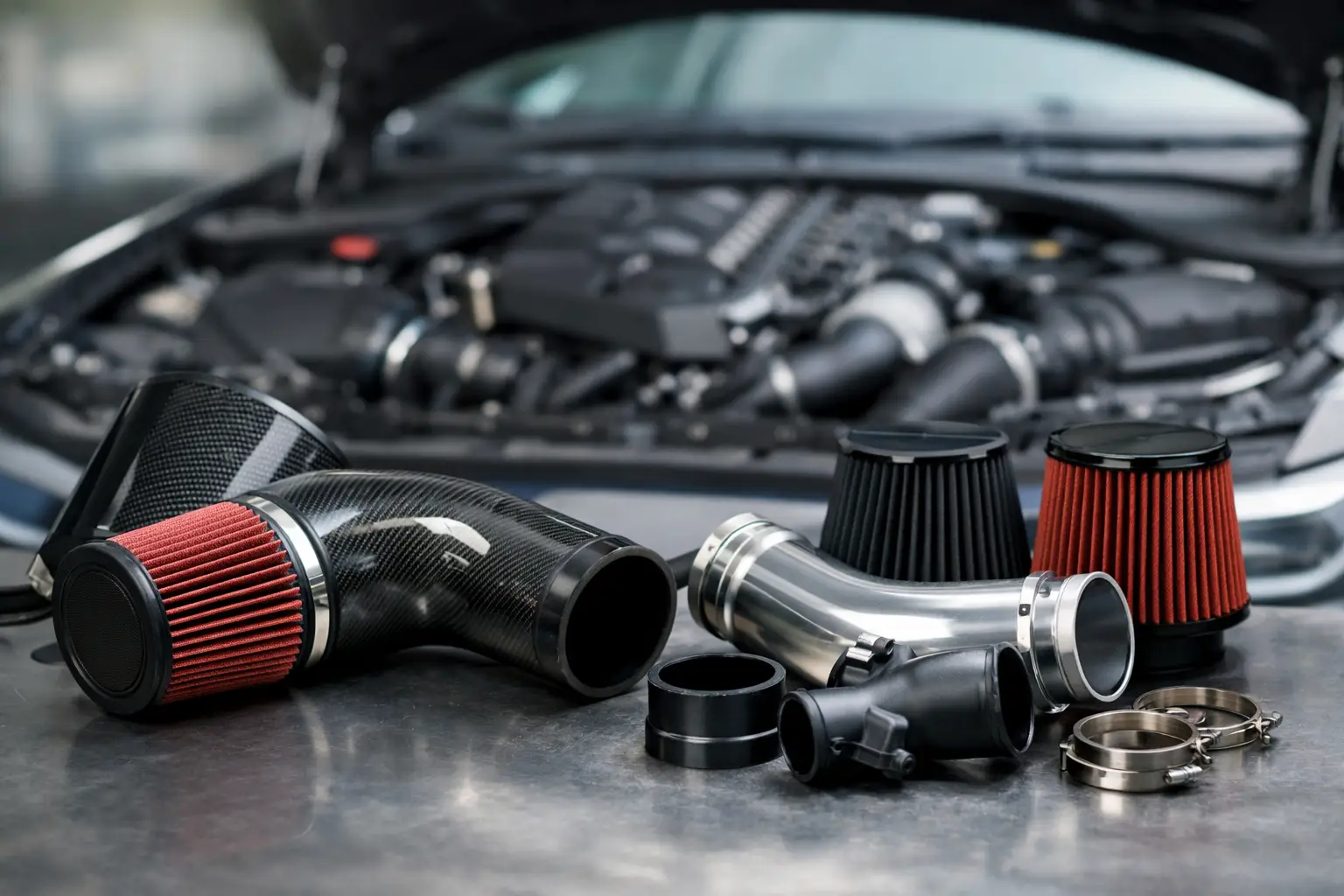
Fitment also affects the result you are buying the part to achieve. An intake that physically fits but pulls hot air from an improperly sealed engine bay will not deliver its intended benefit. Brake calipers can bolt on yet interfere with a wheel barrel. A larger turbo inlet may fit the turbocharger but require a matching intake pipe, revised PCV routing, or a specific engine cover. “Fits” and “works correctly” are not the same standard.
Premium components are engineered around defined conditions. Respecting those conditions protects power, drivability, serviceability, and reliability.
Start With the Exact Vehicle Configuration
Year, make, and model are a starting point, not a complete fitment check. Before ordering, identify the vehicle’s chassis code, engine code, drivetrain, transmission, and production year. For many Volkswagen, Audi, BMW, and Mercedes applications, this information separates a correct order from an expensive assumption.
Engine code is especially important. Two vehicles sold under the same model name can use different engine families, turbocharger arrangements, fueling systems, or cooling layouts. An MQB Volkswagen GTI with an EA888 Gen 3 engine does not automatically share every component with a later Evo4 application. The same principle applies to S58 BMW models, where model year, xDrive configuration, and the intended turbo or fueling package can influence the correct parts list.
Do not overlook market specification. A US-market vehicle may have emissions equipment, crash-bar design, sensor placement, or lighting hardware that differs from an overseas version. Exhaust systems, intercoolers, charge pipes, and body components deserve particular attention here.
The VIN is often the fastest path to certainty when a production split is involved. It can confirm build date and factory configuration that a broad online vehicle selector cannot always capture.
Read Product Notes Like Installation Instructions
Application notes are not fine print. Phrases such as “requires facelift bumper,” “for manual transmission only,” “not compatible with OPF/GPF,” or “must be used with upgraded charge pipe” define the product’s actual fitment window.
Pay attention to exclusions as closely as inclusions. If a product says it fits an Audi TTRS but excludes models with a particular factory option, assume that limitation has a physical reason. It could involve clearance, connector style, heat shielding, or a difference in factory plumbing. Trying to force the installation usually creates a second problem somewhere else.
Build the System, Not a Cart of Individual Parts
Performance parts operate as a package. This is where many experienced enthusiasts still get caught out: each item is compatible with the car, but the items are not compatible with one another.
A common example is turbocharger hardware. A larger turbo may require a specific inlet, outlet, manifold, downpipe, intake, charge pipe, fueling solution, software calibration, and heat-management plan. Purchasing one component at a time without mapping the system can leave you with duplicate parts or a bottleneck that limits the entire setup.
Cooling upgrades need the same discipline. A front-mount intercooler may fit behind the bumper, but a larger core can affect auxiliary radiator clearance, aftermarket crash bars, ducting, grille shutters, and radar equipment. On a hard-driven street car, preserving airflow through the entire heat exchanger stack can matter more than selecting the physically largest core.
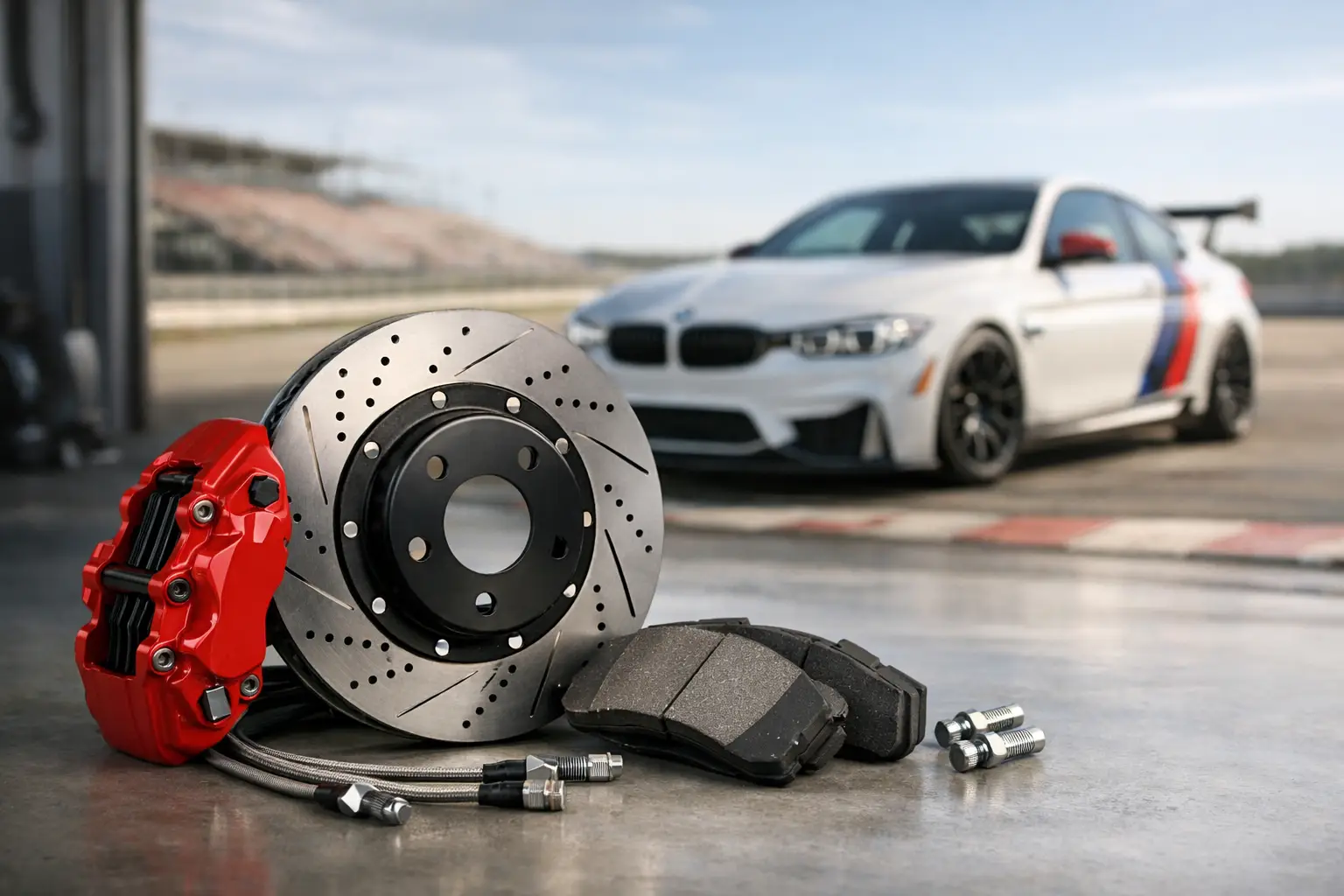
Suspension and brake packages are another frequent source of mismatch. Coilovers change wheel travel and available tire clearance. Big brake kits change spoke clearance and may require a particular wheel profile, spacer, or bolt length. If the vehicle is lowered, a wheel and tire package that cleared at factory height can contact the fender liner or suspension under compression.
Confirm the Installation Requirements Before Buying
A part can be correct for the car and still be the wrong choice for the installation environment. Ask what tools, consumables, calibration, coding, fabrication, and labor time the job requires. This is particularly relevant for upgrades that move beyond bolt-on hardware.
Some installations require new gaskets, one-time-use hardware, fresh fluids, clamps, heat wrap, or replacement seals. Others require ECU tuning, transmission calibration, sensor adaptation, corner balancing, alignment, or coding. Leaving these needs out of the budget turns a planned upgrade into a parked car.
Also consider future service. A tightly packaged intake, catch can, turbo kit, or oil cooler may make routine maintenance more time-consuming. That trade-off can be acceptable on a dedicated competition vehicle. For a daily-driven S4, M3, GTI, or C63, access to filters, plugs, belts, and fluid service points should remain part of the decision.
The Most Common Fitment Errors
Several mistakes appear repeatedly across performance builds:
- Ordering by model name alone instead of confirming chassis, engine, drivetrain, and production split.
- Assuming factory and aftermarket components use the same mounting points, tubing diameter, or connector style.
- Combining parts from different generations of a platform because they look nearly identical in photos.
- Ignoring wheel clearance data when purchasing brakes, suspension, tires, or spacers.
- Treating tuning, fueling, cooling, and drivetrain capacity as separate decisions on a high-output build.
- Buying a part designed around another market’s emissions equipment or sensor layout.
The remedy is not to overcomplicate every purchase. It is to apply the right level of verification to the project. A replacement panel filter may only need a straightforward vehicle match. A hybrid-turbo S58 build needs a complete compatibility review before the first part is ordered.
Use Your Power Goal to Filter the Right Parts
Fitment is not only physical. It is also functional at the intended output. A component may fit perfectly but be undersized for the power, fuel type, or duty cycle you have planned.
For example, a stock-location intercooler upgrade may be ideal for a tuned daily driver making moderate gains. That does not mean it is the best option for repeated high-boost pulls, road-course sessions, or ethanol-fueled power levels. Likewise, a fueling upgrade sized for pump gas may not provide enough headroom for an E85 blend or a larger turbocharger.
Set an honest goal before shopping: responsive street power, consistent drag-strip performance, track durability, or maximum dyno output. Then choose hardware with headroom where it matters. The best part is not always the biggest or most expensive one. It is the one designed for your platform and the conditions you will actually use.
A Better Pre-Purchase Check
Before committing to a performance upgrade, verify the vehicle configuration, read every fitment note, and identify required companion parts. Confirm whether your current modifications alter clearance or connections, then account for tuning, installation hardware, and the intended power level.
When the application is unclear, get a second technical opinion before placing the order. EAS Store supports serious European performance builds with a catalog built around specific platforms, engine codes, and real upgrade paths. A quick fitment conversation is far less expensive than changing direction halfway through an install.
The strongest builds are not assembled by chance. Start with the exact car in front of you, plan the components as one system, and give every part a job it is engineered to do.