Cold start tells you a lot about an S58 car. With the stock airbox, the engine is composed and efficient, but muted. Swap to one of the best S58 intake options, and the character changes immediately – more turbo sound, sharper response, and in the right setup, better airflow headroom for tuned power.
That said, “best” depends on how you use the car. A daily-driven G80 M3 with mild bolt-ons does not need the same intake strategy as a G82 chasing higher boost on upgraded cooling and fueling. On the S58, intake choice is less about chasing a huge dyno number from the intake alone and more about matching airflow, heat management, filter design, and fitment quality to the rest of the build.
What actually matters on an S58 intake
The S58 is already a strong factory package, so any honest discussion has to start there. BMW gave this platform a capable induction system, which means aftermarket gains are usually incremental unless the car is tuned and operating closer to the limits of the stock setup. That is why serious buyers should look beyond marketing claims and focus on the details that affect performance in the real world.
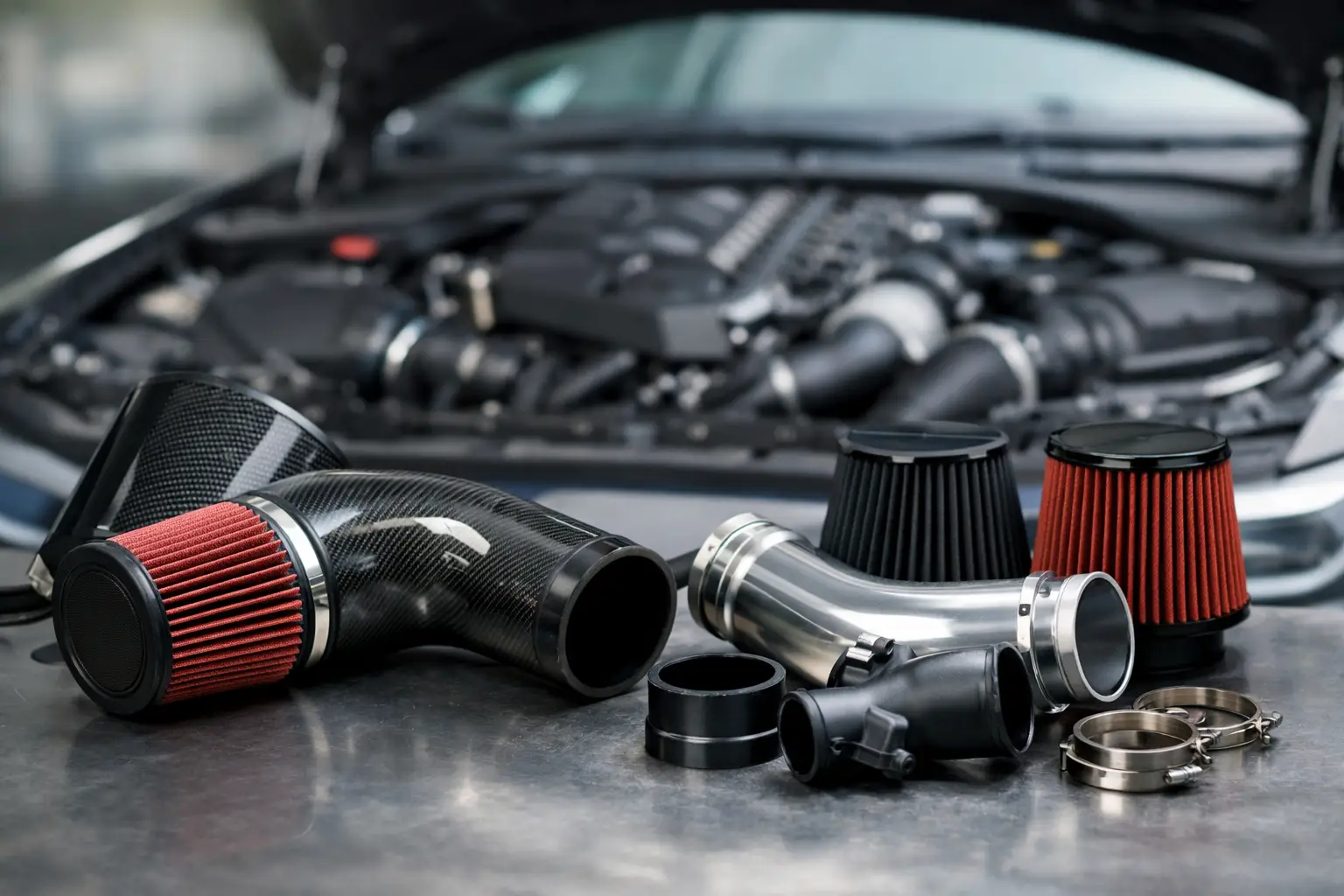
The first variable is intake design. Some systems retain a closed-box layout that protects against engine bay heat and preserves a more OEM-like airflow path. Others move toward an open-element design that prioritizes sound and visual appeal. Neither approach is automatically better. A closed intake often makes more sense for consistent street driving in varied conditions, while an open setup can deliver the aggressive induction noise many owners want from the S58 platform.
Filter area and inlet geometry also matter. A well-designed intake reduces restriction without creating turbulence that hurts drivability or MAF scaling. On a modern turbo BMW, that balance is critical. If the system flows more air but introduces inconsistent readings or poor fitment around sensors and couplers, the result is not a premium upgrade.
Material choice plays a role too. Carbon fiber systems usually win on presentation and often offer strong heat resistance, but well-built aluminum or composite designs can perform just as well depending on the application. What matters most is overall engineering – smooth transitions, secure seals, proper bracket placement, and repeatable fitment.
Best S58 intake options by build goal
For stock-turbo street cars
If your car is stock or lightly tuned, the best S58 intake options are usually the ones that improve sound, preserve clean drivability, and maintain strong underhood fit and finish. This is where premium closed-box or semi-enclosed systems tend to stand out.
On a stock-turbo street build, you are not trying to reinvent the airflow strategy of the engine. You are looking for a system that removes some restriction, adds induction presence, and supports future tuning without introducing compromises. A quality intake in this category should install cleanly, work with factory mounting points, and avoid check-engine-light drama.
This is also the group where paying for quality makes sense. Cheap kits often look similar in photos, but poor coupler fit, weak clamps, inconsistent sensor provisions, and heat-soaked open filters show up quickly in actual use. On the S58, the difference between a bargain intake and a premium one is usually not just appearance – it is repeatability and confidence.
For tuned bolt-on setups
Once the car has calibration work, downpipes where applicable for the build, and supporting hardware, intake choice becomes more important. Tuned S58 cars demand better airflow under load, especially in repeated pulls or track-minded use. This is where larger inlet sizing, better filter surface area, and improved ducting can help the turbos work more efficiently.
You still should not expect an intake alone to transform the car. The value is in supporting the total package. A good system can help maintain power more consistently, sharpen transient response, and reduce the sense that the stock intake path is becoming a bottleneck as boost demand rises.
For many owners, this is the sweet spot. A premium intake on a tuned G8X often delivers the best mix of noticeable sound, cleaner engine bay presentation, and practical airflow improvement without crossing into overbuilt territory.
For high-horsepower and hybrid-turbo builds
At the upper end, intake selection becomes less about preference and more about system capacity. If you are pushing the S58 well beyond stock-turbo airflow levels, the intake has to keep pace with the rest of the hardware. In this range, enlarged inlets, carefully engineered transitions, and compatibility with upgraded turbo hardware matter far more than brand hype.
This is also where you need to think about the entire induction path, not just the visible intake assembly. The best result comes when the intake, turbo inlets, charge path, intercooling, and tune are chosen as one package. An intake that looks impressive but forces awkward routing or creates packaging issues around other upgrades may not be the right solution for a serious build.
If your target is big power, buy for headroom. It is usually more cost-effective than replacing a mid-level setup later when the rest of the car outgrows it.
Closed box vs open intake on the S58
This is one of the most common questions, and the answer depends on priorities.
A closed-box design is usually the safer choice for owners who want OEM-plus refinement. It tends to manage intake air temperatures more consistently in traffic and hot climates, and it often integrates better with factory ducting. For a daily driver or street performance car, that matters. The sound increase is still there, just more controlled.
An open intake leans harder into experience. You will generally hear more turbo spool, diverter activity, and overall induction noise. For many G8X owners, that alone justifies the upgrade. The trade-off is that some open systems can pull more warm engine bay air at low speeds or during extended idle, depending on shielding and layout.
Neither path is wrong. If the car sees commuter duty, mixed climates, and occasional spirited driving, a quality enclosed intake often feels like the more complete package. If the goal is maximum sound and a more aggressive underhood aesthetic, an open system can be exactly the right move.
Fitment, tuning, and brand reputation
On this platform, fitment quality is not a small detail. It is the difference between a part that installs once and works for years, and a part that creates constant frustration. The best S58 intake options come from manufacturers that understand BMW packaging, sensor placement, and the expectations of buyers who are not interested in reworking a brand-new kit to make it fit.
Tuning compatibility matters just as much. Some intakes are designed to work cleanly with factory calibration and common tune strategies, while others may need extra attention if airflow characteristics differ enough to affect scaling. That does not make them bad products, but it does mean the right answer depends on your software and hardware combination.
This is where specialist support has real value. A platform-specific retailer like EAS Store can help narrow the field based on whether your car is stock-turbo, tuned, or built for much more. That saves time and helps avoid the common mistake of buying for appearance first and build plan second.
How to choose the right intake the first time
Start with the honest version of your build plan. If the car will stay near stock power with basic mods, buy a premium intake that delivers sound, finish, and reliable fitment. If the car is headed toward more boost and supporting hardware, choose an intake with enough airflow margin that you will not outgrow it in six months.
Then think about how you actually drive. A street-focused car benefits from consistent behavior in heat, traffic, and daily use. A weekend car may prioritize sound and visual impact. A higher-output setup needs capacity and compatibility above all else.
Finally, buy from brands with a track record on the platform. The S58 market has enough options now that there is no reason to gamble on poor engineering. Premium parts cost more up front, but they usually save money, time, and frustration over the life of the build.
The right intake for an S58 is the one that fits your power target, your driving style, and your standards for quality. Pick with the full build in mind, and it becomes one of the most satisfying upgrades on the car.