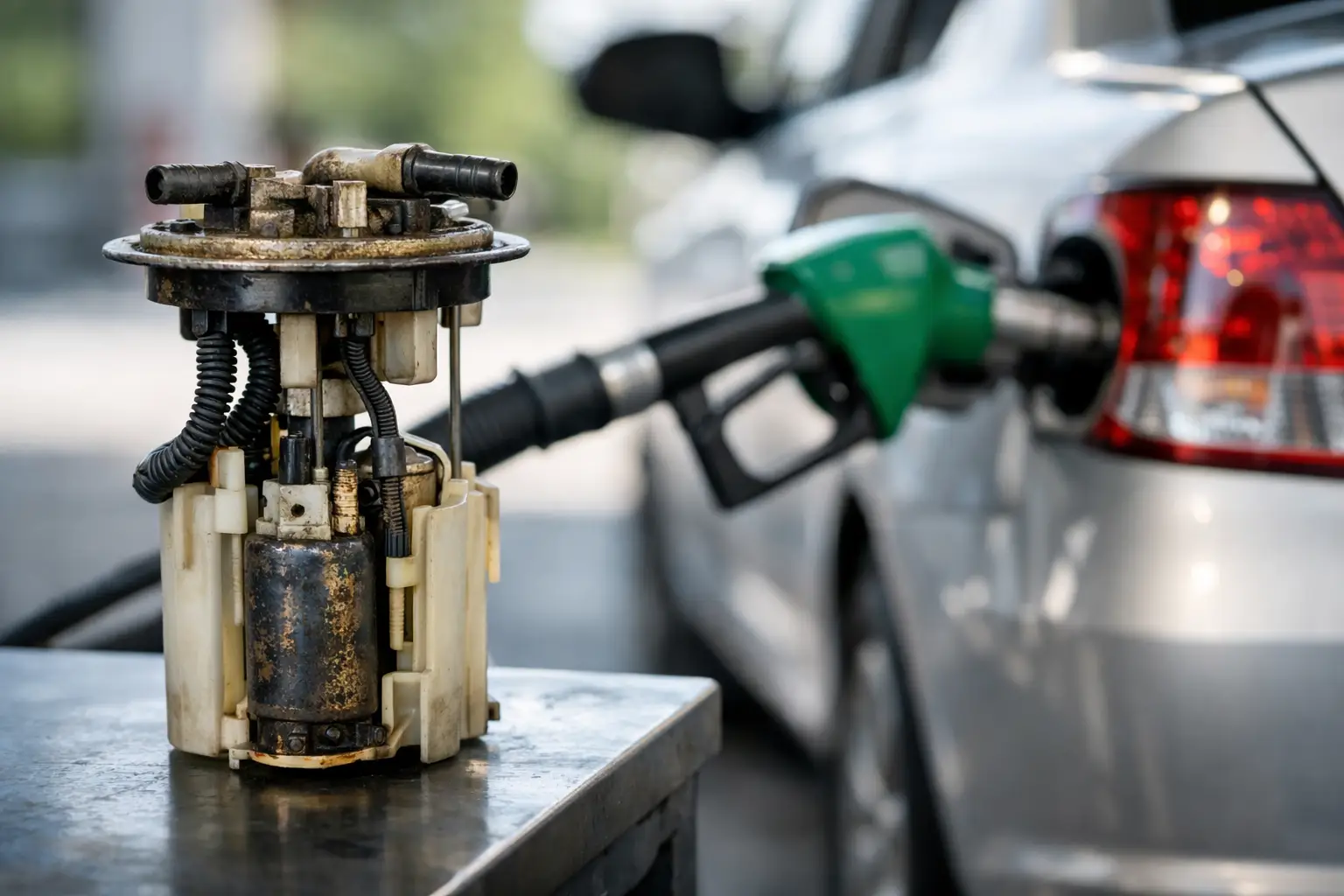
A stock fuel pump that has lived on regular E10 for years may be perfectly healthy. Put an older pump, questionable wiring, or a marginal factory fuel system behind an E85 tune, however, and the same vehicle can quickly expose weak links. So, does ethanol damage fuel pumps? Not automatically. The real answer depends on ethanol content, pump construction, fuel-system condition, and the power level your engine is being asked to support.
For performance builds, ethanol is not simply another fuel choice. It changes the fuel volume your system must deliver, affects compatibility requirements, and makes a properly specified pump, controller, filter, and fuel line package far more critical.
Does Ethanol Damage Fuel Pumps in Modern Cars?
Most modern OEM fuel systems are designed to run on E10, the gasoline commonly sold at US pumps containing up to 10% ethanol. In a healthy late-model Volkswagen, Audi, BMW, or Mercedes, occasional or regular E10 use should not damage the factory low-pressure fuel pump by itself. Manufacturers have used ethanol-compatible plastics, seals, coatings, and electrical components for decades.
The discussion changes when ethanol content rises. E30, E40, E50, and E85 place greater demands on every part of the fuel system. Ethanol can carry more moisture than gasoline, and it can reveal deterioration in older rubber hoses, seals, adhesives, and internal pump materials that were never designed for high-alcohol fuel. It also has different lubricity characteristics than gasoline, which is a concern for a pump not specifically rated for ethanol use.
That does not mean E85 is inherently destructive. A quality ethanol-rated in-tank pump is engineered for it. The issue is compatibility. Running high ethanol content through a fuel system built around a gasoline-only pump is a gamble, particularly on a high-output setup where pump duty cycle is already near its limit.
Why E85 Makes Fuel Pump Selection More Serious
Ethanol contains less energy per gallon than gasoline. To make the same power, your engine must consume more fuel volume. Depending on the ethanol blend and tune, an E85 setup can require roughly 25% to 35% more fuel flow than a gasoline setup.
That extra volume is where many builds run into trouble. A factory pump that comfortably supports a tuned 2.0T, EA888, B58, S58, or 2.5TFSI on premium gasoline may become a restriction on an ethanol blend. As fuel demand rises, pump duty cycle rises with it. The pump runs hotter, voltage drop becomes more damaging, and pressure can fall when the engine needs fuel most.
Low fuel pressure under boost is not just a power limitation. It can create lean conditions, misfires, timing intervention, and in severe cases, engine damage. On direct-injection platforms, low-pressure supply also affects what the high-pressure pump can deliver. A larger high-pressure pump cannot compensate for a low-pressure pump that is starving for volume.
For serious ethanol builds, fuel pump selection should be based on actual flow data at the pressure and voltage your vehicle will see, not a generic horsepower claim on a box. A pump advertised for a certain power figure may be rated at lower base pressure, with ideal voltage, or on gasoline rather than E85.
The Real Causes of Ethanol-Related Pump Failure
When a pump fails after a switch to ethanol, ethanol may be part of the story, but it is often not the only cause. The most common problem is using a pump that is not designed for the fuel or the power target. A tired original pump can survive on pump gas for years, then fail shortly after a tune raises fuel demand and ethanol content.
Contamination is another major issue. Ethanol can loosen deposits that have accumulated inside an older tank and fuel system. That debris can load up a filter or enter the pump assembly. Water contamination is also more concerning with ethanol blends, especially when a vehicle sits for extended periods or fuel is stored poorly. Phase separation can occur when ethanol absorbs enough water that the ethanol and water separate from the gasoline, leaving a corrosive mixture in the tank.
Heat and voltage are equally relevant. Electric in-tank pumps rely on surrounding fuel for cooling. Repeatedly driving at a very low fuel level, especially in warm conditions, can reduce that cooling reserve. Undersized wiring, poor grounds, weak pump control modules, and restrictive factory connectors can also reduce voltage at the pump. Lower voltage means reduced flow and more strain when the engine is under load.
A fuel pump that is technically ethanol-compatible can still fail early when it is overworked, underpowered electrically, or forced to pull fuel through a restricted filter.
E10, E30, and E85 Are Different Conversations
Treating every ethanol blend the same leads to bad parts decisions. E10 is normal operating fuel for most modern street cars. E30 to E40 is common on tuned European platforms because it provides substantial knock resistance without demanding the full fuel volume of E85. Even then, a stock pump may be near its safe limit depending on the turbocharger, tune, climate, and fuel pressure strategy.
E85 is where the supporting hardware needs a harder look. True E85 can vary seasonally and by region, while many pumps sell blends closer to E51 through E83. That variation affects required fueling volume and tune calibration. An ethanol content sensor is a smart addition for flex-fuel setups because it allows the calibration to respond to the fuel actually in the tank rather than the label on the pump.
For a high-horsepower RS3/TTRS, S58, or MQB build, do not assume an upgraded turbo and upgraded high-pressure fuel pump equal a complete ethanol fuel system. The low-pressure side may need a higher-capacity pump, a brushless pump solution, upgraded wiring, a controller, a surge tank, or a return-style system depending on the goal.
How to Protect a Fuel Pump on Ethanol
The best protection is building the system around the intended fuel from the beginning. If the car will run E85 regularly, choose a pump explicitly rated for E85 or alcohol fuel. Confirm that the hanger, lines, seals, fittings, filter media, and any fuel-level components in the system are also compatible.
Keep the tank above one-quarter full when possible, especially during hard driving or track use. This helps keep the pump submerged and reduces the chance of fuel starvation under acceleration. Replace filters on schedule, use fuel from a busy, reputable station, and avoid letting ethanol fuel sit for months in a rarely driven car.
Before adding power, verify pressure and voltage under real load. A clean log of low-side pressure, high-side pressure where applicable, lambda, and ethanol content tells you far more than a pump’s advertised rating. If pressure is dropping at the top of a gear, the system is already telling you it needs attention.
For a practical ethanol-fuel checklist, verify these four areas before increasing boost or ethanol content:
- The pump and all wetted components are rated for the planned ethanol blend.
- Pump flow supports your power target at your vehicle’s operating pressure and voltage.
- Wiring, grounds, fuses, and the pump controller can carry the required current.
- Fuel pressure remains stable in logs during wide-open-throttle pulls.
When a Fuel Pump Upgrade Is Worth It
A fuel pump upgrade is worthwhile when logs show pressure loss, when the tune requires more flow than the stock system can reliably provide, or when you are moving from gasoline or light ethanol blends to consistent E60-E85 use. It is also a reliability upgrade for a vehicle that sees track days, repeated roll racing, or sustained high-load operation.
The correct solution is platform-specific. Some cars respond well to a drop-in ethanol-compatible in-tank pump. Others need a complete bucket upgrade to prevent starvation, while higher-output builds may require staged pumps or an external return-style arrangement. Fitment, electrical control, and calibration all matter as much as the pump itself.
EAS Store supports serious European performance builds with fueling components selected around real platform requirements, not guesswork. If your target is a conservative flex-fuel street setup or an 800HP-plus ethanol combination, match the fuel system to the fuel and power goal before turning up the boost.
Ethanol can be an excellent performance fuel, but it rewards a properly engineered system. Choose components rated for the blend you plan to run, validate the system with data, and treat stable fuel pressure as the foundation of every reliable high-output build.