A hot lap can expose a cooling problem that never appears on the street. Oil temperature climbs, viscosity falls, bearing protection suffers, and the driver starts short-shifting or backing out of the throttle. The best oil coolers for track cars are not simply the largest cores that fit behind the bumper. They are complete, platform-correct systems sized for the car’s power level, airflow, oil capacity, and real track duty.
For Audi, BMW, Volkswagen, and Mercedes performance builds, that distinction matters. A lightly modified street car doing occasional 20-minute sessions needs a different solution than an S58 BMW, RS3 2.5TFSI, or MQB car making serious power on sticky tires. Buy around measured temperatures and proper fitment, not a universal cooler advertised with an oversized row count.
What Makes an Oil Cooler Track-Worthy?
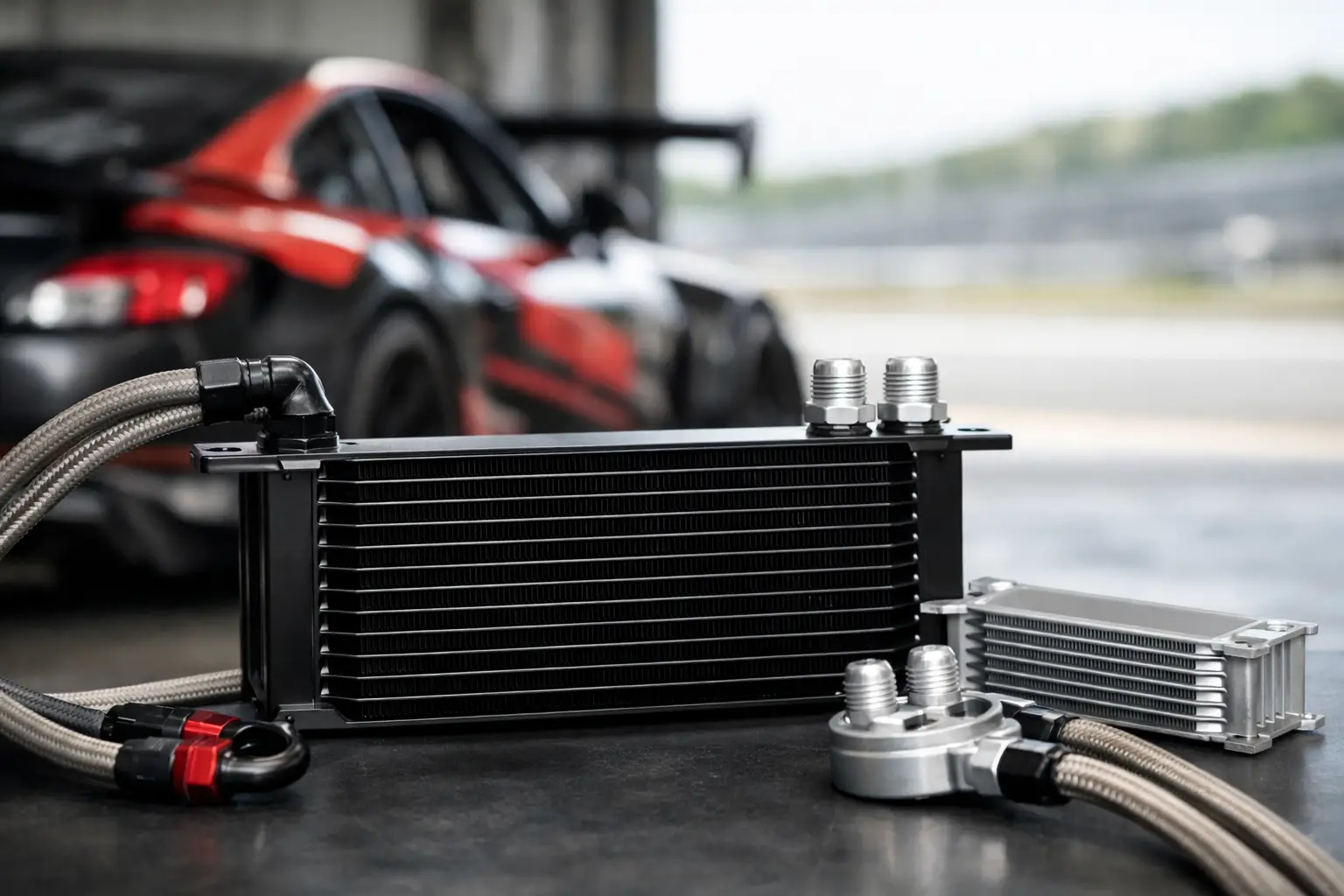
A track-ready oil cooler must remove heat without creating a new restriction in the lubrication system. That starts with the core. Quality stacked-plate cores are the standard for demanding use because they offer efficient heat transfer, strength, and durability under sustained pressure. Tube-and-fin coolers can work in low-demand applications, but they are generally not the first choice for a car that sees repeated high-RPM sessions in summer heat.
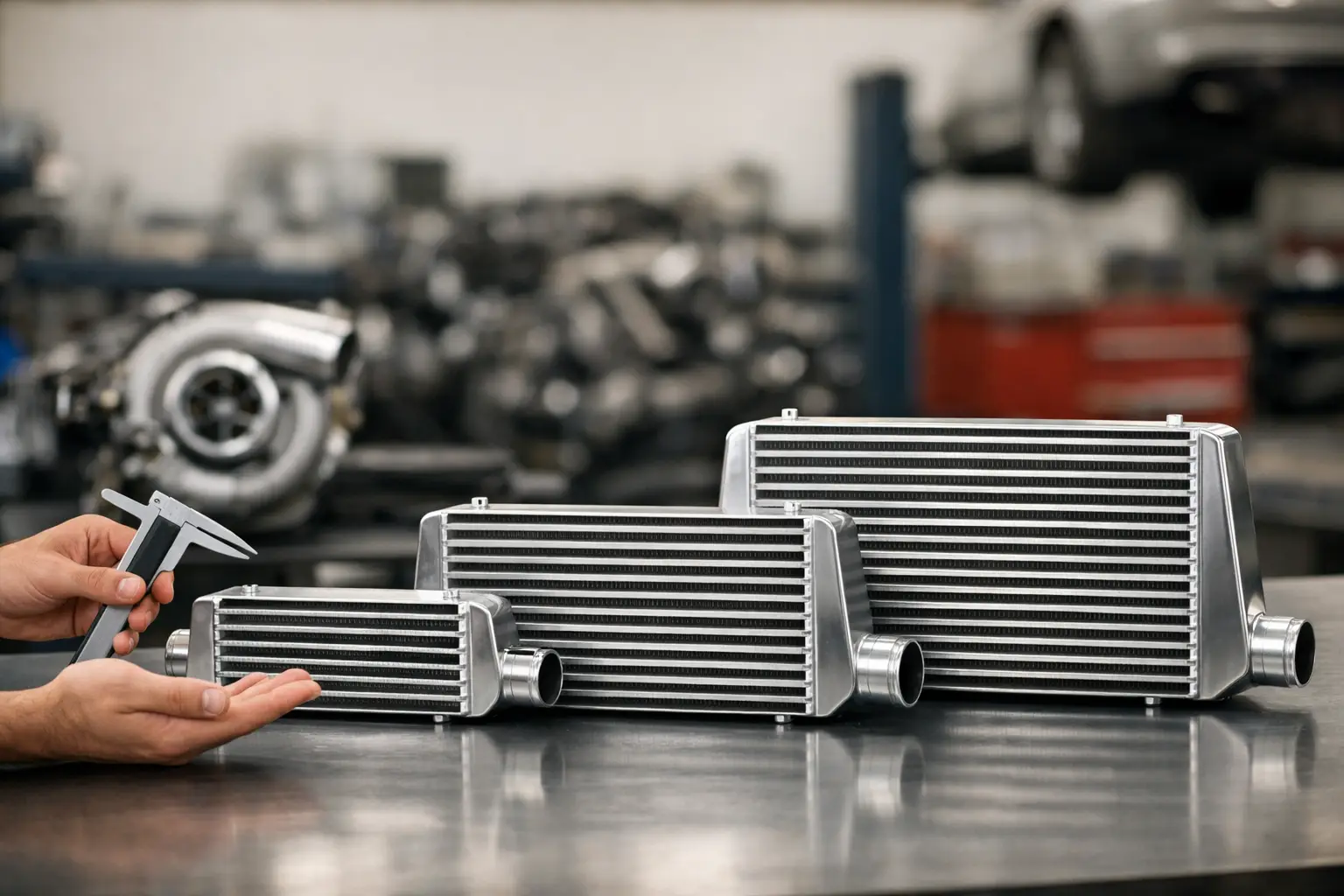
Core size still matters, but it is only part of the equation. A larger core with poor airflow, long restrictive hoses, or a bad mounting location can underperform a smaller, properly engineered kit. The best kits place the cooler in a high-pressure air path, use ducting or shrouding where appropriate, and include brackets designed for the chassis rather than improvised universal hardware.
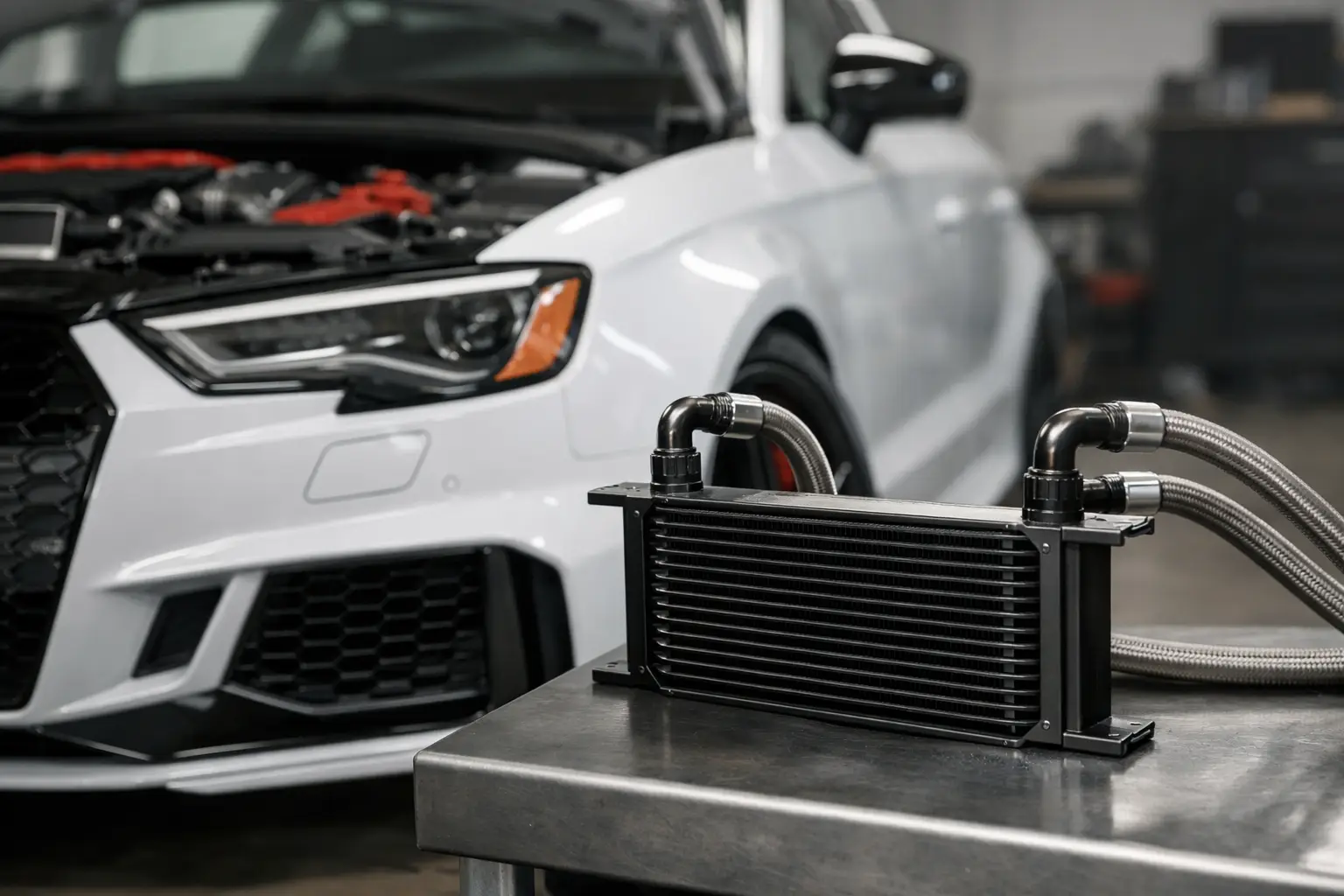
Look for components that match the seriousness of the build: a quality stacked-plate cooler, high-pressure hose, proper fittings, secure mounting brackets, and a thermostat or thermostatic sandwich plate when the engine needs one. On a platform with an OEM heat exchanger or factory oil-cooling circuit, a proven add-on kit should integrate with the existing system without creating clearance, serviceability, or warning-light issues.
Best Oil Coolers for Track Cars: Choose by Use Case
There is no single best cooler for every track car. The correct choice depends on how the vehicle is driven, how much heat it generates, and whether its factory system is already close to its limit.
Occasional Track-Day Street Cars
For a mostly street-driven car with a mild tune, upgraded intercooler, and a few track events each year, an efficient medium-size air-to-oil kit is often the smart move. The goal is temperature control without adding unnecessary oil volume, excess plumbing, or cold-weather complications.
A thermostatic setup is particularly valuable here. Oil needs to reach operating temperature before it can effectively evaporate moisture and fuel contamination. Without a thermostat, a generously sized external cooler may keep oil too cool during normal street driving, especially in colder climates. A quality thermostat allows the system to bypass or limit flow through the cooler until the oil is warm enough to benefit from it.
This category is where vehicle-specific fitment earns its value. A kit engineered around the chassis is more likely to clear crash bars, radiators, charge piping, and factory sensors while receiving usable airflow through the bumper.
Modified Turbo Cars and Repeated Lapping
Once power rises and sessions become more frequent, factory cooling capacity can disappear quickly. Turbocharged engines transfer substantial heat into the oil through turbocharger bearing housings, piston cooling, and sustained cylinder pressure. Cars such as tuned MQB Golf R and Audi S3 models, high-output RS3/TTRS builds, and modern BMW turbo platforms typically benefit from a larger stacked-plate core and more deliberate airflow management.
At this level, do not choose based on cooler dimensions alone. Confirm hose diameter, fitting type, thermostat flow capacity, and the routing path. A setup with undersized lines or sharp bends can add pressure drop, which is not a trade worth making for a few degrees of temperature reduction. The oil pump, bearing clearances, and engine architecture all influence how much restriction is acceptable.
Data logging should guide the decision. If oil temperatures climb past the desired range near the end of each session, then recover slowly in the paddock, the system likely needs more heat rejection. If temperatures are controlled but coolant temperatures rise at the same time, the issue may be total front-end airflow or radiator capacity rather than oil cooling alone.
High-Horsepower and Competition Builds
For cars built around big turbos, ethanol fueling, upgraded engines, slicks, and long sessions, the oil cooler becomes part of an integrated thermal-management package. These builds may need a large dedicated cooler, proper ducting, a high-flow thermostat, upgraded radiator capacity, intercooler improvements, and careful control of air exiting the engine bay.
More cooling is not automatically better. A large core mounted directly in front of the radiator can reduce airflow to the radiator and condenser. On a competition car, that may be acceptable if the rest of the package is designed around it. On a street-track car, it can create a frustrating trade-off where oil temperatures improve while coolant temperatures worsen in traffic or hot conditions.
The answer is layout. Side-mounted coolers, bumper openings, brake-duct-adjacent locations, and purpose-built ducting can preserve cooling efficiency across the entire stack. This is why proven race-oriented kits command a premium over generic universal assemblies.
Air-to-Oil vs. Water-to-Oil Cooling
Most dedicated track builds use air-to-oil cooling because it can reject a large amount of heat directly to ambient air. With the right core placement and airflow, it is highly effective and straightforward to monitor. The trade-off is added plumbing, more potential leak points, and a need for proper thermostat control on street-driven cars.
Water-to-oil heat exchangers are compact and can stabilize oil temperature quickly, which makes them useful where packaging is tight. They transfer heat from the oil into the coolant circuit, however, so they can add load to an already busy radiator system. They are often an excellent factory-style solution or a helpful supplement, but a heavily tracked, high-output car may still need a dedicated air-to-oil cooler.
Platform design decides much of this. Some engines have effective factory water-to-oil systems that benefit most from radiator and coolant-flow upgrades. Others respond better to a dedicated external cooler. The right approach starts with understanding the factory circuit and identifying whether oil, coolant, intake air, transmission fluid, or differential fluid is actually reaching its thermal limit first.
Fitment Details That Matter More Than Marketing
An oil cooler kit is only as good as its installation. Before buying, verify the exact chassis, engine code, transmission configuration, bumper configuration, and any existing modifications. Aftermarket intercoolers, turbo inlet pipes, auxiliary radiators, catch cans, and upgraded charge piping can all affect cooler placement and hose routing.
Pay close attention to mounting. The cooler should be isolated from vibration, protected from road debris, and positioned so airflow passes through the core rather than around it. It should not hang from plastic bumper material or rely on zip ties. A track car also needs lines routed away from exhaust heat, steering movement, sharp edges, and rotating components.
Service access is another overlooked factor. Oil changes, filter access, bumper removal, and leak inspection should remain manageable. A clean install makes it far more likely that fittings and hoses will be inspected regularly, which matters on any car that sees sustained high-speed use.
Temperature Targets and Monitoring
There is no universal oil-temperature number that applies to every engine and oil formulation. As a practical rule, oil that repeatedly exceeds the manufacturer’s intended operating range during track use deserves attention, especially if temperatures continue rising lap after lap. Many modern performance cars will operate safely at temperatures that look high to drivers accustomed to older engines, so factory guidance and quality data logging should lead the decision.
Watch the trend, not just the peak. A brief spike after a cooldown lap is different from a steady climb that forces power reduction halfway through every session. Compare oil temperature with coolant temperature, intake-air temperature, ambient conditions, lap times, and oil pressure. If pressure falls noticeably as oil gets hot, stop treating the issue as a dashboard number and investigate the full lubrication and cooling system.
Use a high-quality oil with the viscosity and approvals appropriate for the engine, then shorten service intervals when the car sees regular track use. An oil cooler helps preserve the oil, but it does not make neglected maintenance acceptable.
Build the Cooling System Around the Car
The right cooler should solve a documented problem while fitting the vehicle as if it belongs there. EAS Store helps performance drivers and workshops narrow the choice by platform, power goal, and intended use, because an RS3 at 700 horsepower and a stock daily-driven GTI do not need the same thermal package.
Start with a clear temperature log, identify the component that is truly overheating, and choose a vehicle-specific system with the core capacity, thermostat strategy, and airflow plan to match. The best upgrade is the one that lets you finish the final session with stable temperatures, consistent oil pressure, and confidence to stay on throttle.