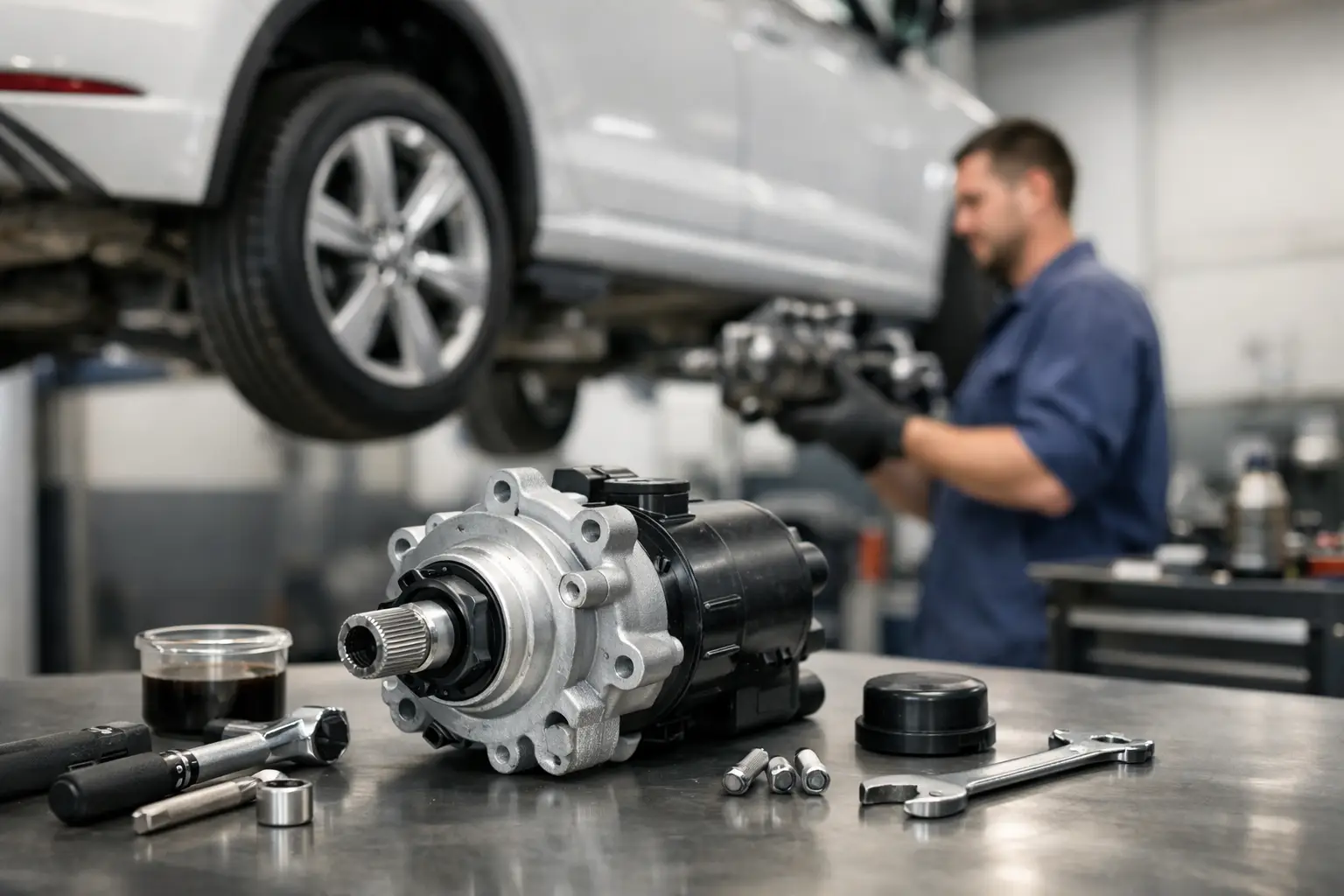
Hard launches, wet-road traction, and corner exits all depend on one often-neglected component: the rear Haldex coupling. Volkswagen Haldex coupling service is not glamorous maintenance, but it directly affects whether your AWD system can transfer torque when the front tires need help. On a stock daily driver, that means predictable all-weather grip. On a tuned Golf R, Tiguan, Alltrack, or other 4Motion platform, it can be the difference between putting power down cleanly and wasting it in wheelspin.
What the Haldex Coupling Actually Does
The Haldex coupling is an electronically controlled clutch pack used on many transverse-engine Volkswagen 4Motion models. Under normal driving conditions, these vehicles are generally front-wheel-drive biased. When the control system detects a need for rear-wheel torque, an electric pump builds hydraulic pressure inside the coupling and engages the clutch pack.
That quick response is why the system works so well for a street car that sees changing conditions. It is also why neglected fluid matters. The coupling relies on clean, correct fluid to lubricate internal components and support hydraulic operation. Contamination, degraded fluid, or restricted pump flow can reduce rear-axle engagement long before a driver notices a dramatic warning light.
Do not confuse Haldex service with a rear differential fluid change. These are separate components with separate fluid requirements and service procedures. A shop that treats the entire rear driveline as one fill-and-drain job can miss the coupling entirely.
What Volkswagen Haldex Coupling Service Includes
A proper Volkswagen Haldex coupling service starts with confirming the vehicle’s exact model year, drivetrain, and Haldex generation. Volkswagen has used several versions of the system, and the details matter. Fluid capacities, filter arrangements, pump access, replacement seals, and service procedures vary across applications.
At its core, the service involves draining the old Haldex fluid, refilling with the correct approved fluid, and setting the proper level according to the applicable procedure. Using a generic gear oil, DSG fluid, or an assumed substitute is not a shortcut worth taking. The Haldex unit has specific hydraulic and friction requirements, and the wrong fluid can compromise clutch engagement or pump operation.
The condition of the removed fluid can tell a useful story. Dark fluid, metallic debris, or sludge suggests the coupling has gone too long between services or has been operating under elevated load. A fluid change cannot reverse mechanical damage, but servicing the system early gives the pump and clutch pack their best chance at a long service life.
Filters and Pump Screens Depend on Generation
Earlier Haldex applications may use a serviceable external filter. If the filter is part of your system, replacing it with the correct component is a key part of the job. A clogged filter restricts flow and forces the pump to work harder, which is not where you want to cut corners on an AWD vehicle.
Many later Haldex systems do not have the same externally replaceable filter arrangement. That does not mean they are maintenance-free. These versions can accumulate debris at the pump pickup screen. Accessing, inspecting, and cleaning the screen where applicable is often the difference between a basic fluid change and a thorough service. The pump seal and hardware should also be inspected carefully during reassembly.
This is where platform-specific knowledge matters. A procedure that is correct for one MQB-based Volkswagen may not match another vehicle, even if both wear 4Motion badges. Confirm parts by VIN, model year, and drivetrain rather than ordering from a broad fitment assumption.
When Should You Service a Haldex Unit?
There is no single interval that fits every Volkswagen, every climate, or every use case. Factory recommendations have changed across generations and markets, while real-world ownership adds variables that the maintenance schedule cannot fully account for.
For a lightly driven stock vehicle, following the applicable manufacturer schedule is the starting point. For cars that see frequent launches, autocross, track days, snow driving, towing, high ambient temperatures, or substantial power increases, earlier service is a practical investment. More torque and more heat mean more work for the clutch pack and fluid.
A conservative enthusiast approach is to inspect service history rather than assume the unit has been maintained. If you bought a used Golf R or Tiguan with no documented Haldex work, putting the coupling on the maintenance list is sensible. The cost of fluid, filters, and seals is modest compared with diagnosing a failed pump, damaged clutch pack, or AWD fault.
Mileage alone is not the entire answer. A low-mileage car that has spent years on old fluid may still need attention. Conversely, a well-documented vehicle that receives regular fluid and filter service is a much safer foundation for power upgrades.
Signs Your Haldex System Needs Attention
The most obvious symptom is a loss of expected rear-wheel assistance. On loose surfaces or during a hard launch, the vehicle may behave more like a front-wheel-drive car, with excessive front tire spin before the rear axle contributes. That symptom is not exclusive to Haldex failure, but it deserves diagnosis.
Dashboard drivetrain warnings, stored AWD-related fault codes, pump communication faults, and unusual pump noise can also point toward a problem. Some vehicles will show no clear warning until the system has already lost significant function. That is why preventive service is preferable to waiting for a message in the gauge cluster.
Do not automatically blame the coupling if traction feels inconsistent. Tires, wheel-speed sensors, ABS faults, rear differential issues, control modules, wiring, and calibration problems can all affect AWD behavior. A capable technician should scan the vehicle, verify live data, and test the system before recommending major parts.
Haldex Service for Tuned and Track-Driven Volkswagens
A performance build raises the stakes. Added torque from tuning, upgraded turbochargers, ethanol blends, or aggressive launch control places greater demand on the coupling than normal commuting does. The Haldex unit is designed to manage torque transfer, not to be ignored after horsepower climbs.
For a tuned MQB Volkswagen, service should be part of the build plan alongside engine oil, DSG service where applicable, brake fluid, cooling, and tire selection. Fresh fluid does not create more clutch capacity, but it helps preserve the hydraulic response and internal condition needed for the system to work as designed.
There is a trade-off to consider with aggressive tuning. More power can make an AWD car faster and more usable, yet it also exposes weak maintenance habits quickly. If a vehicle has unknown Haldex history, resolve that before adding a high-torque calibration or planning repeated launch-control starts. Reliability begins with the systems that put power to the ground.
Choosing the Right Haldex Service Parts
The right service kit is not simply the least expensive bottle of fluid and a filter that looks close enough. Quality fluid, correct filter or pump-screen service components, new seals where required, and verified fitment are the essentials. For workshops, documenting the service and the fluid used also helps protect the customer and establish a baseline for future maintenance.
EAS Store supports serious European performance builds with premium maintenance and upgrade components selected around real platform requirements. If you are sourcing Haldex service parts for a modified Volkswagen, confirm the application before ordering, especially when model-year changes and drivetrain variations are involved.
Give the Haldex coupling the same attention you give the engine and transmission. A clean, correctly serviced AWD system is not just preventative maintenance – it is the foundation for the traction your Volkswagen was built to deliver.