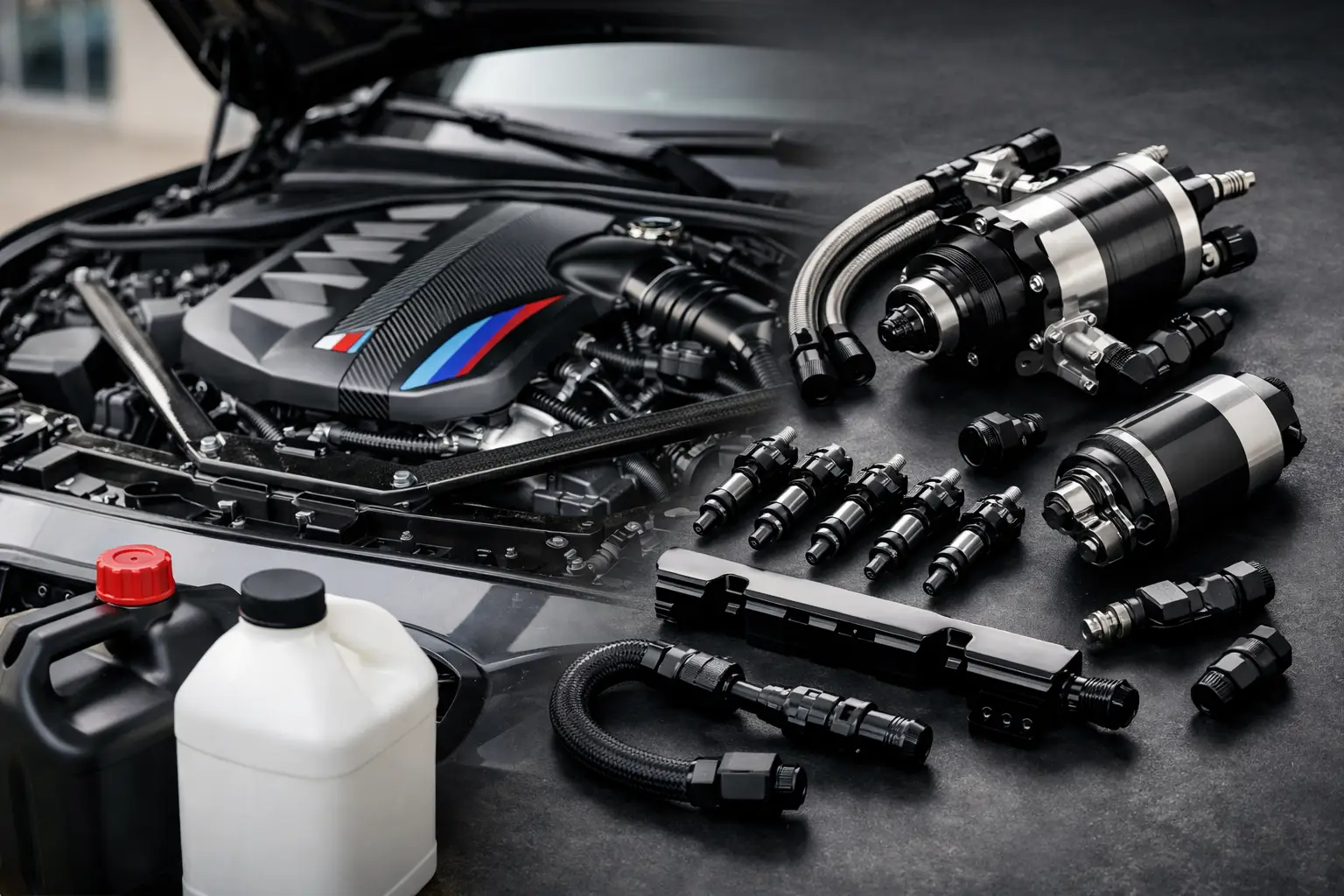
If your S58 build plan starts with “just add ethanol and tune it,” you are already close to the point where fuel system limits decide whether the car feels brutally strong or frustratingly inconsistent. A proper BMW S58 fueling guide is not about chasing the biggest dyno number. It is about matching the right hardware to the power target, fuel type, and use case so the car delivers clean, repeatable performance.
The S58 gives builders a strong foundation. Factory direct injection, solid OEM engineering, and excellent turbo response make it one of BMW’s best modern performance engines. But like every high-output platform, the fueling conversation changes fast once boost rises, ethanol content increases, and sustained load becomes part of the picture.
Why the S58 fuel system becomes the bottleneck
On a stock or lightly tuned car, the factory system is surprisingly capable. That is why many owners get comfortable after a basic flash tune and a few ethanol blend pulls. The issue is that fuel demand does not increase in a gentle, linear way once you start leaning on the platform harder.
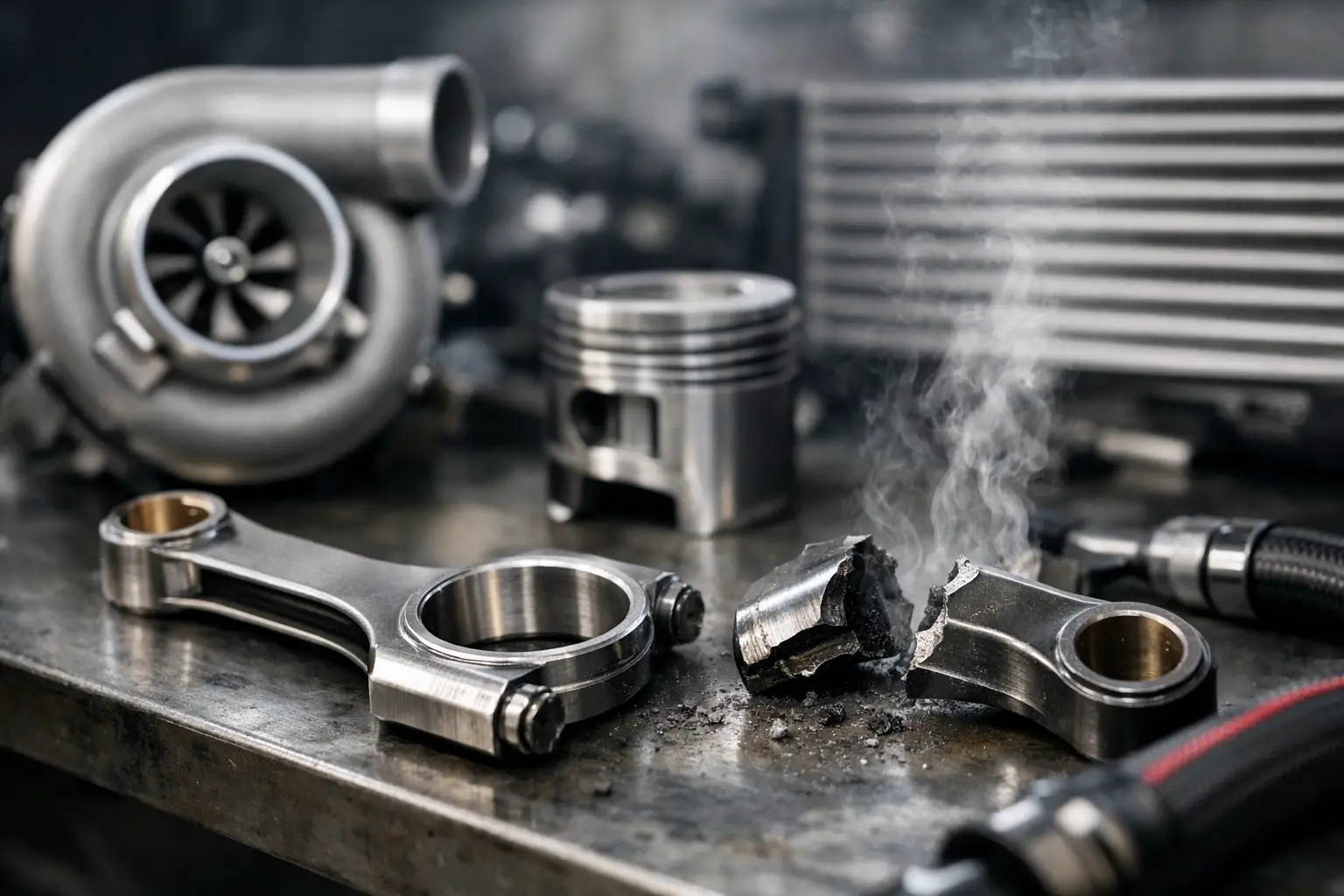
More boost means more air mass. More ethanol means you need more volume than pump gas for the same power. Longer pulls on track or repeated highway hits add heat and expose weak points that may not show up in a short dyno session. A setup that looks fine on a cool day with E30 can become marginal on warmer fuel, higher ethanol content, or a more aggressive tune.
That is where experienced parts selection matters. Not every S58 owner needs the same path, and overbuilding the system is not always the smartest move if the car is mostly street driven. At the same time, trying to squeeze race-level output out of stock fueling usually ends with compromised tuning, reduced headroom, or hardware you have to replace later.
BMW S58 fueling guide by power goal
The cleanest way to approach the platform is by honest horsepower targets, not social media claims. If the goal is a responsive street car on premium pump gas, your fueling needs are very different from a drag-oriented ethanol setup.
For basic tuned stock-turbo cars on 91 or 93 octane, the factory fueling system often remains workable with the right calibration. Once ethanol blends enter the mix, especially beyond mild blends, the margin tightens quickly. Ethanol is excellent for knock resistance and charge cooling, but it demands more from the pumps and injectors. That is why so many S58 conversations shift from tune files to low-pressure and high-pressure fuel supply.
For mid-level builds, the low-pressure side is often the first area owners address. The car may run well on conservative blends, but as torque rises and ethanol percentage increases, maintaining stable supply becomes more difficult. Upgrading the low-pressure fuel pump can create valuable headroom and help the entire system stay more consistent under load.
At higher horsepower levels, especially on upgraded turbochargers or aggressive full-ethanol setups, the high-pressure side becomes a much bigger factor. Direct injection systems live and die by pressure control. If pressure drops or injector delivery becomes a limiting factor, the tuner has fewer options. That usually means giving up power, softening the curve, or adding supplementary fueling strategies.
Low-pressure vs high-pressure fueling on the S58
A lot of confusion comes from owners treating the fuel system as one single upgrade path. It is really two conversations that have to work together.
The low-pressure system is responsible for feeding the high-pressure pump consistently. If the low side cannot keep up, the high-pressure system never gets the volume it needs. This is often where blend cars start running out of room first. A stronger low-pressure pump is a logical upgrade for owners who want more ethanol capacity and a more stable foundation.
The high-pressure side is where direct injection performance becomes critical. The S58 relies on very high fuel pressure to deliver the right amount of fuel during limited injection windows. As RPM and load climb, that window gets tighter. More airflow and more ethanol make the job harder. This is why upgraded high-pressure pump solutions or multi-pump strategies become relevant on serious builds.
The key point is simple: a stronger low-pressure pump does not automatically solve a high-pressure limitation, and a high-pressure upgrade cannot perform properly if the low side is inadequate. The best builds treat the system as a complete package.
Pump gas, ethanol blends, and full ethanol
Fuel choice changes everything.
If you plan to stay on premium pump gas, your fueling path can stay relatively straightforward. The car may support strong gains with fewer hardware changes, and drivability usually remains easier to manage. For many street customers, this is the sweet spot because it balances power, convenience, and long-term reliability.
E30 to E50 style blends are where the S58 gets especially interesting. These blends can offer substantial performance benefits without the full complexity of a dedicated ethanol build. But this is also where owners need to stop guessing. Actual ethanol content, regional fuel quality, and seasonal variation all matter. The difference between a conservative flex-fuel-capable setup and a blend pushed to the edge is larger than many people think.
Full E85 or near-full ethanol setups can deliver major performance, but they require a much more honest look at the entire system. Fuel volume demand rises sharply. Cold-start behavior can change. Tuning becomes less forgiving if the hardware package is not matched correctly. For street-driven cars, that trade-off may still be worth it. For others, a well-executed blend setup offers a better balance.
Supporting mods that matter more than people admit
Fueling upgrades do not work in isolation. The more power you ask from the S58, the more interconnected the package becomes.
Charge air cooling matters because high intake temperatures force the calibration to pull back, which changes fuel demand and overall consistency. Spark plug selection matters because combustion stability becomes more sensitive on higher-boost ethanol cars. The intake and exhaust path matter because airflow improvements change how quickly the engine reaches fuel system limits. Even the transmission tune and torque strategy affect how the car applies power and how repeatable the setup feels on the road or track.
This is why serious S58 builds are usually better when planned in stages. Buying a single fueling component without a clear roadmap can solve one short-term issue while creating a mismatch somewhere else.
The tuning side of the BMW S58 fueling guide
No fueling article is complete without saying this clearly: hardware does not make power by itself. Calibration quality determines whether the system uses that hardware safely and effectively.
A strong tuner will look at rail pressure behavior, low-pressure stability, injector performance, ethanol content, ignition strategy, and torque targeting together. That matters because one car on the same parts can perform very differently from another depending on fuel quality, climate, and intended use.
Street cars need clean starts, smooth transitions, and predictable part-throttle behavior. Race builds may accept more trade-offs if the goal is peak output and repeatability under extreme load. Neither approach is wrong. Problems happen when the owner expects race-car output with stock-like compromises and budget-minded parts selection.
Choosing parts without wasting money
The smartest buyers start with the end goal. If the target is a strong stock-turbo street car with occasional ethanol blends, focus on the components that add real margin without forcing unnecessary complexity. If the target is an upgraded turbo car with aggressive ethanol use, buy the fueling system once with enough headroom to support the next stage.
Brand quality matters here. Fuel system parts are not the place to shop purely by the cheapest option or the most aggressive marketing claim. Pump control, fitment, material quality, and tuning support all matter. This is especially true on premium European performance platforms where compatibility mistakes can get expensive fast.
That is also where a specialist supplier helps. EAS Store works with enthusiasts and serious builders who need parts that fit the application, not generic recommendations copied from another platform. On the S58, that difference shows up quickly once power goals move beyond basic tuning.
What most S58 owners should do first
Before ordering parts, decide three things: your real horsepower target, your actual fuel plan, and whether the car is primarily street, drag, or road course driven. Those answers usually reveal the correct fueling path faster than any forum debate.
If you are unsure, be conservative with your assumptions. Most owners benefit more from a stable setup with margin than from a system tuned right at the edge. A car that delivers repeatable power on every pull is worth more than one impressive dyno sheet followed by constant revisions.
The S58 responds extremely well to the right fuel system strategy, but there is no universal parts list that fits every build. Match the hardware to the goal, leave headroom where it counts, and treat fueling as the foundation of the package rather than an afterthought. That is how you build an S58 that stays fast when the conditions stop being perfect.