A serious RS3 build can make exceptional power on ethanol, but the fuel system has to be planned around volume, not just a target horsepower number. This RS3 ethanol fueling example outlines a sensible path for a DAZA-powered 8V RS3 targeting roughly 700-plus horsepower at the crank on E60-E85, with the supporting hardware and calibration discipline that keep the car consistent.
Ethanol is not a bolt-on horsepower trick. It gives the 2.5TFSI more knock resistance and charge cooling, allowing a tuner to safely command more boost and ignition timing when the rest of the package supports it. At the same time, ethanol requires substantially more fuel volume than gasoline. That increased demand exposes weak low-pressure pumps, high-pressure capacity limits, undersized lines, and tuning shortcuts quickly.
Why an RS3 ethanol fueling example matters
The DAZA 2.5TFSI is a strong foundation, but every RS3 ethanol setup has a limiting point. Turbocharger flow, elevation, desired ethanol content, ambient temperature, injector strategy, and whether the car sees repeated track use all change the answer. A fuel system that supports a quick highway pull may not hold stable pressure during a long road-course session or several back-to-back drag passes.
The useful way to approach the build is to establish a power objective, verify the actual ethanol blend available locally, then size the fueling hardware with margin. Do not build around the assumption that every station marked E85 dispenses the same product year-round. In many markets, pump ethanol can vary materially, particularly in colder months. A sensor-based flex-fuel calibration gives the ECU the information it needs to adjust for that change.
For this example, assume a stock long-block DAZA RS3 with a capable hybrid or upgraded turbo, intake and intercooler improvements, a free-flowing exhaust, and a conservative goal of approximately 600-650 wheel horsepower. The exact dyno result is secondary. The priority is retaining stable commanded rail pressure, adequate low-side pressure, clean air-fuel control, and safe ignition correction under the conditions the car will actually see.
The fuel-volume reality of E85
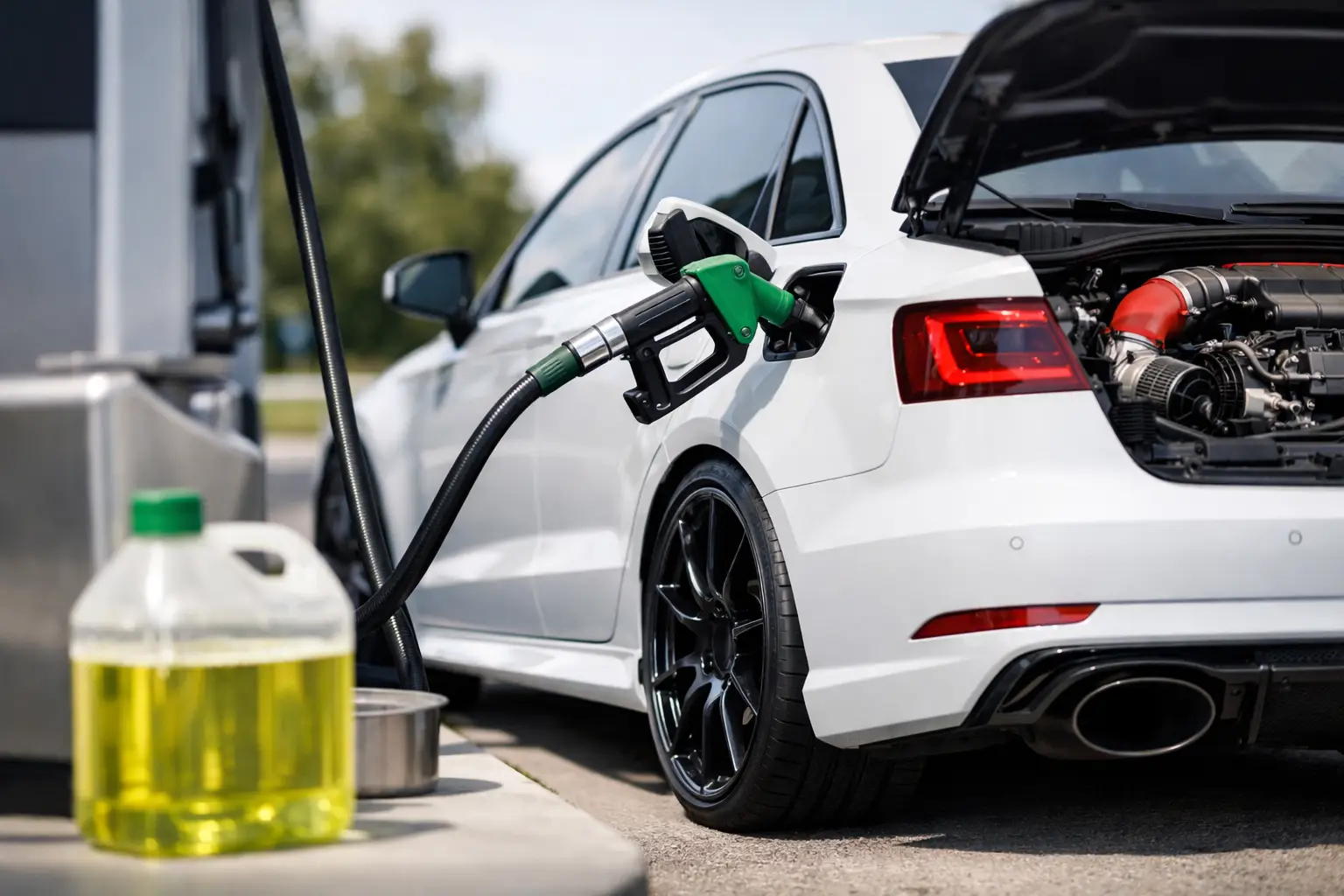
E85 contains less energy per gallon than pump gasoline, so the engine consumes more of it to make the same power. A practical rule is to expect roughly 25-35 percent greater fuel-volume demand, depending on the real ethanol percentage and calibration. That is why a stock fuel system that looks comfortable on 93 octane can be near its limit once ethanol content and boost rise together.
On a direct-injected engine, the high-pressure and low-pressure sides work as one system. The in-tank pump must deliver sufficient volume to the high-pressure fuel pump without excessive pressure drop. The high-pressure pump must then deliver enough fuel at the rail pressure the calibration requires. If either side falls behind, the tuner has less useful fuel mass available exactly where cylinder pressure is highest.
Logging is the deciding factor. Watch actual versus requested low-side pressure, actual versus requested rail pressure, injector pulse width or injection window where available, lambda, fuel trims, and ignition correction. The data needs to be evaluated through the full pull, not only at peak power. A pressure curve that falls off near redline can turn a seemingly successful dyno number into a poor calibration for repeated hard use.
A 700-plus horsepower RS3 ethanol fueling example
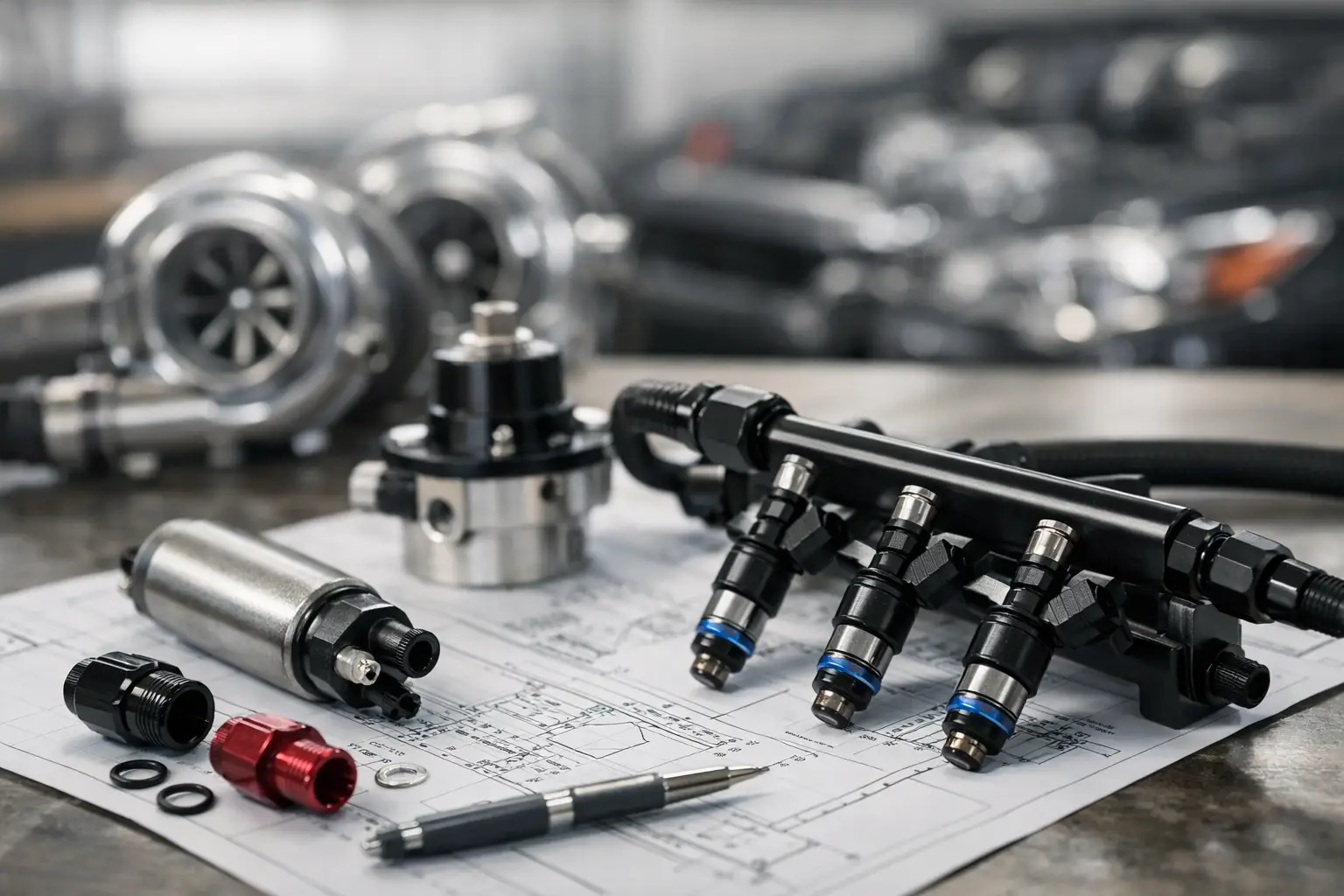
A well-matched setup at this level commonly starts with a high-capacity in-tank low-pressure fuel pump solution, upgraded internal pump hardware or a complete module depending on the application, and a higher-capacity high-pressure fuel pump. The correct combination depends on the ECU strategy and the fuel blend being used. Some builds can meet their target with upgraded direct-injection capacity alone. Others require supplemental port injection to create enough overhead at higher boost and airflow.
For a 600-650 wheel horsepower E60-E85 RS3, the core package may look like this:
- A proven high-flow low-pressure pump solution sized for ethanol and sustained load.
- An upgraded high-pressure pump compatible with the DAZA fuel system and selected calibration.
- Flex-fuel hardware with a reliable ethanol-content sensor and an ECU calibration designed to use its signal.
- Ethanol-compatible fuel lines, fittings, filters, and, when required, supplemental port-injection hardware.
- A tuner with direct experience calibrating the RS3 platform at the intended turbocharger and fuel level.
That list is not a universal shopping cart. A car on E60 at moderate boost may not need the same hardware as a full-E85 car at sea level using an aggressive hybrid turbo. Likewise, a port-injection system should not be added simply because it is popular. It needs correct injector sizing, proper fuel-pressure control, secure wiring, and a calibration strategy that coordinates direct and port fuel delivery. More components add capacity, but they also add installation, diagnostic, and maintenance requirements.
Choosing between direct injection and port injection
Upgraded direct injection retains the factory-style fuel delivery approach and can be an efficient solution for many street-focused builds. It generally keeps the engine bay cleaner and reduces system complexity. The trade-off is that high-pressure pump and injector limitations can arrive quickly as power, RPM, and ethanol content increase.
Supplemental port injection is often the right answer when the direct-injection system no longer has enough headroom. It can substantially increase total fuel capacity and support more ambitious turbochargers. However, it makes component quality and installation detail non-negotiable. Fuel rails, injector seals, line routing, fittings, electrical connections, and controller integration all deserve the same scrutiny as the turbo system.
A specialty workshop building a repeatable 800-plus horsepower combination may choose port injection early because the long-term fuel demand is known. A street driver aiming for a responsive 650-wheel-horsepower car may prefer the simplicity of an upgraded direct-injection package if the logs demonstrate adequate margin. Neither route is automatically better. The correct route is the one that supports the real objective without operating at the edge of its capacity.
Fuel quality, cold starts, and daily use
An ethanol sensor is one of the most valuable parts of a flex-fuel RS3 because it replaces assumptions with data. The content reading lets the calibration account for blend variation, while a quality gauge or digital display can help the driver verify what is in the tank. Test fuel when a new station is used, and do not assume a summer blend is available in January.
Cold-start behavior also deserves attention. Higher ethanol content vaporizes differently than gasoline, and cold weather adds another layer of difficulty. A properly developed flex-fuel tune should address start-up enrichment across expected temperatures. If the vehicle is a daily driver in a cold climate, an E60 blend may be a more practical year-round target than chasing maximum power on full E85.
Fuel storage matters as well. Ethanol attracts moisture and can degrade during extended downtime. Cars that sit for months should not be left with old ethanol fuel and ignored. Fresh fuel, appropriate storage practices, and periodic inspections of filters and fittings protect the investment in the fueling system.
Installation details that separate a strong build from a stressful one
Fueling upgrades reward careful work. Confirm every part against the vehicle’s engine code, model year, and ECU configuration before ordering. The 8V RS3 and TTRS community includes different engine generations and hardware variations, so a part marketed broadly for a 2.5T may not be correct for every application.
Use ethanol-rated components throughout the fuel path, route lines away from heat and moving parts, and pressure-test the system before the first hard drive. Electrical supply to an upgraded low-pressure pump is equally important. A pump cannot deliver its advertised flow if voltage drops under load because the wiring, controller, relay, or ground path is inadequate.
After installation, the first calibration revisions should be logged conservatively. Confirm low-side supply, rail pressure, lambda, and corrections before adding boost or timing. This process takes more patience than installing parts and loading a file, but it is where reliable fast cars are built. EAS Store can help narrow the hardware options around your target, turbocharger, and intended ethanol blend before incompatible parts become an expensive delay.
Do not size the system to the dyno sheet
A fueling system should have enough reserve for heat, a less favorable ethanol blend, and the occasional bad tank of fuel. Building to the absolute edge may produce an impressive number once, but it leaves no room for the conditions that occur outside the dyno cell. Prioritize data, compatible components, and a calibration with headroom, and the RS3 will deliver the kind of ethanol performance you can use with confidence every time you roll into boost.