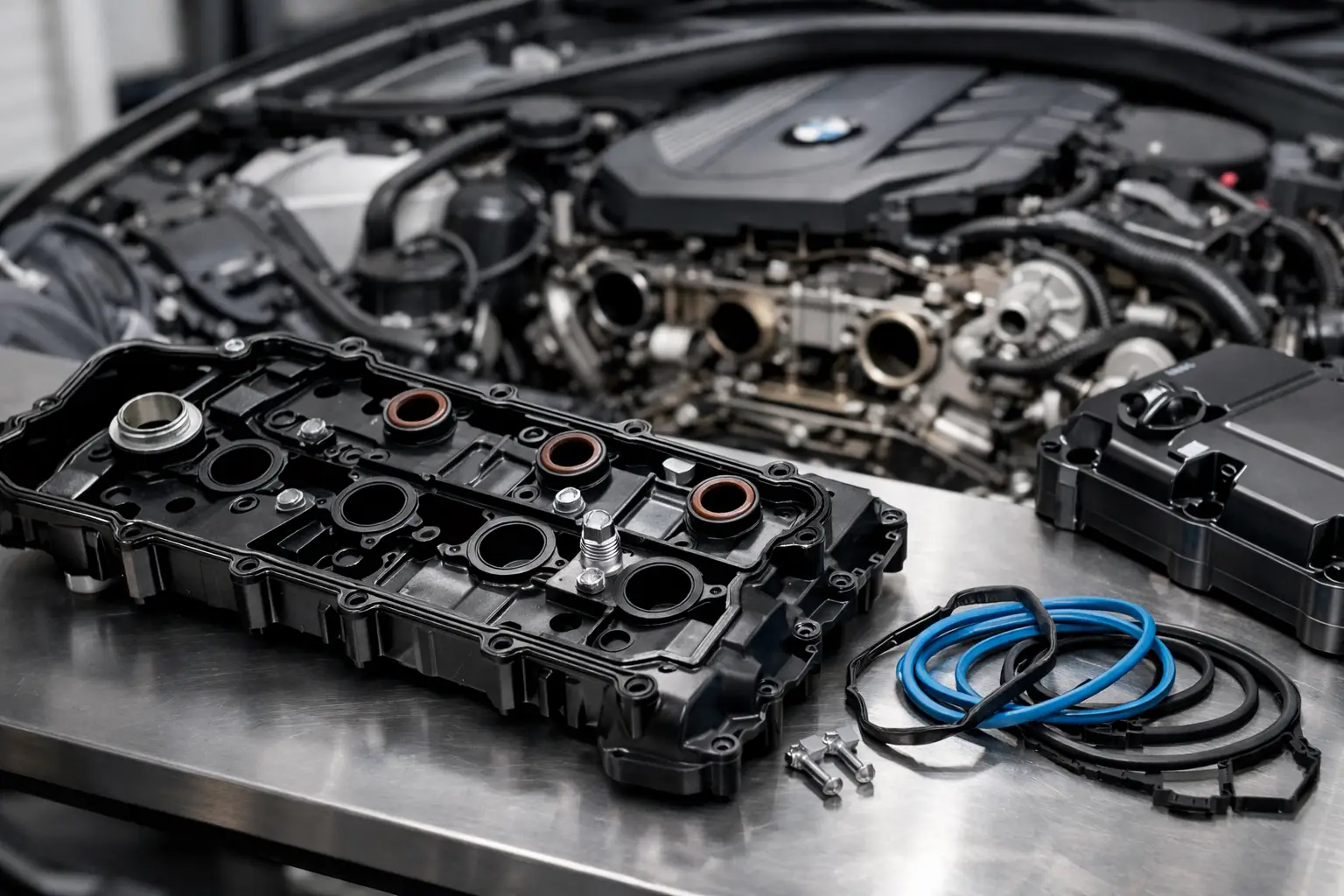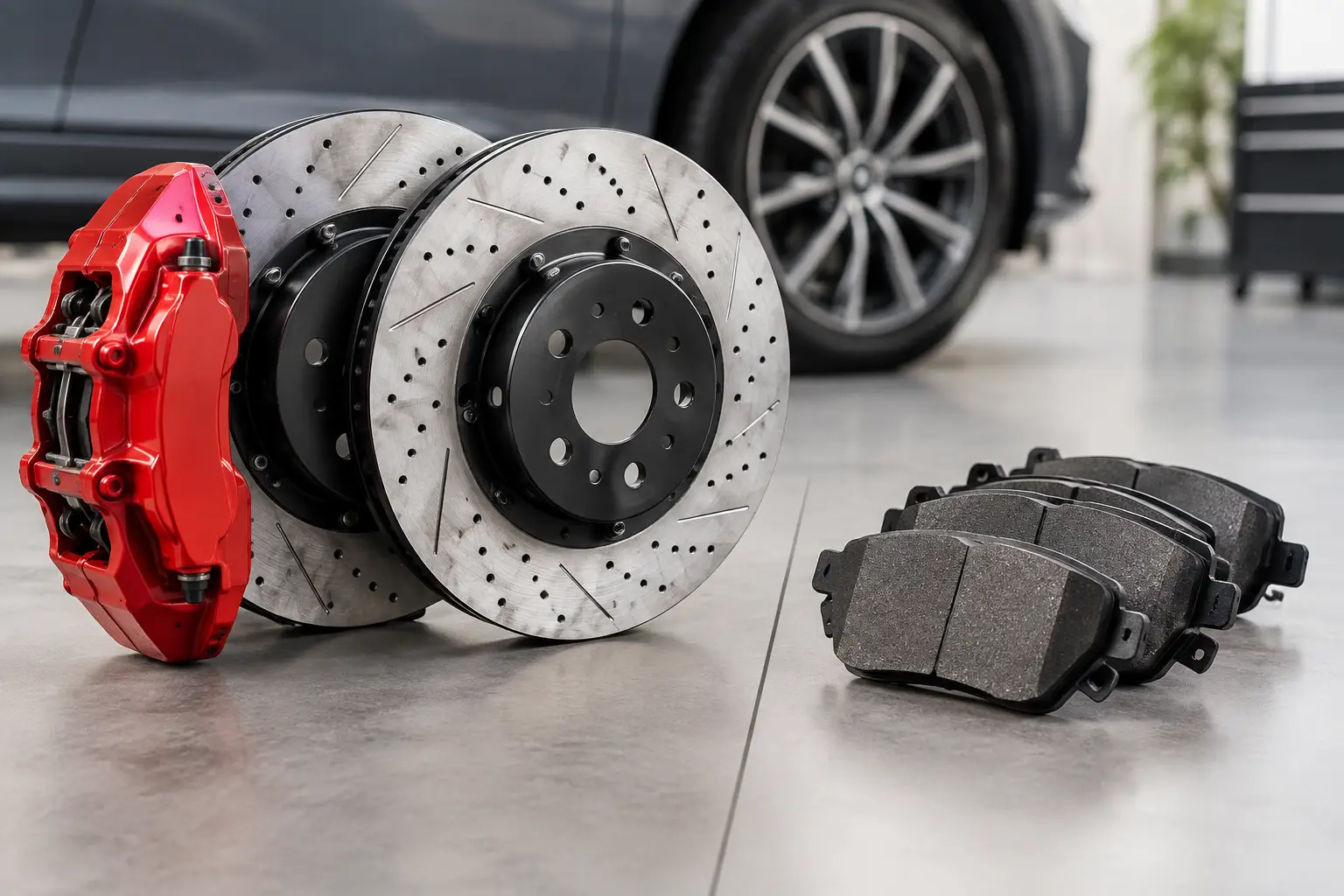
Your factory brakes may feel completely fine on the street, then start telling a different story after three hard laps, a mountain descent, or repeated 70-to-20 mph stops. The big brake kit versus pads decision comes down to identifying that limit correctly. A brake upgrade should solve the problem your car actually has, not simply add the largest caliper that fits behind the wheel.
For a tuned GTI, RS3, M3, AMG, or other European performance platform, that distinction matters. More power raises terminal speeds, more speed raises brake energy, and the wrong upgrade can leave money on the table. Quality pads, fluid, rotors, cooling, and a properly selected big brake kit all have a place. The right choice depends on heat, duty cycle, tire grip, wheel fitment, and how honestly the car is driven.
Start With the Actual Brake Complaint
Before choosing parts, separate pedal feel from fade, fade from traction limitation, and heat capacity from outright clamping force. These are related, but they are not the same issue.
A soft pedal after hard use often points to old or overheated fluid, air in the system, or an overworked pad compound. A firm pedal that requires more and more pressure as a session continues is more likely friction fade. Vibration under braking can come from uneven pad deposits, rotor surface condition, worn suspension components, or incorrect bedding – not automatically warped rotors.
If the car locks ABS early on the street, larger brakes will not create more tire grip. The tire is already the limit. On the other hand, if a 700-horsepower G8X BMW repeatedly enters high-speed braking zones with a stock-sized rotor glowing at the end of a session, thermal capacity is the limit. That is where a complete system upgrade begins to make sense.
What Performance Pads Can Actually Fix
A high-quality pad compound is usually the most effective first brake upgrade for a fast street car or occasional track-day build. Pads change the friction characteristics at the rotor face. The right compound can improve initial bite, maintain consistency at elevated temperatures, and resist fade far better than an OE street pad.
This does not mean every aggressive pad belongs on every vehicle. Track-focused compounds can be noisy when cold, create more dust, wear rotors faster, and feel less refined during daily driving. A dual-duty performance pad is often the better answer for a street-driven Audi S3 or BMW M2 that sees a few events each year. A dedicated track compound makes more sense for a car trailered to events or regularly driven at advanced pace.
Pads work best as part of a sensible service package. Fresh high-temperature brake fluid raises the fluid boiling point and protects pedal consistency. Quality rotors provide a stable friction surface and manage heat more predictably than bargain replacements. Stainless steel lines can improve pedal feel by reducing line expansion, although they do not add meaningful thermal capacity on their own.
For many owners, this combination is enough: performance pads, fresh fluid, appropriate rotors, and proper bedding. It costs substantially less than a big brake kit, retains stock caliper serviceability, and can transform confidence under repeated braking.
When pads are the smart choice
Choose pads and supporting brake service first when the factory hardware is in good condition, the car is primarily street driven, and the problem is fade or inconsistency during occasional hard use. It is also the logical move when wheel clearance is limited or when the car is still on all-season or modest-performance tires.
There is no performance value in installing six-piston calipers while leaving old fluid in the system and fitting a pad that cannot survive the temperatures you generate. Build the braking system in the same order you build power: address the restriction first.
Big Brake Kit Versus Pads: Where a BBK Wins
A big brake kit is not simply a visual upgrade, although a properly engineered caliper and large two-piece rotor certainly change the appearance behind the wheel. Its real advantage is heat management and repeatability.
A larger rotor increases thermal mass. It can absorb more energy before temperature rises to the point where pad friction falls away, fluid is stressed, seals are exposed to excessive heat, or the rotor surface becomes unstable. A larger effective rotor radius also gives the caliper more mechanical leverage. That can reduce the hydraulic pressure required for a given braking torque when the system is correctly engineered.
Two-piece rotors are another major benefit on serious applications. Their aluminum hats can reduce rotating and unsprung weight compared with a heavy one-piece iron rotor of similar size. Floating hardware allows the iron ring to expand more naturally under heat, which supports durability during repeated track cycles. Replacement rings may also reduce long-term running costs compared with replacing an entire rotor assembly.
The caliper matters because it must apply pressure evenly, resist flex, accommodate a suitable pad shape, and work with the master cylinder, ABS system, and brake bias of the chassis. More pistons are not automatically better. Piston sizes, total caliper area, pad volume, mounting geometry, and rotor diameter determine whether a kit works as a system.
A premium BBK earns its price when the vehicle repeatedly overwhelms stock rotor mass. Think of an RS3 or TTRS making substantially more than factory power, a heavy BMW running slicks, or a Mercedes that sees long, high-speed track sessions. In those cases, a larger rotor and properly matched caliper can turn a brake system from a consumable bottleneck into a dependable track component.
The Trade-Offs of Going Bigger
A big brake kit requires more planning than pads and fluid. Wheel clearance is the first question. Caliper shape matters as much as wheel diameter. A 19-inch wheel may still interfere with a large caliper barrel or spoke profile, while certain 18-inch track wheels can clear a kit designed around that fitment. Always verify the manufacturer’s brake template against the exact wheel, including spacer thickness if applicable.
Cost is the next consideration. The purchase price is only part of the equation. Replacement rings, pad shapes, fluid, and installation should be considered before committing. Some calipers use common motorsport pad profiles with broad compound availability, while others use more specialized shapes. For a car that sees frequent track use, consumable availability matters.
Brake bias and ABS behavior deserve respect as well. A front-only BBK can be an excellent solution, but it must be engineered for the chassis. Randomly combining oversized front hardware with unrelated rear components can change the balance in ways that reduce confidence at the limit. Reputable kits are designed around piston sizing and rotor dimensions that preserve appropriate system behavior.
There is also a practical point many owners overlook: a BBK does not eliminate the need for good pads and fluid. It gives those components a more capable environment. The wrong pad can still fade in a large kit, and neglected fluid can still boil.
Match the Upgrade to Your Build Stage
For a lightly tuned daily driver, start with premium street-performance pads, fresh fluid, and quality rotors. This is especially effective when the car’s braking issue is vague pedal feel, dust-heavy worn OE pads, or occasional fade during spirited driving.
For a dual-purpose car with track days on the calendar, choose a more temperature-capable pad, high-boiling-point fluid, fresh rotors, and consider brake cooling where the platform supports it. Cooling ducts can be a remarkably effective answer because they lower the temperature of the entire system rather than asking one component to survive more heat.
For a high-output or dedicated track build, a BBK should be considered when stock rotor temperatures, pad wear, cracking, or repeated fade demonstrate that the factory system has reached its thermal limit. Pair the kit with track-appropriate pads, quality fluid, tires capable of using the additional brake torque, and wheels confirmed for clearance.
The best brake upgrade is rarely the most expensive one on the first purchase. It is the setup that stays consistent at your real pace, fits your exact chassis and wheel combination, and has consumables you can source without compromise.
Do Not Ignore Tires, Setup, and Driver Technique
Braking performance is tied directly to the tire contact patch. Installing a serious brake package on worn street tires may improve resistance to fade, but it will not shorten every stop in the way many drivers expect. Better tires can allow higher deceleration before ABS intervention, which also means they can generate more brake heat. As grip goes up, brake system demands usually go up with it.
Suspension setup matters too. Excessive dive, poor alignment, and unstable rear-end behavior can make a car feel like it needs more brake when the chassis is actually reducing confidence. A balanced alignment, properly functioning dampers, and predictable tire behavior let the driver use the brakes harder and more consistently.
Finally, brake technique affects temperature. Dragging the pedal into corners and repeatedly making partial applications puts heat into the system without getting the most deceleration from it. Firm, controlled braking followed by a clean release is usually easier on components and more repeatable on track.
If you are deciding between pads or a full kit, begin with the data you already have: vehicle weight, power level, tire choice, wheel size, track frequency, and the exact behavior you feel at the pedal. EAS Store can help match premium braking components to the platform rather than selling an upgrade based on appearance alone. Choose the system that gives your car the confidence to brake just as hard as it accelerates.