A hard braking zone exposes the difference between ordinary brake pads and a pad chosen for the way you actually drive. On a tuned MQB car, an S58 BMW, or a high-output Audi RS3, added power raises trap speeds quickly. If the pad compound cannot hold temperature, deliver consistent pedal feel, and work with your rotor setup, the car may be fast in a straight line but compromised everywhere else.
For performance owners, brake pads are not a generic maintenance item. They are a friction material decision that affects stopping distance, fade resistance, bite, dust, noise, rotor life, and driver confidence. The right choice starts with honest use case, exact fitment, and the rest of the braking system.
Brake Pads Start With How You Use the Car
A daily-driven European performance car needs different behavior than a dedicated track build. There is no single “best” compound because street comfort, cold performance, track temperature capability, and low dust do not always coexist in one pad.
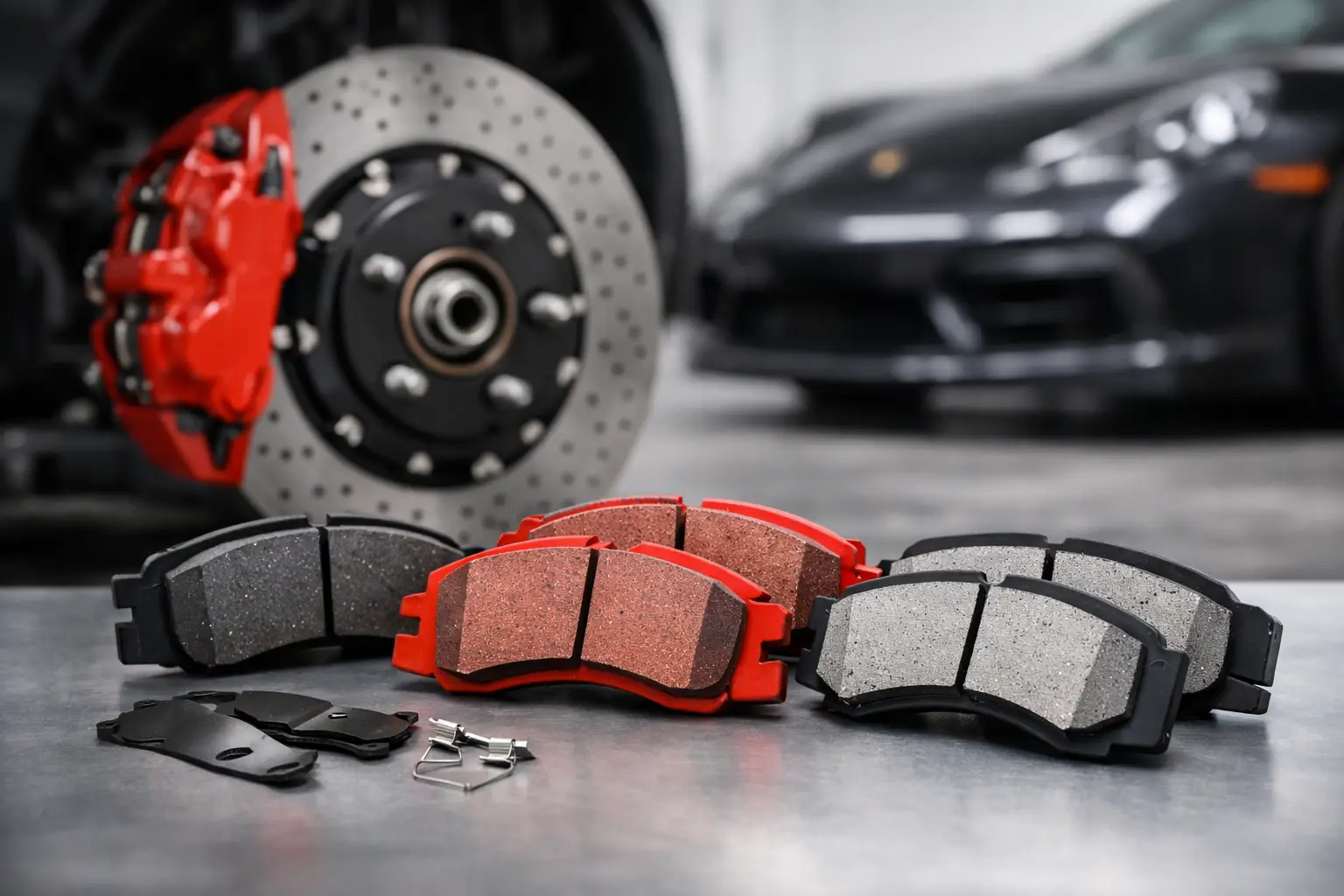
A quality street-performance pad is usually the right baseline for a car that sees spirited back-road driving, occasional high-speed pulls, and normal commuting. It should bite predictably from cold, remain quiet with proper bedding, and tolerate more heat than an OE pad. This category makes sense for many tuned Golf R, S3, M340i, and AMG owners who want a stronger pedal without turning every morning drive into a race-car experience.
Track-capable street pads push further into heat tolerance and initial bite. They can be a strong option for drivers attending occasional track days, especially with upgraded fluid and appropriate rotors. The trade-off is usually more dust, more rotor wear, possible noise, and less refined operation in cold or wet daily use.
A dedicated track compound is built for repeated high-energy braking. It generally needs heat before it performs at its best and may be loud enough to make street use impractical. Running this kind of pad on a daily car simply because it is labeled “race” is often a downgrade. A compound that works brilliantly after several laps can feel uninspiring during a cold stop outside the garage.
Heat Range Matters More Than Marketing
Brake fade is not one single problem. Pad fade occurs when the friction material exceeds its effective operating range and loses consistent friction. Brake fluid fade happens when fluid boils and creates a soft, long pedal. Rotor cracking, glazing, and uneven deposits can also appear when a system is repeatedly pushed beyond its intended temperature.
Pads are only one part of that equation, but they set the tone for the system. A heavier car, a car making significantly more power, or one running repeated track sessions puts far more energy into the brakes than a lightly used stock vehicle. An 800-horsepower build may not need a race pad for city driving, but it needs a braking plan that matches its speed and intended use.
For track applications, do not choose a pad solely by the highest temperature number in a product description. Look at its usable range, its cold behavior, and whether the compound is proven on your chassis. A pad that is too mild will fade. A pad that is too aggressive for the environment can be noisy, hard on rotors, and inconsistent at low temperature.
Brake fluid deserves the same attention. High-temperature fluid and a properly bled hydraulic system are essential before blaming a pad for a fading pedal. If the pedal goes soft after several laps, the root cause may be fluid, caliper condition, cooling, or air in the system rather than pad compound alone.
Initial Bite vs. Modulation
Initial bite is the immediate friction you feel when the pedal first loads the brakes. Some drivers prefer a sharp, aggressive response, particularly in track environments where fast, decisive brake application is part of the driving style. Others want a smoother pad that is easier to modulate in traffic and during wet-weather driving.
Modulation is the ability to finely control braking force as pedal pressure changes. A well-modulated pad lets the driver approach threshold braking without abrupt lockup or an on-off feel. It is especially valuable on street cars with high-grip tires, upgraded suspension, and substantial power, where chassis balance matters under braking.
Neither characteristic is automatically better. The right balance depends on driver preference, tire grip, ABS calibration, and whether the car spends more time on public roads or at the circuit.
Fitment Is More Than Make and Model
European performance platforms often have multiple brake options within the same model range. Production year, rotor diameter, caliper type, electronic parking brake configuration, performance package, and regional specification can all affect the correct pad shape.
A BMW G8X with factory carbon-ceramic brakes does not use the same pad setup as a steel-rotor car. An Audi S or RS model may have different front brake packages based on year and option code. MQB vehicles can vary significantly across GTI, Golf R, S3, and TTRS applications, even when the chassis family appears closely related.
Before ordering, confirm the vehicle year, exact model, brake system, rotor size, and caliper configuration. If the car has been converted to a big brake kit, the pad must be selected for the caliper manufacturer and specific caliper model, not for the original vehicle. This is where expert fitment support saves time, money, and the frustration of opening a box to find a pad that is close but wrong.
At EAS Store, the goal is simple: match serious parts to the exact application rather than treating performance braking like a one-size-fits-all category.
Rotors, Tires, and Cooling Change the Result
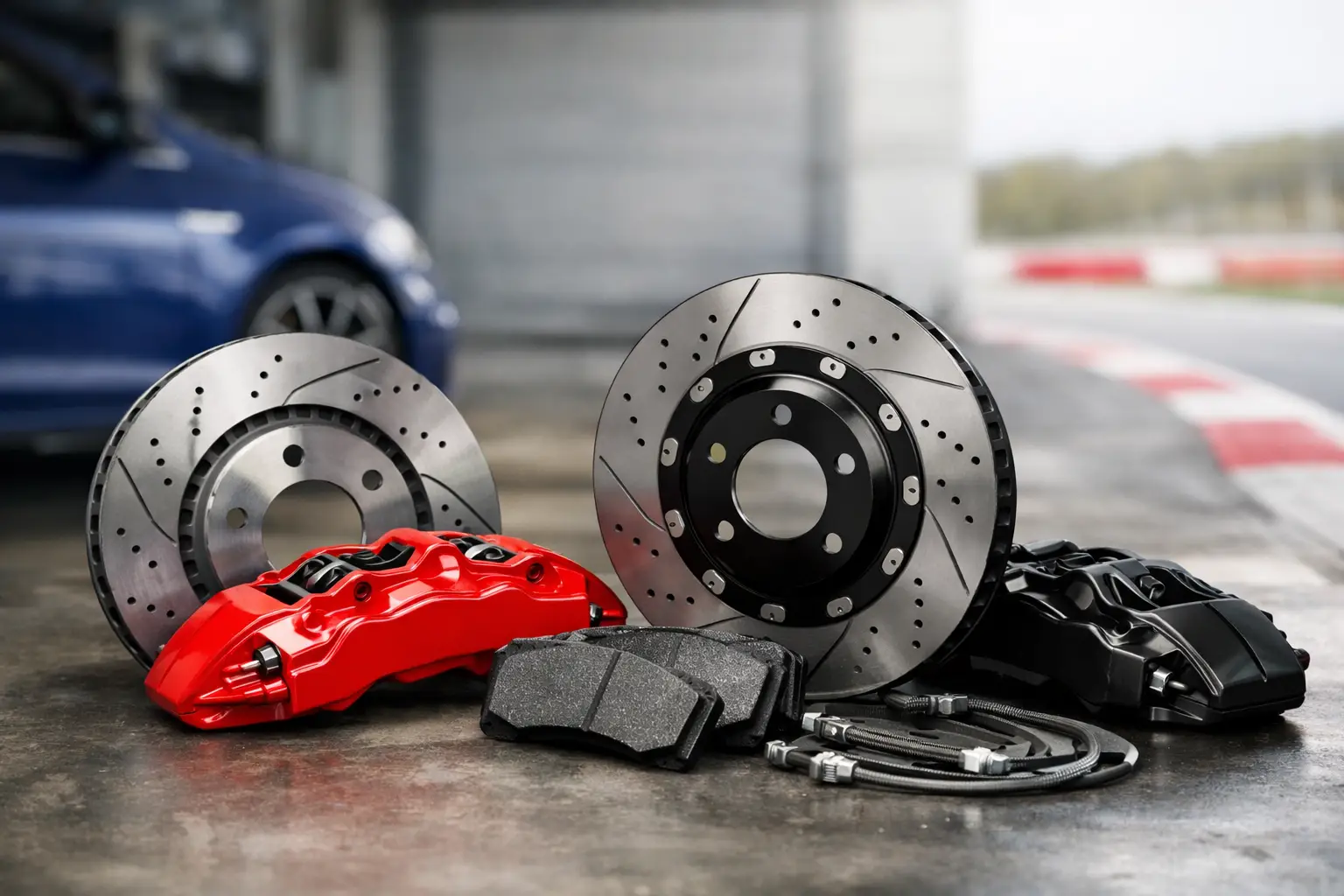
Pads do not operate in isolation. Rotor design and condition have a direct effect on bedding, temperature management, and wear. Fresh pads should be installed on rotors that are within specification and have an appropriate surface condition. Reusing heavily grooved, heat-checked, or contaminated rotors can prevent even transfer-layer formation and create vibration or inconsistent braking.
For most street-performance builds, high-quality blank or properly engineered slotted rotors are a sensible match. Drilled rotors can reduce weight and are common on OE performance applications, but repeated track heat cycles can increase the likelihood of cracking around drill holes. The correct choice depends on the rotor design, vehicle weight, and level of track use.
Tires set the final limit on available stopping grip. A highly aggressive pad cannot overcome a worn all-season tire, and an ultra-sticky tire can expose weaknesses in a mild brake setup. Suspension geometry also matters. If the car dives excessively, wanders under braking, or has uneven tire loading, a pad change alone will not fix the underlying issue.
Brake cooling becomes increasingly valuable as track pace rises. Directed airflow to the rotor hat and friction surfaces can lower temperatures, extend pad life, and reduce the chance of fluid boil. On heavier turbocharged cars, cooling upgrades can be just as meaningful as moving to a more aggressive compound.
Bedding Brake Pads Correctly
Bedding is the controlled process of transferring an even layer of pad material onto the rotor surface. It is not an optional ritual or a reason to make repeated panic stops on public roads. It is a necessary procedure that helps the pad and rotor work as a matched friction pair.
Each pad manufacturer may specify a different sequence, so follow the instructions provided for that compound. Generally, bedding involves a series of firm decelerations from moderate speed, followed by enough driving time to let the brakes cool without sitting stopped with hot pads clamped against the rotor. Parking immediately after heavy stops can leave uneven deposits that feel like warped rotors.
After bedding, inspect the system. Confirm that hardware is correctly installed, caliper pins move freely where applicable, pad wear is even, and the brake fluid level is correct. A clean installation and proper torque procedure matter as much as the compound printed on the box.
Signs Your Current Pads Are Not the Right Match
Noise and dust alone do not mean a pad is defective. Performance compounds commonly produce both, especially when cold. However, certain patterns indicate that the setup deserves closer attention.
A burning smell, smoke after moderate use, crumbling edges, severe glazing, or a sudden loss of bite point to overheating or a mechanical problem. Pulling to one side can indicate a sticking caliper, uneven pad deposits, or suspension issues. Steering-wheel vibration under braking may come from uneven rotor deposits, rotor runout, hub surface contamination, or worn components – not necessarily a physically warped rotor.
If you have added power, upgraded to stickier tires, or started doing track days, reassess the pads before the next event. Braking demands change with the build. The part that was perfect on a stock daily driver may no longer have the thermal headroom your current setup requires.
Choose the pad that matches the road, the track, the vehicle, and the driver behind the wheel. When those four factors agree, every braking zone becomes more repeatable, more controlled, and far more rewarding.