A piston choice can determine whether a high-output build stays reliable under repeated full-throttle pulls or comes apart after one bad detonation event. The forged pistons versus cast question is not about buying the most expensive component by default. It is about matching piston material, design, clearance, and ring package to the engine, fuel, boost level, and intended use.
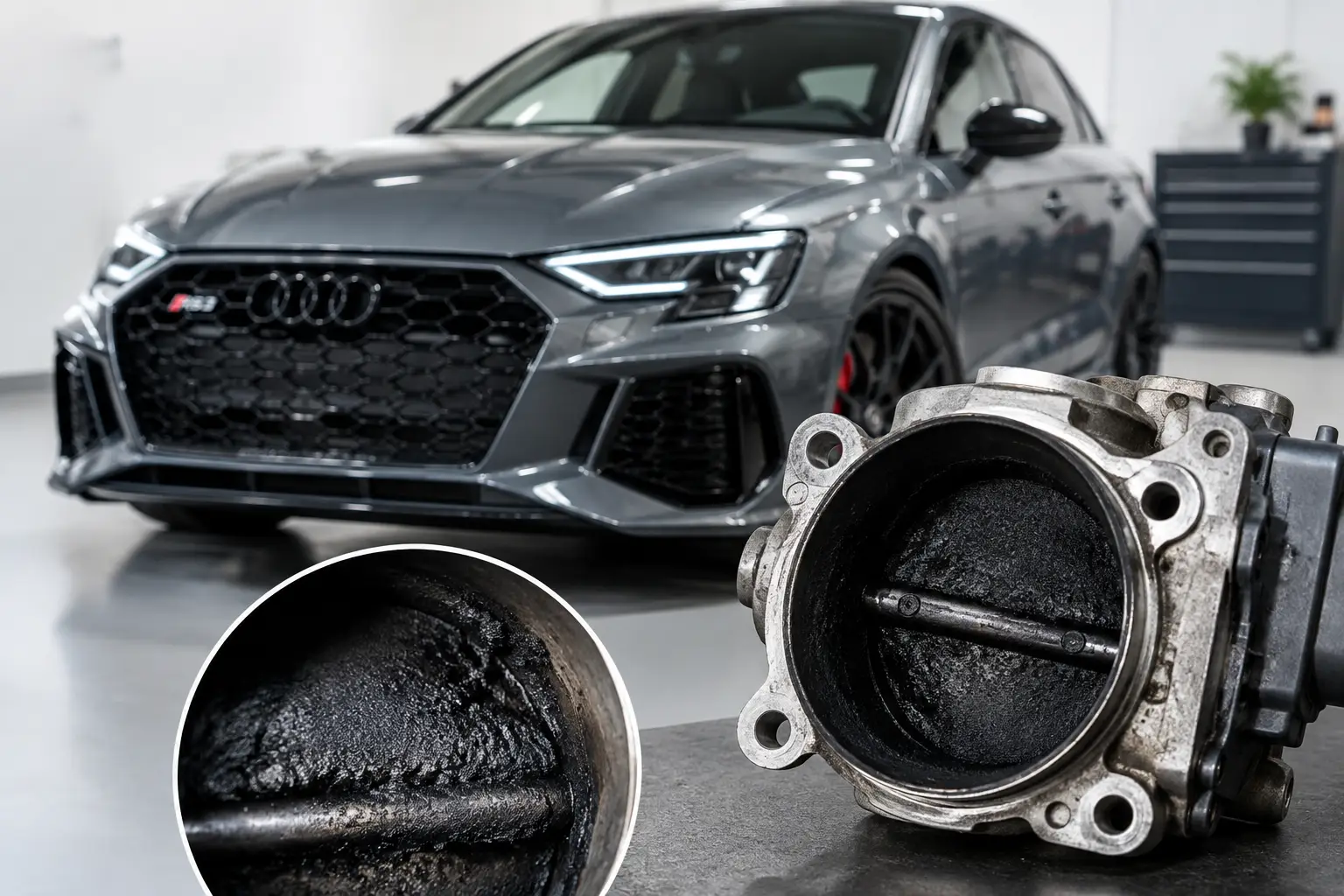
For a lightly tuned street car, a quality cast piston may be exactly what the build needs. For an RS3 2.5TFSI, S58, EA888, or other turbocharged European platform heading toward serious cylinder pressure, forged pistons are often cheap insurance compared with the cost of rebuilding a damaged block, head, and turbo system. The correct answer starts with understanding what each piston is built to handle.
Forged Pistons Versus Cast: The Core Difference
Cast pistons are made by pouring molten aluminum alloy into a mold. This process is efficient, consistent, and well suited to high-volume OEM production. Many factory cast pistons are impressively capable, especially in modern direct-injection turbo engines, but their structure has limits when cylinder pressure, exhaust gas temperature, and detonation risk climb beyond the factory operating window.
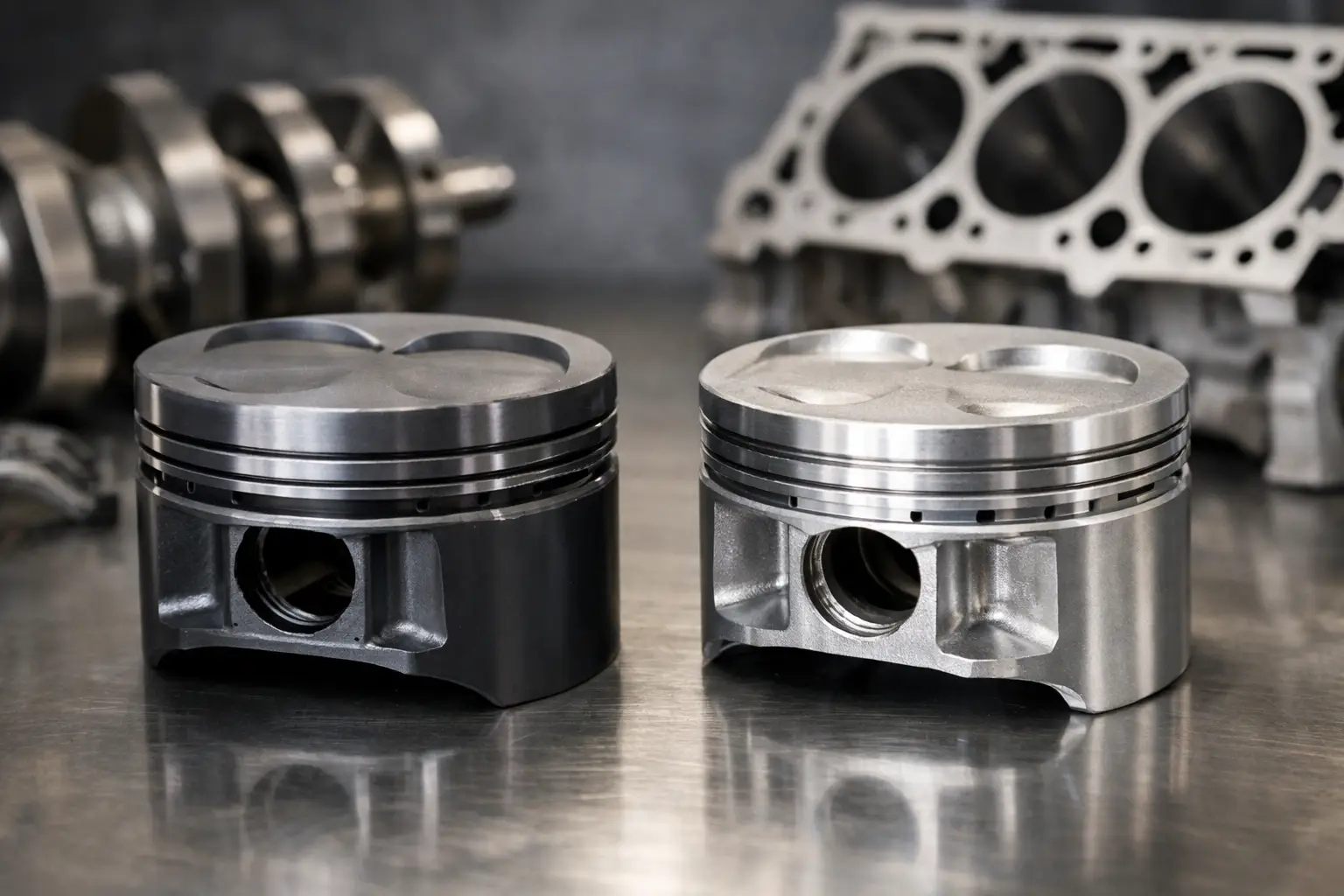
Forged pistons begin as an aluminum billet or slug that is compressed under extreme pressure before machining. The forging process creates a denser grain structure than conventional casting. In practical performance terms, that gives a forged piston greater resistance to cracking, collapsing ring lands, and surviving the shock load associated with high boost or detonation.
That does not mean every forged piston is automatically superior in every engine. Piston quality depends on the alloy, forging design, crown thickness, pin bore design, ring-land dimensions, skirt profile, machining accuracy, and intended clearance. A well-engineered OEM cast piston can outperform a poorly selected forged piston in a street application. Component selection matters as much as the label on the box.
Why Forged Pistons Handle High-Power Builds
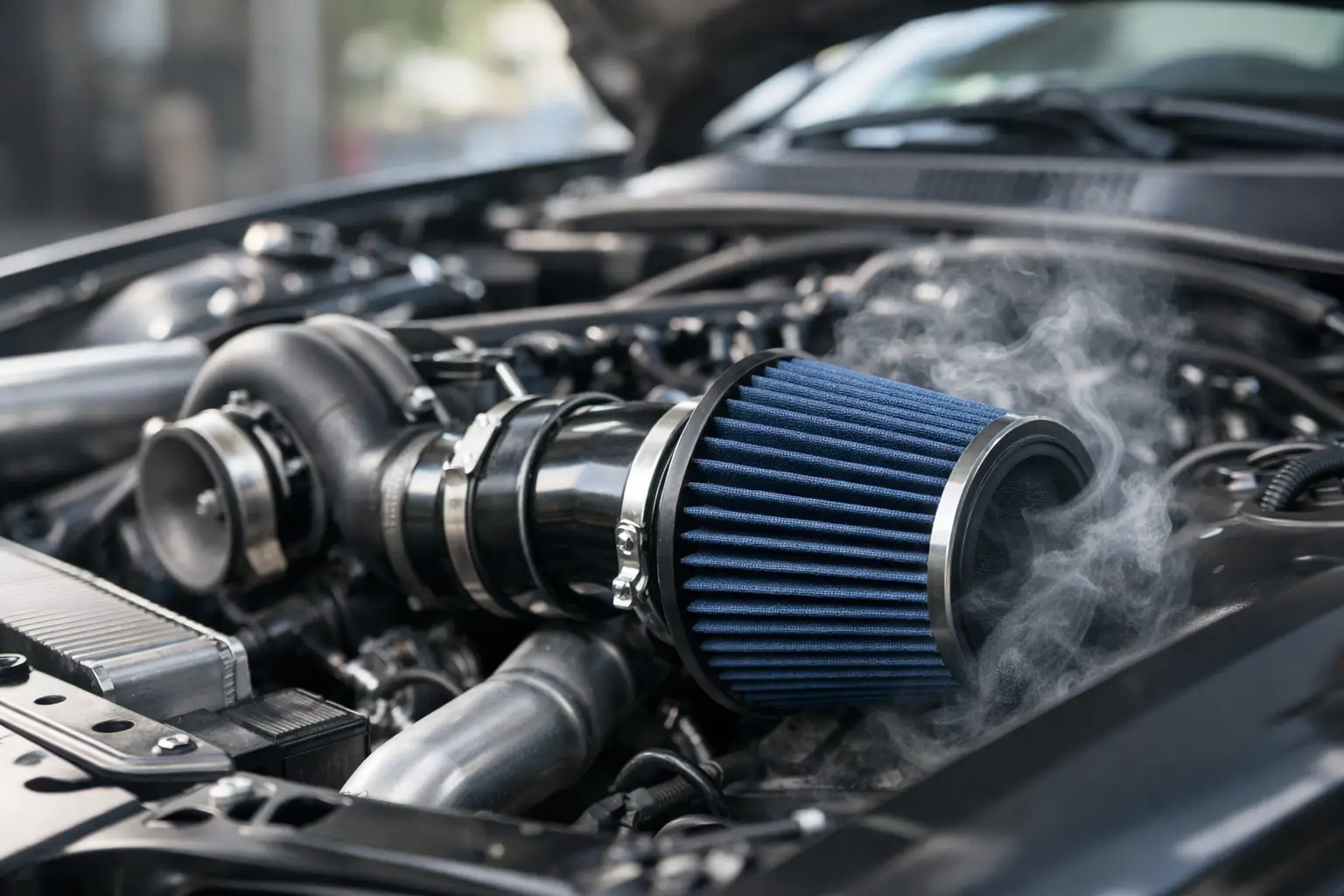
Turbocharged engines make power by increasing cylinder pressure. That pressure pushes down on the piston crown, loads the connecting rod, and places substantial stress on the ring lands. Add elevated intake air temperatures, aggressive ignition timing, ethanol blends, track use, or an imperfect tune, and the piston becomes one of the most heavily worked parts in the engine.
Forged pistons are designed for that environment. Their material structure is more tolerant of the extreme mechanical loads found in built engines. They also give manufacturers room to design application-specific features such as thicker crowns, reinforced ring lands, stronger wrist-pin bosses, revised valve pockets, and ring packs suited to boost.
For high-horsepower applications, the ring lands are often the critical area. Detonation can hammer the top ring land hard enough to crack it, allowing combustion pressure into the crankcase and damaging the bore. A forged piston will not make an engine detonation-proof, but a properly designed forged piston generally provides a much larger safety margin than a cast unit.
This matters when a build goes beyond a conservative calibration. An upgraded turbo, larger fuel system, port injection, built cylinder head, or ethanol tune can transform the thermal and mechanical demands placed on the short block. If the goal is sustained 700, 800, or more horsepower, piston choice should be made around realistic future power targets, not only the first tune file installed.
Alloy Choice: 2618 vs. 4032
Not all forged pistons use the same aluminum alloy. The two common choices are 2618 and 4032, and each has a clear role.
A 2618 forged piston is highly ductile and highly tolerant of severe heat and detonation. It is a popular choice for all-out drag, roll-race, and competition engines where power levels are high and the engine sees intense combustion temperatures. Its trade-off is expansion. Because 2618 expands more as it heats up, it needs greater piston-to-wall clearance. Cold-start piston noise is more likely, and street manners can be less refined until the engine reaches operating temperature.
A 4032 forged piston contains more silicon, which improves dimensional stability and reduces thermal expansion. It can run tighter clearances than 2618 and is generally quieter on cold starts. For a powerful street car, road-course build, or fast daily-driven European platform, 4032 can be an excellent balance of forged strength and OEM-like behavior. Its ultimate detonation tolerance is typically lower than 2618, so the intended power level and tuning margin still matter.
Neither alloy is universally right. A properly built 4032 piston engine can live a long time at substantial power. A 2618 piston is often the more appropriate call when the tune, fuel, boost, and competition use leave little room for error.
Where Cast Pistons Still Make Sense
Cast does not mean weak or unusable. Modern OEM pistons are commonly engineered around a specific engine’s bore finish, cooling strategy, emissions targets, compression ratio, and factory power ceiling. A stock or mildly modified vehicle with excellent calibration, adequate fueling, and controlled intake temperatures may never need an aftermarket forged piston.
Cast pistons also offer practical benefits. They can run tighter piston-to-wall clearances, produce less cold-start noise, and often support quiet, efficient street operation. For a vehicle that is staying near factory torque levels, the money may be better directed toward fueling, intercooling, oil cooling, maintenance, or professional calibration.
The issue arises when a build asks a cast piston to operate far outside its intended cylinder-pressure range. Higher boost alone is not the full story. Torque delivery, ignition advance, air-fuel ratio, fuel quality, charge-air temperature, and knock control all affect piston survival. A car making a modest peak horsepower number with a very aggressive midrange torque curve can be harder on pistons than the dyno graph suggests.
Clearance, Bore Finish, and Machine Work Matter
Installing forged pistons is not a parts-swap shortcut. The machine work must match the piston’s specifications exactly. That includes bore diameter, cylinder-wall finish, ring end gap, deck clearance, and the piston-to-wall clearance recommended by the piston manufacturer.
Piston-to-wall clearance is especially important with forged parts. Too tight, and the piston can scuff or seize as it expands under heat. Too loose, and the engine may have excess noise, oil consumption, blow-by, and reduced ring control. The correct measurement depends on the alloy, skirt design, intended use, bore material, and target operating temperature.
Ring gap deserves the same attention. Boosted engines need enough top-ring end gap to prevent the ring ends from butting together at high temperature. When rings butt, they can damage the ring land, score the cylinder, or break the piston. This is one reason a reputable machine shop and an experienced engine builder are as valuable as the forged components themselves.
Cylinder blocks require their own consideration. Some aluminum blocks use coated bores, pressed-in liners, or specialized honing requirements. A piston package that is correct for a sleeved iron-block build may not be correct for an aluminum-silicon bore. Confirm the engine code, block construction, bore size, connecting rod specification, compression target, and fuel plan before ordering internal components.
Choosing the Right Piston for Your Build
Start with the real mission of the car. A weekend street RS3 running ethanol and a larger turbo has different needs from a dedicated drag car, even if both target similar peak horsepower. Street mileage, cold-weather operation, road-course heat cycles, launch control use, and how often the engine will see sustained boost all affect the right choice.
Next, be honest about the tuning strategy. A forged piston supports power, but it cannot correct inadequate fueling, excessive ignition timing, poor knock control, weak connecting rods, or a failing cooling system. The strongest short block still depends on clean fuel delivery, stable oil pressure, controlled temperatures, and a calibration written for the hardware.
Compression ratio should also be selected as part of the whole package. Lower compression can create more margin for high boost and marginal fuel, while higher compression can improve response and off-boost efficiency when the fuel system and tuning are capable. There is no universal best compression ratio for every EA888, S58, or 2.5TFSI build.
For customers selecting a piston and rod package, EAS Store can help narrow the options around platform, power goal, and intended use. Compatibility is not limited to bore diameter. Pin size, rod length, valve reliefs, ring dimensions, and head-gasket strategy all need to work together.
The Cost Decision Is Really a Build Decision
Forged pistons cost more than cast parts, but the piston itself is only part of the expense. A proper forged build can require machining, balancing, rings, bearings, gaskets, fasteners, cleaning, assembly labor, tuning, and potentially upgraded rods or sleeves. Trying to save money by cutting corners on the supporting work is where expensive engine builds go wrong.
If your current power level is well within the proven range of the factory short block, retain the cast pistons and invest in the systems that protect them. If your plan includes large turbo airflow, high boost, ethanol, repeated launches, or competition use, choose forged pistons before the stock components become the limiting factor.
The right piston is the one that matches how you will actually use the car. Set the target honestly, give the tune and machine work the same respect as the hardware, and build enough margin that the engine can take a hard pass without becoming a teardown story.