The difference between a car that feels planted and one that just feels low usually comes down to more than ride height. When enthusiasts start comparing coilovers versus lowering springs, they are really deciding how much control they want over handling, comfort, stance, and long-term setup flexibility.
For Volkswagen, Audi, BMW, and Mercedes platforms, that decision matters even more. These cars respond well to suspension changes, but they also expose poor choices quickly. A setup that looks right on day one can become frustrating after a few months if the ride quality is harsh, the damping is mismatched, or the drop is too aggressive for the roads you actually drive.
Coilovers versus lowering springs: the real difference
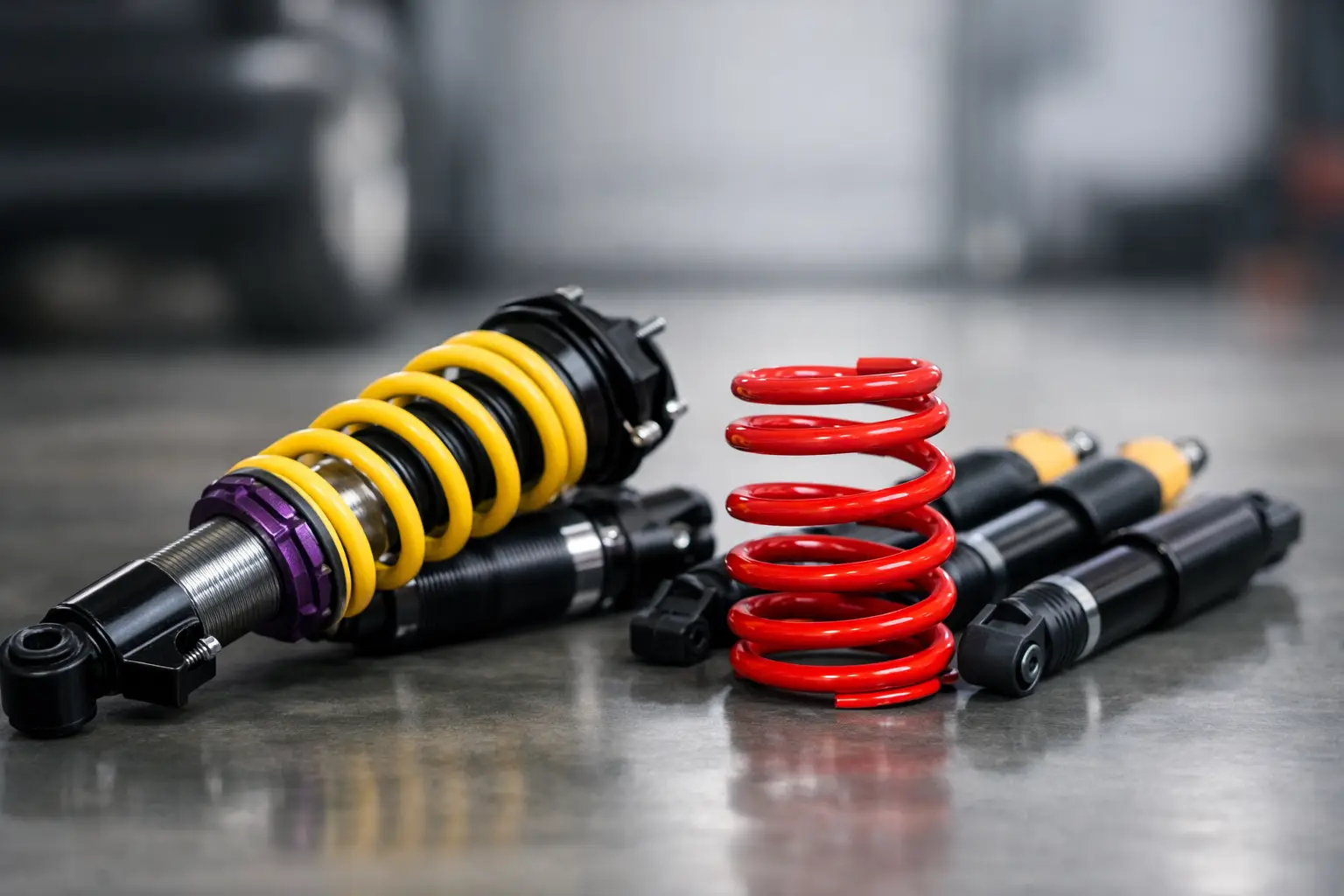
Lowering springs replace the factory springs and keep the original struts or shocks, unless you pair them with upgraded dampers. Their main job is straightforward: reduce ride height, usually increase spring rate, and sharpen the car’s look and response for a lower entry cost.
Coilovers replace the full spring and damper assembly as a matched suspension package. In most cases, they also add ride height adjustability, and many kits include damping adjustment as well. That makes coilovers the more complete solution, especially for drivers who want to fine-tune how the car sits and behaves.
On paper, this sounds simple. In practice, the better option depends on what you expect from the car. If your goal is a cleaner stance with a mild bump in handling, lowering springs can make sense. If you care about corner balance, wheel-and-tire fitment, track use, or dialing in ride height precisely, coilovers usually justify the extra cost.
What lowering springs do well
A quality set of lowering springs is often the fastest way to improve the appearance of a street car. The wheel gap tightens up, the center of gravity drops, and turn-in can feel more immediate than stock. On many European performance platforms, a conservative spring drop also preserves decent street manners if the factory dampers are still in good shape.
That matters for owners who want a visual and handling upgrade without turning a daily driver into a project. A mild spring setup can be a smart fit for an MQB GTI, an Audi S3, or a BMW 340i that spends most of its life on the street and only sees occasional spirited driving.
Cost is the obvious advantage. Springs are cheaper to buy than a full coilover kit, and if you are not chasing adjustability, they can deliver a lot of value. For many enthusiasts, that is enough.
The trade-off is that springs are only one part of the suspension equation. If you lower the car on factory dampers that were not designed for the higher spring rate or reduced travel, the result can be mixed. Some cars feel controlled. Others become bouncy, crashy over sharp impacts, or simply wear out the dampers faster.
That is why lowering springs work best when expectations are realistic. They are not a shortcut to a fully engineered suspension package. They are a targeted upgrade with clear limits.
Where lowering springs can fall short
The biggest limitation is adjustability – or rather, the lack of it. You get the drop the spring manufacturer designed, and that is largely what you live with. If the front sits lower than expected, if the rear needs correction for wheel fitment, or if your local roads punish aggressive ride height, there is not much room to tune around it.
Damping is the second issue. Even when a factory damper can tolerate lowering springs, that does not mean it is optimized for them. Enthusiasts often expect a lower car to automatically feel tighter and more premium. Sometimes it does. Sometimes it just feels underdamped.
There is also the long-term consideration. If the plan is to start with springs and eventually upgrade to matched dampers or coilovers later, the initial savings may not hold up well. Paying for suspension labor twice is common, and on some platforms that turns a budget-minded decision into a more expensive path overall.
Why coilovers are the premium choice
Coilovers appeal to serious enthusiasts for a reason. They give you control. Ride height can be adjusted to match wheel fitment, alignment goals, intended use, and personal preference. On higher-end kits, damping adjustment lets you fine-tune how the car responds to compression, rebound, and road imperfections.
That flexibility is especially valuable on modern European performance cars where owners are often balancing multiple goals. You might want a clean street stance on an Audi RS3, enough clearance for real-world driving, and a setup that stays composed when the pace picks up. A properly chosen coilover kit gives you more room to hit those targets without compromise.
Matched spring and damper tuning is another major advantage. Instead of hoping the factory shocks work well with a shorter spring, you are buying a system designed to work together. On a quality kit, that usually means better body control, more predictable handling, and a more refined feel than a spring-only setup.
Not every coilover is automatically better than every lowering spring. Cheap kits often ride poorly, corrode faster, and disappoint drivers who expected premium performance. But a well-engineered coilover setup is the stronger solution if handling precision and adjustability are high on your priority list.
Coilovers versus lowering springs for street cars
If the car is a true daily driver, comfort still matters. That is where many buyers get tripped up. They assume springs are always more comfortable and coilovers are always harsher. That is not necessarily true.
A good coilover kit with proper damping can ride better than lowering springs on worn stock shocks. It can feel more controlled, less floaty, and more settled over uneven pavement. At the same time, an aggressive track-focused coilover can absolutely be too stiff for street use.
The key is choosing for the actual mission of the car, not the one you imagine on social media. A daily-driven BMW G20 on rough roads needs a different suspension philosophy than a weekend-only Golf R running sticky tires and track days. Street cars usually benefit from moderate spring rates, sensible ride height, and suspension travel that has not been sacrificed for appearance alone.
The track and performance angle
Once regular canyon driving, autocross, or road course use enters the picture, coilovers begin to separate themselves. Consistency matters at speed. So does the ability to adjust ride height, improve corner balance, and run alignment settings that support performance driving.
For track-oriented builds, a spring-only solution is usually not enough. The factory dampers and fixed ride height become limiting factors, especially as tire grip, brake performance, and power levels increase. A properly spec’d coilover kit gives the chassis a better foundation and makes the rest of the build work harder.
This is why racers and advanced builders rarely stop at lowering springs. Once your goals move beyond appearance and into measurable lap time, heat management, tire wear, and chassis balance, a full suspension package becomes the right tool.
Cost, value, and buying once
Lowering springs win the price conversation upfront. There is no way around that. For a buyer who wants a tasteful drop and does not need adjustability, they can be a smart spend.
But value is not just purchase price. It is also ride quality, service life, future flexibility, and whether the setup actually fits the build. If you know the car will get wheels, aggressive alignment, occasional competition use, or further chassis upgrades, coilovers often make more sense from the start.
This is where platform knowledge matters. European performance cars are sensitive to fitment, damping quality, and suspension geometry. Choosing parts by price alone usually leads to compromises. Choosing by application leads to better results.
For enthusiasts who want direct guidance, this is exactly where a specialist supplier adds value. Matching suspension components to a specific chassis, drivetrain, and use case is not guesswork when you work with people who understand the platform.
Which one should you buy?
If you want a modest drop, improved appearance, and a lower-cost upgrade for a primarily street-driven car, lowering springs are a valid option. They are best for owners who want simplicity and are comfortable with fixed ride height.
If you want adjustability, matched damping, better long-term tuning potential, or a chassis setup that can handle more serious driving, coilovers are the better investment. For most performance-minded enthusiasts building beyond entry level, they are the more complete answer.
The right suspension is the one that matches how you actually use the car. Be honest about that, buy quality the first time, and the car will feel better every time you turn in, get on throttle, or glance back at it in the parking lot.