A plastic charge pipe that lets go under full boost can turn an otherwise excellent BMW pull into a sudden loss of power, a check-engine light, and a tow home. That is why BMW charge pipe upgrade benefits matter most to owners of turbocharged platforms that are tuned, driven hard, or simply reaching the age where factory plastic becomes less trustworthy.
A charge pipe upgrade is not usually the modification that produces the biggest dyno number. Its value is more practical: it replaces a known weak point in the pressurized intake tract with a component built to tolerate higher boost, repeated heat cycles, and more demanding use. For BMW owners planning software, intercooler, downpipe, or fueling upgrades, it is often one of the smartest reliability-focused purchases on the list.
Why the Factory BMW Charge Pipe Can Fail
The charge pipe carries compressed air from the intercooler to the throttle body. On many turbocharged BMW applications, the factory part uses molded plastic construction, molded fittings, and connections that are adequate for normal stock operation. Over time, though, engine-bay heat, vibration, oil vapor, and boost pressure take their toll.
The common failure is a crack, split, or separated connection near the throttle-body end of the pipe. A stock vehicle can experience this issue, but added boost pressure from a tune puts more load on every weak point in the system. The result can be an obvious boost leak, limp mode, reduced power, rough running, or a loud rush of air when the throttle opens.
This is particularly familiar territory for owners of N54 and N55-powered BMWs, where the factory charge pipe has long been viewed as a preventative maintenance item on modified cars. Newer B58, S55, and S58 applications have their own intake and charge-air layouts, so the exact weak points and upgrade options vary by chassis and engine code. Fitment always comes first.
BMW Charge Pipe Upgrade Benefits for Tuned Cars
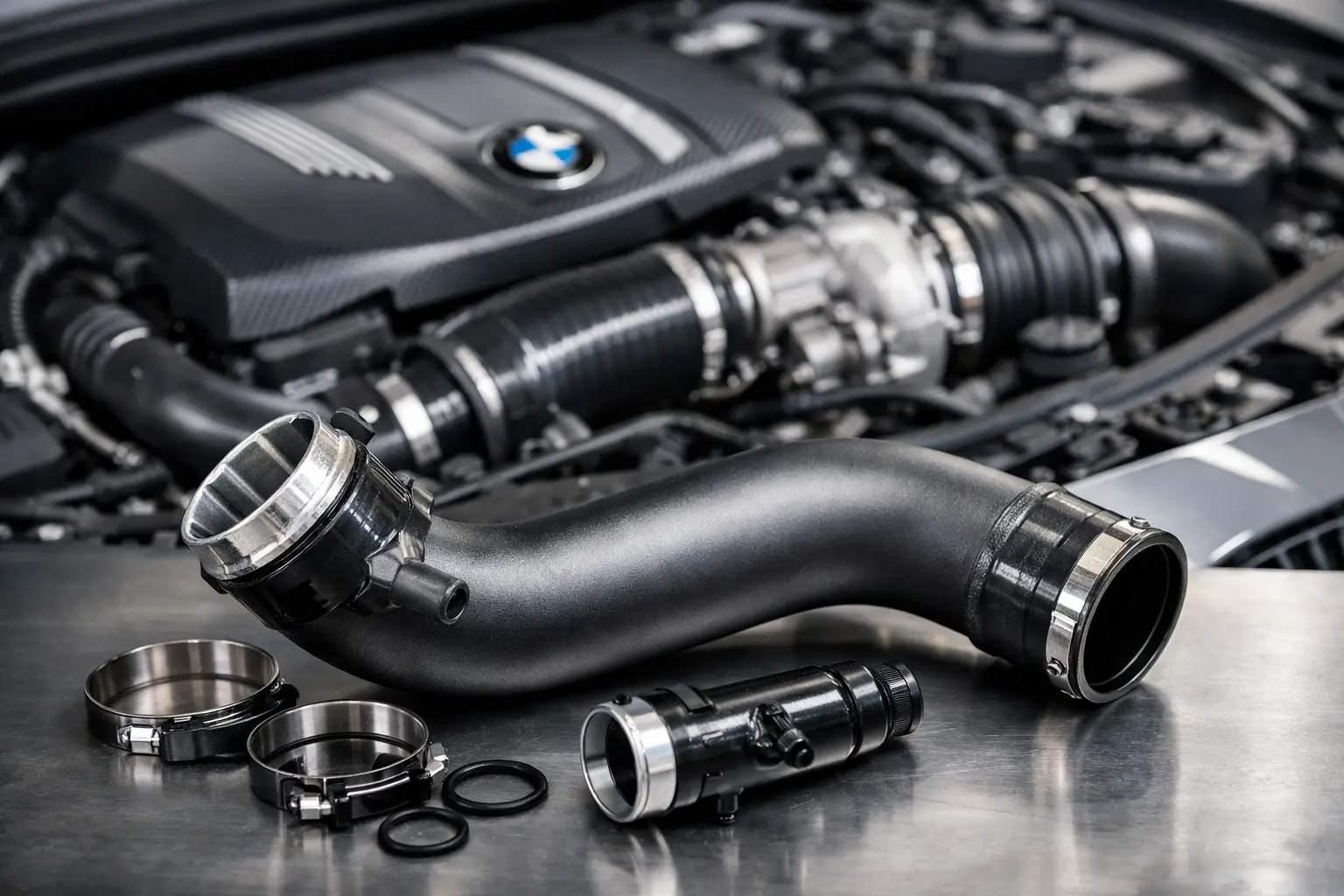
The central benefit is durability. Quality aftermarket charge pipes are commonly made from aluminum with welded or machined connections designed to withstand significantly more pressure and heat than a factory plastic component. That does not make the rest of the boost system invincible, but it removes one of the most frequent failure points from the equation.
Better reliability under boost
A stronger charge pipe provides meaningful peace of mind when boost targets increase. Whether the car is running a conservative flash tune or a more serious ethanol-blend setup, the charge pipe needs to keep its shape, retain its connections, and seal correctly every time the engine comes into torque.
For a street car, that can mean fewer surprises during a highway pull or summer commute. For track use, roll racing, drag racing, or repeated dyno sessions, it means the intake tract is less likely to become the reason a session ends early. Reliability may not be as glamorous as a larger turbocharger, but it is what keeps a performance build usable.
More confidence when adding supporting modifications
A proper tune often leads to other upgrades: a higher-capacity intercooler, freer-flowing exhaust components, upgraded fueling, and revised intake hardware. Installing a charge pipe early helps establish a stronger foundation before boost and airflow demands rise.
It also makes sense to combine the work when access is already open for an intercooler installation. Replacing aging seals, inspecting the throttle-body connection, and confirming every coupler is seated correctly at the same time can prevent repeat labor later.
Consistent boost delivery when the system is sealed
A charge pipe itself does not automatically create horsepower. On an otherwise healthy vehicle, simply replacing an intact stock pipe with an aftermarket version should not be treated as a major power adder. The performance value comes from maintaining a sealed, stable path for pressurized air.
When the factory pipe is cracked, flexing, or leaking, the engine may not achieve commanded boost consistently. Correcting that problem can restore the performance the tune and turbo system are already designed to deliver. On higher-output builds, a properly sized, smooth-flowing pipe may also reduce unnecessary restriction, but durability and sealing remain the main reasons to upgrade.
Useful provisions for advanced builds
Many premium charge pipes include ports or fittings for factory diverter valves, aftermarket blow-off valves, boost-reference lines, or water-methanol injection. These features can make a future build cleaner and easier to service, provided the chosen pipe matches the intended setup.
This is where buying for the entire plan matters. A basic replacement-style pipe may be perfect for a Stage 1 street car. A customer planning a larger turbo, external blow-off valve, or methanol system should select hardware with the correct provisions from the start rather than adapting mismatched parts later.
Choosing the Right Charge Pipe for Your BMW
Not every aluminum pipe is automatically the right part. BMW turbo platforms can differ in throttle-body diameter, intercooler connection style, sensor provisions, diverter-valve configuration, and chassis packaging. An F30 340i, an F80 M3, and a G80 M3 may all be turbocharged BMWs, but they do not share the same charge-pipe requirements.
Start with the engine code and exact chassis, then confirm the model year, drivetrain where applicable, and current turbo configuration. A charge pipe designed around the factory turbo and factory intercooler connection may not work with an aftermarket intercooler using a different outlet size. Likewise, a pipe intended for a specific blow-off-valve flange is not useful if your build retains factory diverter valves.
Material and construction deserve a close look. Aluminum is popular because it resists cracking and holds up well under pressure. Quality welds, precise mounting tabs, properly machined throttle-body connections, and durable couplers are not cosmetic details. They affect fitment, long-term sealing, and how easily the part can be installed without fighting alignment issues.
Pay attention to supplied hardware as well. Correct O-rings, retaining clips, clamps, and plugs are essential. Reusing a flattened seal or damaged clip can create a leak that gets blamed on the new part. For serious builds, EAS Store can help narrow the options based on platform, power target, and planned supporting modifications.
Installation Details That Protect the Upgrade
Charge pipe installation is manageable for an experienced enthusiast, but it is not a job to rush. The old pipe can fail in a way that leaves fragments, broken tabs, or seals behind at the throttle-body connection. Everything should be removed carefully and the mating surfaces cleaned before the replacement part goes in.
The new pipe should seat fully without forcing it. Confirm that the O-ring is correctly positioned, the retaining clip is fully engaged, and all couplers are aligned before tightening clamps. Over-tightening can distort silicone couplers or damage hardware, while under-tightening invites boost leaks once pressure rises.
A pressure test after installation is one of the best ways to verify the work. It can identify a loose coupler, unsealed auxiliary port, or connection that appears secure at idle but leaks under boost. If a new check-engine light or drivability issue appears after installation, inspect the entire charge-air path before assuming the tune or turbocharger is at fault.
When a Charge Pipe Upgrade Makes the Most Sense
For a tuned N54 or N55, the answer is usually straightforward: upgrade it before the original pipe fails. The cost and effort are minor compared with diagnosing a roadside boost leak or replacing the part after it breaks at the track.
For a newer, stock BMW, the decision depends on the platform, mileage, driving style, and future plans. A low-mileage daily driver with no tune may not need an immediate upgrade. But if performance software, track days, or intercooler work are planned, replacing the charge pipe proactively is a logical move.
There are trade-offs. An aftermarket pipe can add a more pronounced turbo or blow-off sound depending on the setup, and poor-quality parts can fit worse than OEM. Some configurations may also affect warranty considerations or local emissions requirements. The right upgrade is a well-engineered, application-specific component installed correctly, not simply the cheapest metal pipe available.
A charge pipe is easy to overlook because it sits between more visible performance parts. Yet on a turbo BMW, it is one of the components that determines whether the rest of the build can work with confidence. Choose the part around your engine code and end goal, install it with fresh sealing hardware, and verify the system before asking the car for more boost.