A big turbo Golf R can make the stock clutch feel fine right up until it very much does not. The usual story starts with stronger midrange, a harder top-end pull, and then a vague flare in RPM during a loaded shift or a roll race. Once torque climbs, the clutch stops being a supporting part and becomes a limit.
That is why choosing the right performance clutch for big turbo Golf R builds matters early, not after the first signs of slip. On MQB cars, clutch selection is not just about chasing the highest torque rating on a spec sheet. It is about how the car is used, how the turbo comes in, what the tune delivers down low, and how much compromise you are willing to accept in traffic.
What changes when you go big turbo on a Golf R
A stock turbo car with basic bolt-ons tends to load the drivetrain in a fairly predictable way. A big turbo setup changes that. Torque may hit later, but when it comes in, it usually arrives with more force and carries harder through the upper RPM range. That changes clutch demand in a real-world way, especially during high-load shifts, highway pulls, and repeated heat cycles.
The Golf R platform is also sensitive to how power is delivered. Two cars with similar peak horsepower can want very different clutch setups if one has an aggressive low-end torque strategy and the other is tuned to roll power in more progressively. This is where buyers get tripped up. They shop by horsepower number alone, then end up with a clutch that is either overbuilt for the street or underbuilt for the tune.
A proper clutch choice needs to match the full combination – turbo size, fueling, tire, launch habits, intended use, and transmission generation. If you skip that part, you are guessing.
How to choose a performance clutch for big turbo Golf R setups
The first question is simple: street-first, track-first, or somewhere in between. A daily-driven Golf R that sees occasional hard pulls needs a very different clutch than a drag-focused car on sticky tires and repeated launches.
For most enthusiast builds, the goal is not the most aggressive clutch available. The goal is a clutch that will hold the torque with enough headroom while keeping engagement predictable. Pedal effort, chatter, take-up window, and heat management all matter. If the car becomes annoying to drive, most owners end up regretting the choice no matter how strong the numbers looked on paper.
Torque capacity matters, but how it is rated matters too
Not all torque ratings are equal. Some brands rate at the crank, others at the wheels. Some publish ideal-condition figures, while others build in a safety margin. A clutch rated just above your expected output can work on a conservative setup, but that is usually not where you want to be with a big turbo Golf R.
A little margin is smart. Too much clutch, though, can create its own problems. Heavier engagement, more noise, and harsher take-up are common once you move into more aggressive friction materials and pressure plate designs. That trade-off can be worth it on a race-oriented build. On a street car, it depends on your tolerance.
Disc material changes the whole driving experience
Organic clutches tend to offer smoother engagement and better street manners. They are often the right call for moderate-output cars that still spend most of their life commuting, back-road driving, and occasional pulls. Once torque climbs into more serious big turbo territory, many owners move to ceramic, metallic, or hybrid disc designs.
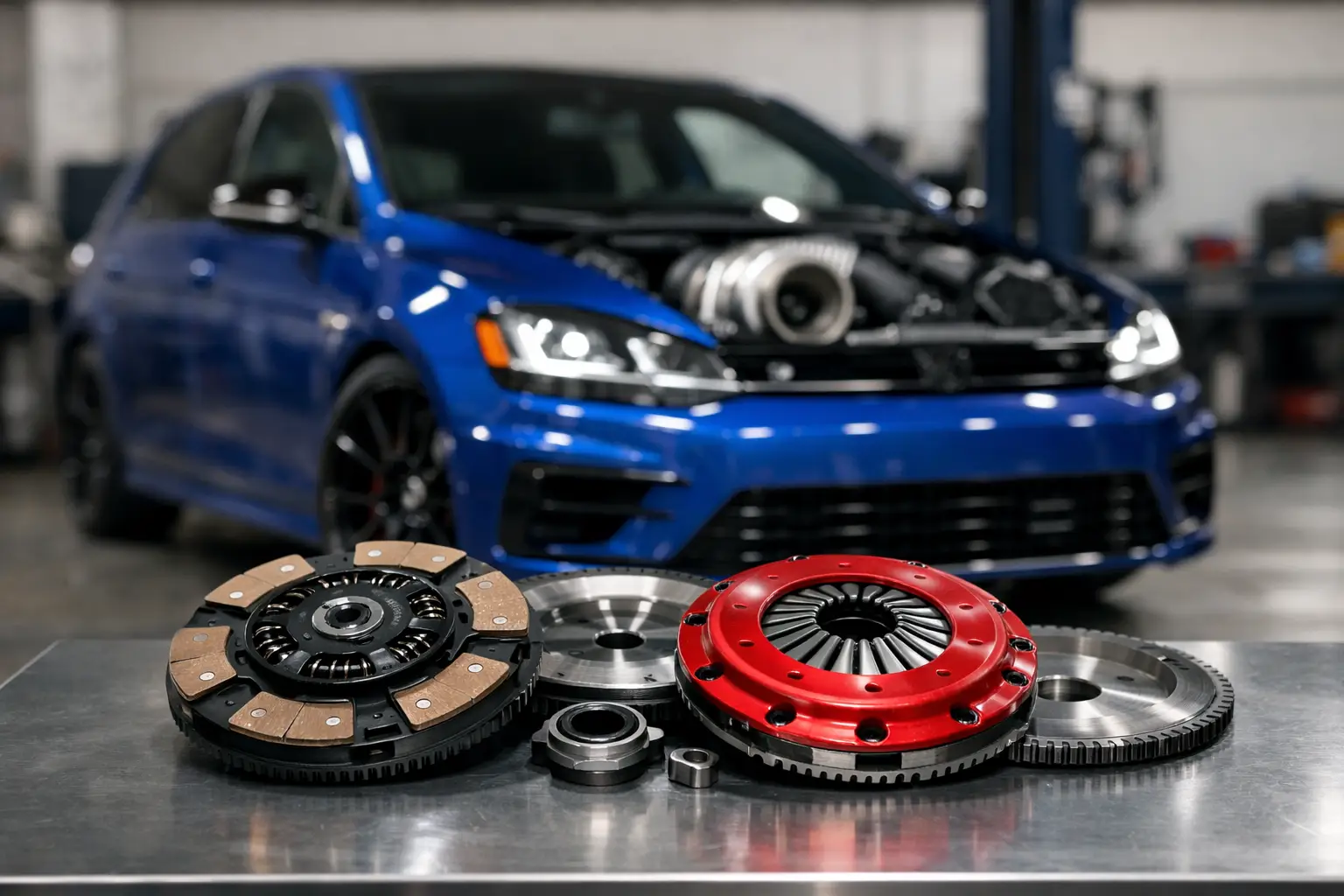
That is where holding power improves, but civility can drop off. More aggressive materials usually tolerate heat better and resist slip under repeated abuse, but they can introduce chatter and a narrower engagement window. Twin-disc setups push that even further. They can be the right answer for very high torque builds, but they are not automatically the right answer for every big turbo Golf R.
Single-disc vs twin-disc
This is one of the biggest decisions in the category. A well-matched single-disc clutch can be excellent for many street and street-strip Golf R setups. It often provides better drivability, lower noise, and a more familiar pedal feel. If the build is on the lower end of big turbo output and the car is not launched constantly on aggressive tires, a quality single-disc may be the better overall solution.
Twin-disc systems start to make more sense when torque climbs high enough that a single-disc would need too much clamp load or too aggressive a material to hold reliably. With a twin-disc, manufacturers can increase torque capacity while controlling pedal effort. The catch is that some twin-disc kits bring more drivetrain noise and a more mechanical feel. For the right customer, that is a fair trade. For others, it feels like too much race part in a street car.
The supporting parts that should not be ignored
A clutch upgrade is rarely just a clutch disc decision. Flywheel choice matters, and so do the release components, hardware, and break-in process.
Flywheel selection
A lighter flywheel can sharpen response and help the engine rev more freely, which sounds attractive on a performance build. The downside is usually more noise at idle and during deceleration, especially on manual MQB cars. A heavier flywheel may keep the car smoother and easier to modulate in traffic.
There is no universal right answer here. If the Golf R is a weekend car and driver feel ranks above refinement, a lightweight setup may fit the build. If you want the car to feel premium on the street, a more balanced flywheel choice often makes more sense.
Hydraulic and release components
It is never a good idea to spend on a premium clutch package and then cut corners on the parts that actuate it. Release bearings, slave components, and related hardware need to match the application. On MQB cars, proper fitment is not optional. The best clutch in the world will not save a poorly matched install.
Break-in is part of the package
A new clutch that gets immediate abuse can glaze, chatter, or fail to hold the way it should. That does not always mean the part was wrong. It may mean the clutch never seated correctly. Serious buyers know this already, but it is still one of the most common reasons a new setup disappoints.
Common mistakes buyers make
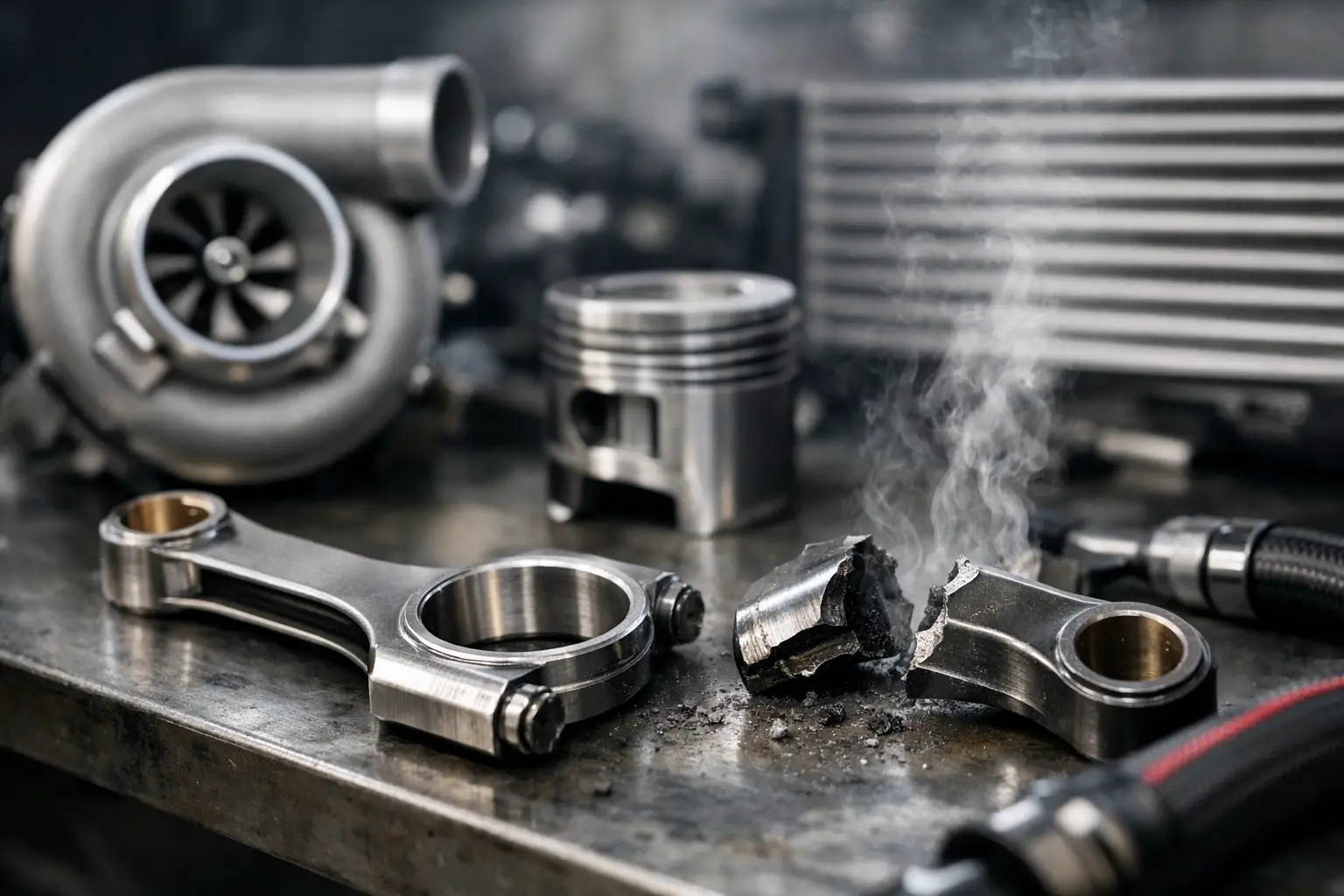
The biggest mistake is buying too late. If the stock clutch is already slipping under big turbo torque, it is not giving you useful feedback anymore. It is just telling you the limit has already been passed.
The second mistake is buying by forum hype instead of application. One owner may love a certain kit because the car is mostly highway-driven with progressive tuning. Another may hate that same kit because the car is launched hard every weekend on sticky tires. Same platform, different demands.
The third mistake is overcorrecting. Plenty of owners jump straight to the most extreme clutch they can find because they never want to revisit the job. That can work, but it can also turn the car into a chore on the street. The right clutch is not the most aggressive one. It is the one that fits the build honestly.
What most big turbo Golf R owners actually need
For a lot of street-driven builds, the sweet spot is a clutch with real torque headroom, strong heat resistance, and manageable engagement. That usually means choosing a proven performance unit from a reputable manufacturer with MQB-specific fitment and a clear rating for the intended power level.
As power climbs further, especially on ethanol, built motor combinations, or drag-focused setups, the conversation shifts toward more serious pressure plate designs and often twin-disc solutions. At that point, drivability is still worth discussing, but reliability under load becomes the priority.
This is also where a consultative parts approach matters. A catalog full of options is only useful if the buyer can separate what fits from what actually works. Serious enthusiasts and shops want product selection backed by application knowledge, not generic recommendations.
Performance clutch for big turbo Golf R buyers should ask these questions
Before making the call, be clear about four things: your actual torque target, how often the car is launched, whether street manners matter more than maximum holding power, and what transmission-specific components the kit requires. Those answers narrow the field fast.
If you are between two options, it usually makes sense to choose the one that gives you some margin without pushing too far into race-only behavior. Headroom is good. Unnecessary compromise is not.
A big turbo Golf R is at its best when every supporting part is chosen with the same discipline as the turbo kit itself. Get the clutch right, and the car feels complete. Get it wrong, and every hard pull reminds you where the weak link is.